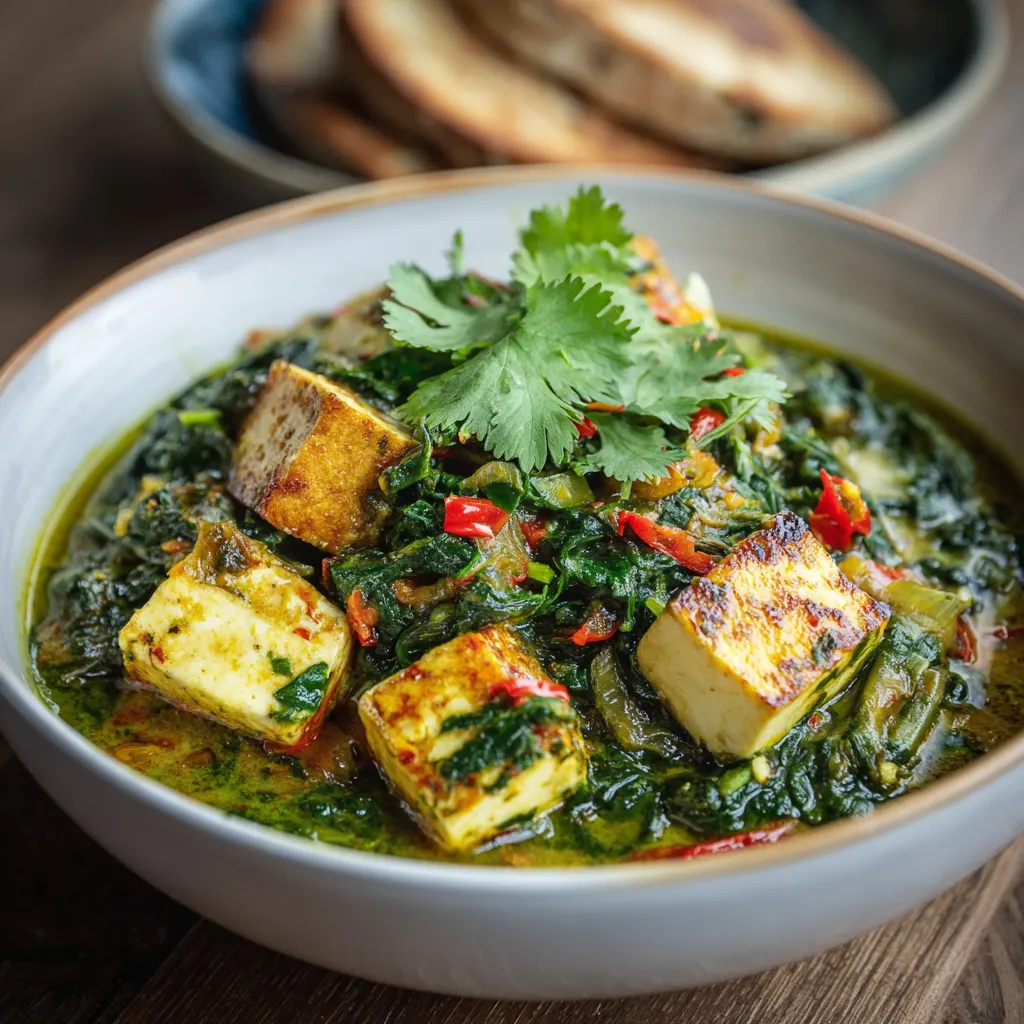
This rich and fragrant curry is a deeply satisfying plant-based interpretation of the classic North Indian dish, Palak Paneer. By swapping the traditional mild Indian cheese (paneer) for extra-firm tofu, we create a nutrient-dense, high-protein meal that sacrifices none of the complex flavor or creamy texture. The secret lies in blanching and blending fresh spinach with sautéed aromatics to form a vibrant, velvety green base, which perfectly coats the savory, golden cubes of tofu. This recipe is an ideal weeknight dinner, pairing health benefits with comfort food appeal, and is naturally vegan and gluten-free.
Essential Ingredients
For the Crispy Tofu:
-
1 block (14-16 oz) extra-firm or firm tofu, pressed
-
1 tbsp neutral cooking oil (e.g., grapeseed or canola)
-
1 tsp ground cumin
-
1 tsp nutritional yeast (optional, for a cheesy depth)
-
Salt and black pepper to taste
For the Spinach Curry (Palak) Base:
-
1 tbsp neutral cooking oil
-
1 large yellow or red onion, finely chopped
-
4-6 cloves garlic, minced
-
1 inch piece fresh ginger, grated
-
1-2 fresh green chilies (e.g., serrano or jalapeño), seeded and minced (adjust to desired heat)
-
1 medium tomato, roughly chopped, or 1/4 cup tomato puree
-
1 lb (450g) fresh spinach, or 10 oz frozen spinach (thawed and squeezed dry)
-
1/2 cup water or vegetable broth
-
1/2 cup full-fat coconut milk or coconut cream
-
1/2 tsp white sugar (optional, to balance acidity)
-
Salt to taste
For the Spice Blend (Masala):
-
1 tsp ground turmeric
-
1 tsp ground coriander
-
1 tsp ground cumin
-
1 tsp garam masala
-
1/2 tsp cayenne pepper or chili powder (optional)
For Garnishing:
-
Fresh cilantro leaves, chopped
-
A squeeze of fresh lime or lemon juice
-
A swirl of vegan yogurt or coconut cream

Step-by-Step Instructions
1. Prepare the Tofu
Ensure the tofu is pressed to remove excess water. Cut the pressed block into 1-inch cubes. In a medium bowl, toss the tofu cubes with 1 tbsp of oil, ground cumin, nutritional yeast (if using), salt, and pepper until evenly coated. You can choose to bake the tofu at 400°F (200°C) for 20-30 minutes, flipping halfway, or pan-fry it in a skillet over medium-high heat until golden brown and crispy on all sides (about 8-10 minutes). Set the cooked tofu aside.
2. Blanch the Spinach
If using fresh spinach, bring a large pot of water to a boil. Add the spinach leaves and blanch for only 30-60 seconds until wilted and bright green. Immediately remove the spinach using a slotted spoon and plunge it into an ice bath or rinse with cold water to stop the cooking process and preserve the color. Drain well and squeeze out as much water as possible. (Skip this step if using frozen, thawed spinach, but ensure it is thoroughly squeezed.)
3. Build the Aromatic Base
In a large pan or Dutch oven, heat 1 tbsp of oil over medium heat. Add the chopped onion and sauté for 5-7 minutes until translucent and soft. Add the minced garlic, grated ginger, and green chilies. Cook for another 2 minutes until fragrant. Next, add the chopped tomato (or puree) and cook until it softens and breaks down, about 3-4 minutes.
4. Create the Palak Puree
Transfer the cooked aromatic mixture (onion, ginger, garlic, chili, tomato) to a high-speed blender or food processor, along with the blanched and squeezed spinach and 1/2 cup of water or vegetable broth. Blend until a smooth, uniform, vibrant green paste is formed.
5. Bloom the Spices and Finish the Curry
Return the pan to medium heat and add a touch more oil if needed. Add the entire spice blend (turmeric, coriander, cumin, garam masala, and cayenne/chili powder). Toast the dry spices for about 30-60 seconds, stirring constantly, until highly fragrant. This essential step “blooms” the spices, deepening their flavor. Immediately pour the spinach puree into the pan. Stir well to combine the puree with the toasted spices.
6. Simmer and Serve
Stir in the coconut milk or cream and the sugar (if using). Bring the curry to a gentle simmer. Adjust the consistency by adding a splash more water or broth if it’s too thick. Season with salt to taste. Gently fold in the prepared tofu cubes. Simmer for 5 minutes, allowing the tofu to absorb the curry flavor. Serve hot, garnished with fresh cilantro and a squeeze of lime juice.
The Art of Tofu Preparation: Achieving the Perfect Texture
The success of a great Spinach and Tofu Curry often hinges on the texture of the tofu. Since this dish is a vegan homage to Palak Paneer, many recipes aim to replicate the slightly chewy yet soft texture of the cheese, while others prefer a crispy counterpoint to the creamy sauce. Mastering tofu preparation is key to fulfilling either preference.
The Necessity of Pressing
Regardless of the cooking method, pressing extra-firm tofu is non-negotiable. Tofu is packaged with a high water content, which inhibits browning and flavor absorption. By pressing it, we remove this excess moisture, allowing the tofu to become dense, absorb spices more effectively, and achieve a crisper exterior when pan-fried or baked. Pressing should take at least 20 to 30 minutes, using a dedicated tofu press or a makeshift setup involving paper towels, a cutting board, and heavy objects like books or cast iron skillets.
Optimal Cooking Techniques
-
For Crispy Tofu: This is the most popular method. Tossing pressed cubes with a light coating of oil, cumin, and nutritional yeast (which adds a savory, umami note) before pan-frying or baking yields golden-brown cubes. The crispy crust holds up well in the sauce, providing a satisfying textural contrast.
-
For Paneer-Like Tofu (Boiling): Some traditional Indian approaches suggest boiling the pressed tofu cubes in generously salted water for 2-3 minutes. This method gives the tofu a slightly spongy, chewy consistency that closely mimics the texture of paneer. This is an excellent choice if you prefer a softer, more integrated protein in your curry.
By treating the tofu with care—pressing it first and choosing the right cooking method—you ensure that the main protein component is flavorful and texturally appealing, elevating the entire dish.
Mastering the Depth of Flavor: Spices, Aromatics, and the Curry Base
A truly exceptional curry is built on layered flavor, achieved through meticulous attention to spices and aromatics. The deep, earthy complexity of this spinach curry comes from three key culinary processes: blooming the spices, utilizing a potent aromatic paste, and achieving the right balance of heat and creaminess.
The Magic of Blooming Spices (Tarka)
The most crucial technique in Indian cuisine for building flavor is the tarka, or tempering. This involves adding whole or ground spices to hot oil or ghee (or vegan oil in this case) and cooking them briefly. Toasting dry spices like turmeric, ground cumin, and coriander powder in hot fat releases their volatile oils, enhancing their aroma and deepening their flavor profile significantly. This step transforms the spices from tasting raw or powdery to robust and integrated. It should only take about 30 to 60 seconds; adding the spinach puree immediately afterward stops the cooking process and prevents the spices from burning, which would result in a bitter taste.
The Vibrant Palak Paste
The foundation of the curry is the palak (spinach) paste. Preparing this paste involves several steps that ensure maximum color and flavor:
-
Blanching: Quickly blanching the spinach and shocking it in cold water locks in the bright green color. Skipping this step or overcooking the spinach can result in a dull, olive-green curry.
-
Sautéing Aromatics: Cooking onions, garlic, and ginger until soft and fragrant before blending ensures that their sharp, raw flavors are mellowed and deepened. These sautéed aromatics are the backbone of the curry’s taste.
-
Blending: Pureeing the spinach, aromatics, and tomatoes creates a luxuriously smooth, cohesive sauce that perfectly clings to the tofu. The tomatoes add essential acidity, which brightens the otherwise rich and earthy profile.
The Creamy Finish
While traditional Palak Paneer relies on heavy cream, the vegan version achieves its richness using full-fat coconut milk or coconut cream. The fat in the coconut milk coats the tongue, delivering a satisfying, velvety mouthfeel while complementing the South Asian spice profile. Alternatively, a small handful of pre-soaked cashews can be blended directly into the palak paste to provide a nut-based creaminess without a distinct coconut flavor.
Customizing Your Curry: Adaptations and Regional Influence
While the classic Spinach and Tofu Curry (Palak Tofu) is satisfying in its pure form, its adaptable nature is one of its greatest assets. This dish acts as a versatile canvas, allowing for easy substitutions and additions inspired by both regional Indian cuisine and global health trends.
Incorporating Extra Vegetables and Legumes
To boost nutrition and yield, you can easily introduce other ingredients. The most common additions found in variations of this curry include:
-
Chickpeas and Lentils: Adding canned chickpeas (chana) or pre-cooked brown lentils dramatically increases the fiber and protein content, making the meal even more substantial. They should be added during the final simmering stage along with the tofu.
-
Root and Stem Vegetables: Cubed potatoes, sweet potatoes, cauliflower florets, or chopped green beans can be added. These require a longer cooking time (about 15-20 minutes) and should be simmered in the curry base before the tofu is added.
-
Green Peas (Matar): Often included in Indian curries, frozen green peas add a sweet pop of color and freshness. Stir them in during the last 5 minutes of simmering.
Herb and Spice Adjustments
-
A Hint of Fenugreek: To replicate the authentic North Indian flavor sometimes found in restaurant-style palak dishes, stir in one teaspoon of dried fenugreek leaves (kasoori methi) during the final simmer. Rubbing them between your palms before adding them releases their unique, pungent aroma.
-
Heat Level: The heat is easily controlled by the type and quantity of chilies or chili powder used. For a milder curry, remove the seeds and membranes from the fresh chilies, or omit the cayenne pepper entirely. For extra heat, try a pinch of red chili flakes or a hotter chili powder.
Alternative Cream Bases
For those who want to avoid coconut, the creaminess can be achieved using alternative plant-based ingredients:
-
Cashew Cream: Soak 1/2 cup of raw cashews in boiling water for at least 30 minutes, then drain and blend with the spinach paste. This provides a neutral, luxurious creaminess.
-
Non-Dairy Milk: Full-fat oat milk or soy milk can be used, though they may yield a slightly thinner consistency and less richness than coconut cream.
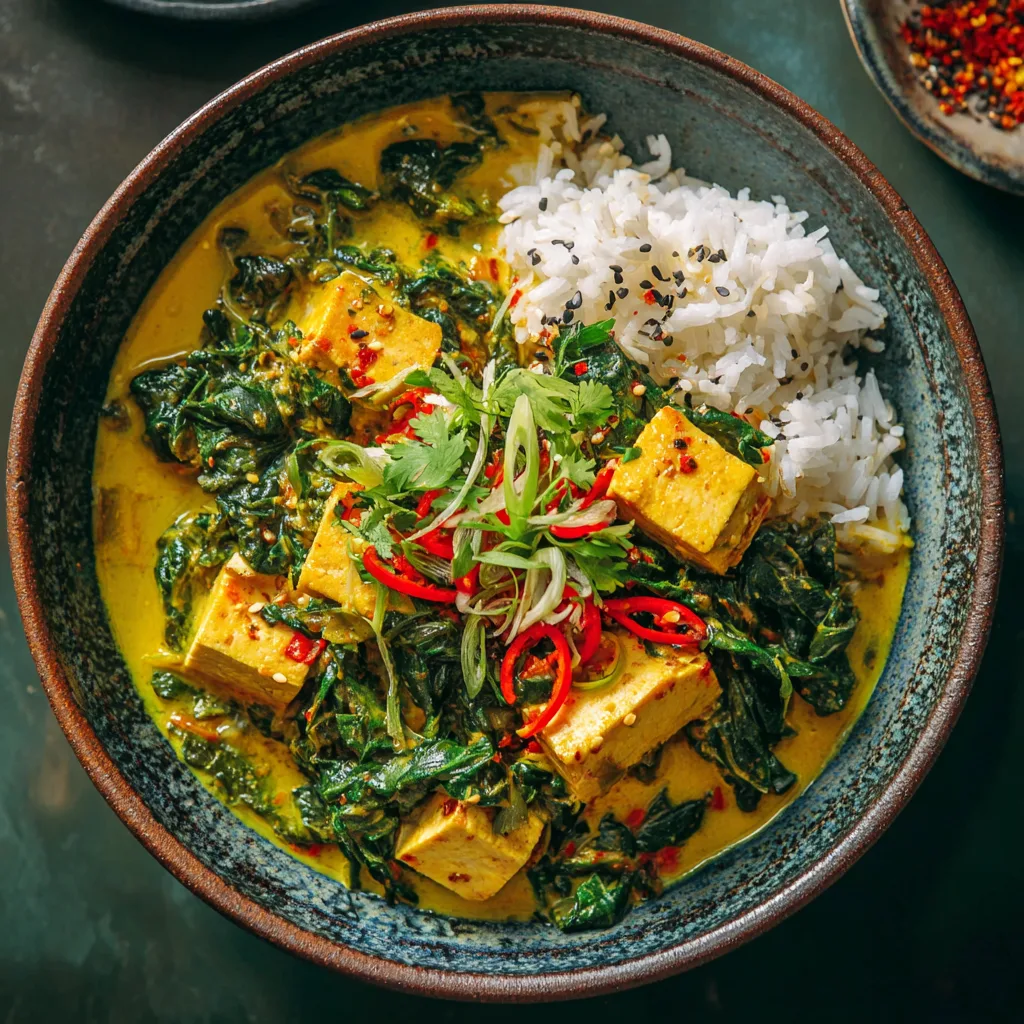
Serving Suggestions, Storage, and Optimization Tips
Serving the perfect curry involves more than just cooking the dish; it’s about presentation, pairing, and ensuring proper longevity for leftovers.
Perfect Pairings
Spinach and Tofu Curry is a rich, flavorful dish that requires neutral counterparts to balance its complexity:
-
Grains: Basmati rice (white or brown) is the traditional companion. For a healthier option, serve over quinoa or millet.
-
Breads: Freshly made or store-bought naan bread (vegan), roti, or paratha are essential for scooping up the thick, creamy sauce.
-
Accoutrements: A simple side of chopped onion and cucumber mixed with a dollop of vegan yogurt (raita) provides a cooling contrast. A wedge of lime or lemon is a must-have finishing touch, as a final squeeze of citrus brightens the entire flavor profile.
Storage and Meal Prepping
This curry is an excellent candidate for meal preparation, as the flavors deepen beautifully overnight.
-
Refrigeration: Store cooled leftovers in an airtight container in the refrigerator for up to 3-4 days.
-
Freezing: This curry freezes exceptionally well. If preparing for the freezer, consider adding the tofu and coconut milk during the final reheat, as freezing and thawing can sometimes alter their textures. Store the curry base in a freezer-safe container for up to 3 months.
-
Reheating: Reheat gently on the stovetop over medium-low heat, adding a splash of water or broth to restore the desired consistency.
Troubleshooting Common Issues
-
Curry is too thin: To thicken the curry, simply simmer it uncovered for a few extra minutes to allow some of the liquid to evaporate. Alternatively, mix a tablespoon of chickpea flour (besan) or cornstarch with an equal amount of cold water, pour it into the simmering curry, and stir until thickened.
-
Spinach color is dull: This is usually due to overcooking the spinach or not shocking it in cold water. For the next batch, ensure the blanching time is kept under one minute.
-
Tofu is chewy or tough: This often happens if the tofu wasn’t pressed properly before cooking. Ensure you use extra-firm tofu and press it for at least 20 minutes to achieve the best texture.