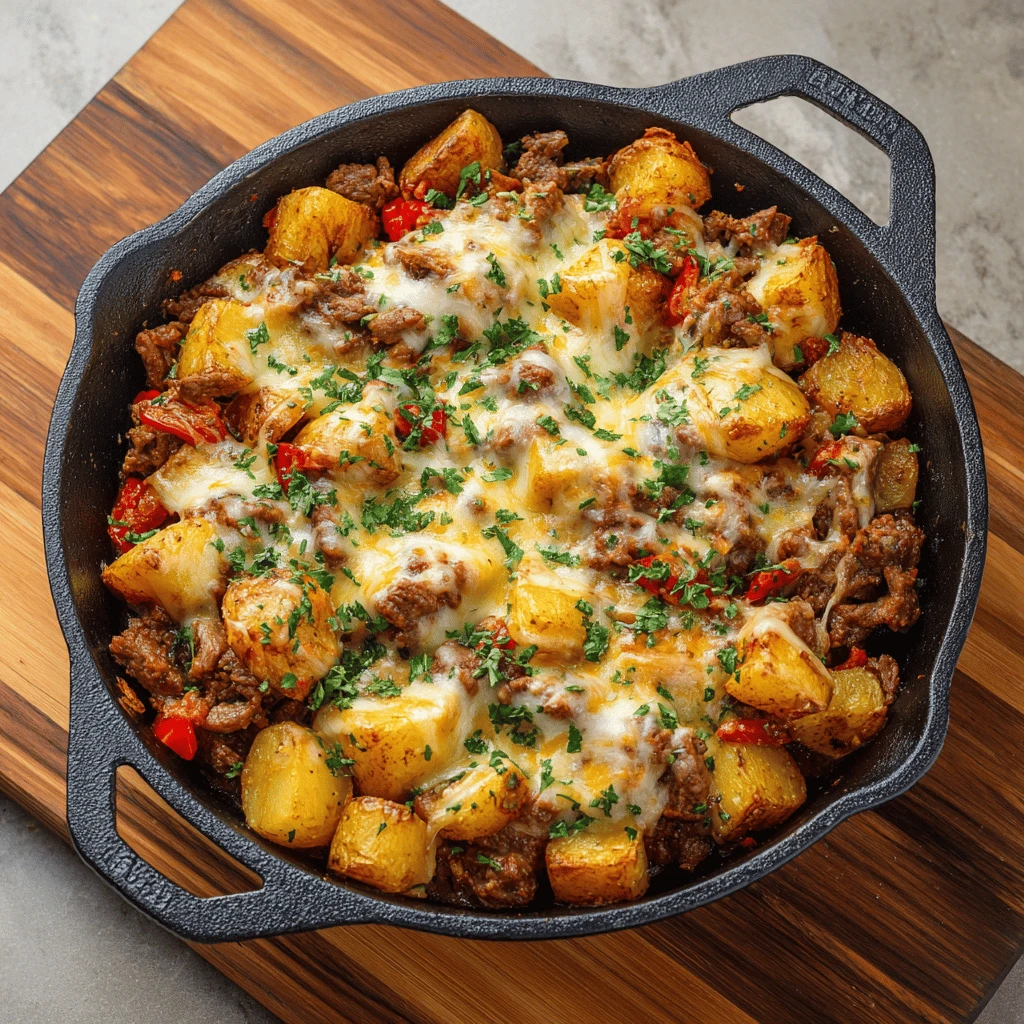
Beef and Potato Skillet: A Hearty and Flavorful One-Pan Meal
Introduction: The Perfect Weeknight Dinner
The Beef and Potato Skillet. The name itself conjures images of a comforting, home-cooked meal. This dish is the epitome of simple yet satisfying cooking. It’s a one-pan wonder that combines tender beef, hearty potatoes, and flavorful seasonings, making it perfect for busy weeknights or a cozy weekend dinner. Forget multiple pots and pans; this recipe keeps cleanup to a minimum while delivering maximum flavor. It’s versatile, customizable, and endlessly adaptable to your favorite ingredients and dietary needs. Whether you’re a seasoned cook or just starting out, this recipe is a guaranteed crowd-pleaser. So, gather your ingredients, grab your skillet, and get ready to enjoy a delicious and stress-free meal!
Mastering the Beef and Potatoes
The heart of any good Beef and Potato Skillet lies in the quality of the beef and the preparation of the potatoes. Let’s dive into the specifics:
Choosing the Right Beef
The type of beef you choose will significantly impact the final result. For a Beef and Potato Skillet, you want a cut that is tender enough to cook quickly in a skillet but also has enough flavor to stand up to the other ingredients. Here are some excellent options:
- Sirloin Steak: This is a lean and flavorful option that cooks quickly and evenly. Cut it into bite-sized pieces before adding it to the skillet.
- Flank Steak: Flank steak is another good choice, known for its rich flavor. Be sure to slice it thinly against the grain for maximum tenderness.
- Ground Beef: Ground beef is a budget-friendly and readily available option. Use lean ground beef to minimize excess grease.
- Stew Meat: While technically intended for longer cooking, stew meat can work in a skillet if cut into smaller pieces and browned properly.
No matter which cut you choose, make sure it is fresh and well-marbled for optimal flavor and tenderness. Consider marinating the beef for at least 30 minutes before cooking to enhance its flavor and tenderness even further. A simple marinade of olive oil, garlic, soy sauce, and Worcestershire sauce can work wonders.
Perfecting the Potatoes
The potatoes provide the hearty base for this skillet meal. The key is to choose a variety that cooks well in a skillet and doesn’t become mushy.
- Yukon Gold Potatoes: These are an excellent choice due to their creamy texture and ability to hold their shape when cooked.
- Red Potatoes: Red potatoes are another great option, offering a slightly firmer texture than Yukon Golds.
- Russet Potatoes: While Russets can be used, they tend to be starchier and may require more attention to prevent them from sticking to the skillet.
Before cooking, wash and dice the potatoes into uniform, bite-sized pieces. This ensures they cook evenly and in a timely manner. Consider parboiling the potatoes for a few minutes before adding them to the skillet. This will help them cook faster and prevent them from becoming undercooked while the beef is browned. To parboil, simply place the diced potatoes in a pot of boiling water for 5-7 minutes, then drain and set aside.
Seasoning for Success
The right blend of seasonings can elevate your Beef and Potato Skillet from good to great. Don’t be afraid to experiment with different spices and herbs to find your perfect flavor profile. Some essential seasonings to consider include:
- Salt and Pepper: These are the foundation of any good seasoning blend. Use freshly ground black pepper for the best flavor.
- Garlic Powder: Garlic powder adds a savory depth to the dish.
- Onion Powder: Onion powder complements the garlic and adds another layer of flavor.
- Paprika: Paprika adds a touch of sweetness and color. Smoked paprika can add a smoky flavor.
- Dried Herbs: Dried herbs like thyme, rosemary, and oregano can add a herbaceous note.
- Chili Powder: For a touch of heat, add a pinch of chili powder or red pepper flakes.
Building Your Skillet: Step-by-Step Instructions
Now that you’ve prepped your beef and potatoes, it’s time to build your skillet masterpiece. Here’s a step-by-step guide:
1. Heat the Skillet: Heat a large skillet (preferably cast iron) over medium-high heat. Add a tablespoon or two of oil (vegetable, canola, or olive oil will work).
2. Brown the Beef: Add the beef to the skillet in a single layer, being careful not to overcrowd. Brown the beef on all sides, then remove it from the skillet and set aside. If using ground beef, cook it until browned and drain off any excess grease.
3. Cook the Potatoes: Add the diced potatoes to the skillet and cook until they are tender and slightly browned, stirring occasionally. This may take 10-15 minutes.
4. Add Aromatics: Add diced onions and minced garlic to the skillet and cook until they are softened and fragrant, about 3-5 minutes.
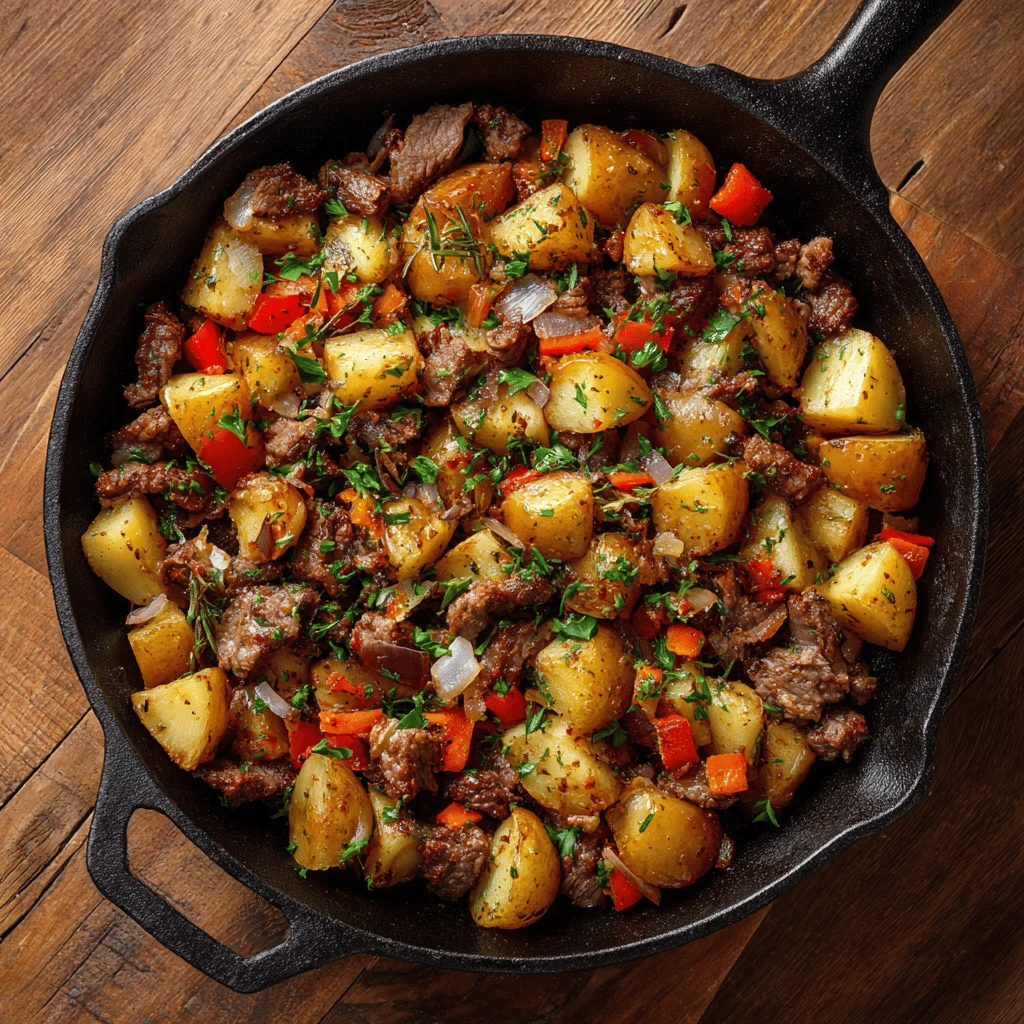
5. Combine and Simmer: Return the beef to the skillet with the potatoes and onions. Add any additional vegetables you desire (see below). Season with salt, pepper, garlic powder, onion powder, paprika, and any other desired spices. Stir to combine.
6. Add Liquid (Optional): For a more saucy skillet, add a splash of beef broth or tomato sauce. Simmer for a few minutes to allow the flavors to meld.
7. Garnish and Serve: Garnish with fresh parsley, chives, or green onions before serving.
Variations and Customizations
One of the best things about the Beef and Potato Skillet is its versatility. You can easily adapt the recipe to suit your tastes and dietary needs.
Adding Vegetables
Consider these flavorful additions:
- Bell Peppers: Diced bell peppers add color and sweetness.
- Mushrooms: Sliced mushrooms add an earthy flavor and meaty texture.
- Carrots: Diced carrots add sweetness and a slight crunch.
- Peas: Frozen peas can be added towards the end of cooking for a pop of sweetness.
- Green Beans: Fresh or frozen green beans add a crisp-tender texture.
- Spinach or Kale: Add a handful of spinach or kale towards the end of cooking for added nutrients.
Flavor Boosters
Enhance the flavor even more:
- Worcestershire Sauce: A splash of Worcestershire sauce adds a savory depth.
- Soy Sauce: Soy sauce adds umami and saltiness.
- Hot Sauce: A few dashes of hot sauce adds a kick of heat.
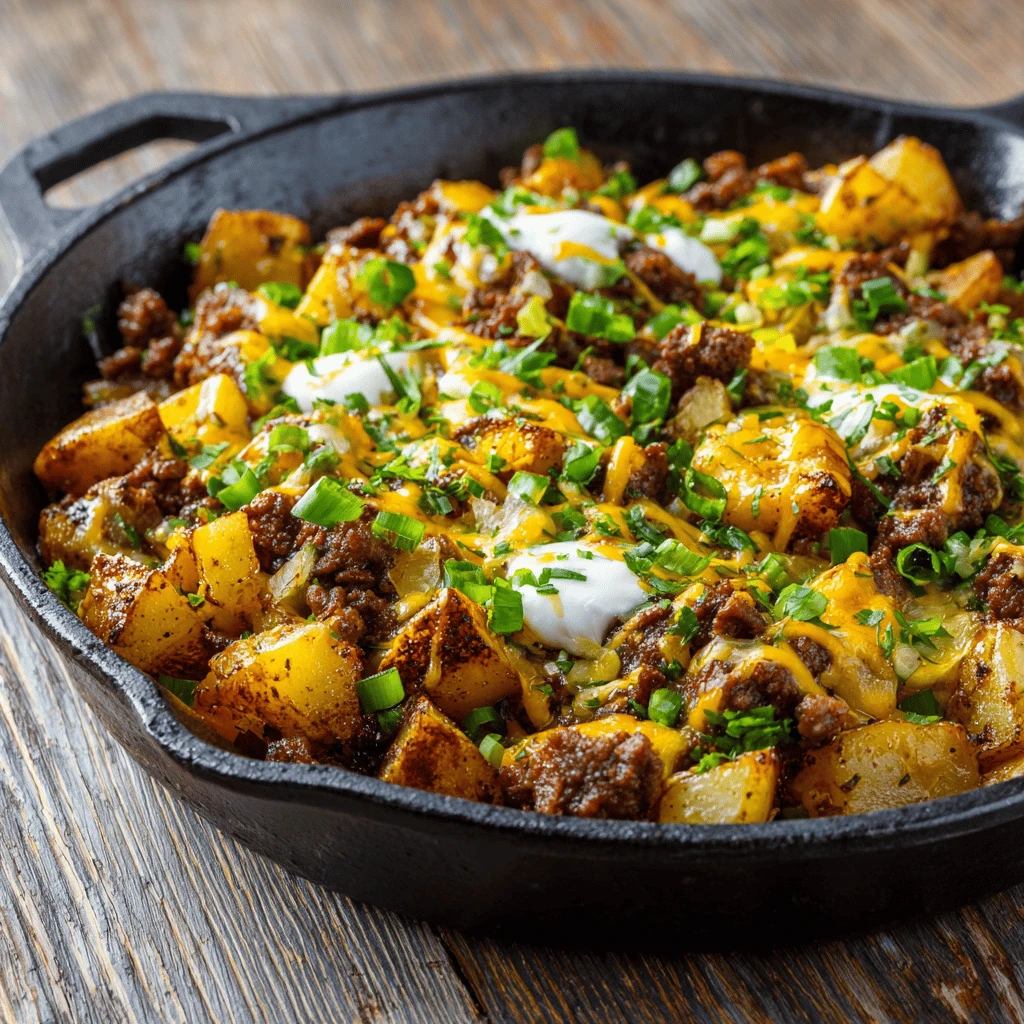
- Cheese: Sprinkle shredded cheddar, Monterey Jack, or pepper jack cheese over the skillet during the last few minutes of cooking for a melty, cheesy finish.
- Sour Cream or Greek Yogurt: Top with a dollop of sour cream or Greek yogurt for a creamy tang.
Dietary Modifications
- Low-Carb: Substitute cauliflower florets for potatoes to make this dish low-carb friendly.
- Gluten-Free: Ensure all your seasonings and sauces are gluten-free.
- Dairy-Free: Omit the cheese and sour cream or use dairy-free alternatives.
- Vegetarian/Vegan: Substitute plant-based beef crumbles for the beef.
Serving Suggestions and Leftovers
The Beef and Potato Skillet is a complete meal in itself, but here are some serving suggestions to elevate your dining experience:
- Serve with a Side Salad: A simple green salad with a vinaigrette dressing provides a refreshing contrast to the hearty skillet.
- Crusty Bread: Serve with crusty bread for soaking up the delicious juices.
- Garlic Bread: Take it up a notch with some homemade garlic bread.
- Toppings: Offer a variety of toppings, such as sour cream, salsa, guacamole, or chopped green onions, to allow everyone to customize their meal.
Leftovers can be stored in an airtight container in the refrigerator for up to 3-4 days. Reheat in a skillet over medium heat or in the microwave. The flavors often meld together even more overnight, making the leftovers just as delicious as the original meal. You can also repurpose the leftovers into other dishes. Add them to tacos, burritos, or quesadillas for a quick and easy meal. You can even top a baked potato with the leftover skillet mixture.
FAQ: Common Questions About Beef and Potato Skillet
Here are some frequently asked questions about making the perfect Beef and Potato Skillet:
Q: What kind of potatoes are best for a skillet?
A: Yukon Gold and red potatoes are excellent choices for a skillet due to their creamy texture and ability to hold their shape during cooking. Russet potatoes can also be used, but they may require more attention to prevent them from sticking.
Q: How do you keep potatoes from sticking to the skillet?
A: Make sure the skillet is properly heated before adding the potatoes. Use enough oil to coat the bottom of the skillet, and stir the potatoes occasionally to prevent them from sticking. Parboiling the potatoes for a few minutes before adding them to the skillet can also help.
Q: What’s the best cut of beef for a Beef and Potato Skillet?
A: Sirloin steak, flank steak, and lean ground beef are all good options. Choose a cut that is tender enough to cook quickly in a skillet but also has enough flavor.
Q: Can I add other vegetables to this skillet?
A: Absolutely! Bell peppers, mushrooms, carrots, peas, green beans, spinach, and kale are all great additions.
Q: How do I store leftovers?
A: Store leftovers in an airtight container in the refrigerator for up to 3-4 days. Reheat in a skillet or microwave.
Q: Can I make this ahead of time?
A: While it’s best served fresh, you can prepare the ingredients ahead of time. Dice the beef, chop the vegetables, and parboil the potatoes. Store each component separately in the refrigerator until you’re ready to cook. This can save you time during the week.
Q: How can I make this skillet spicier?
A: Add a pinch of chili powder, red pepper flakes, or a few dashes of hot sauce to the skillet while cooking. You can also use spicy sausage instead of beef for an extra kick.