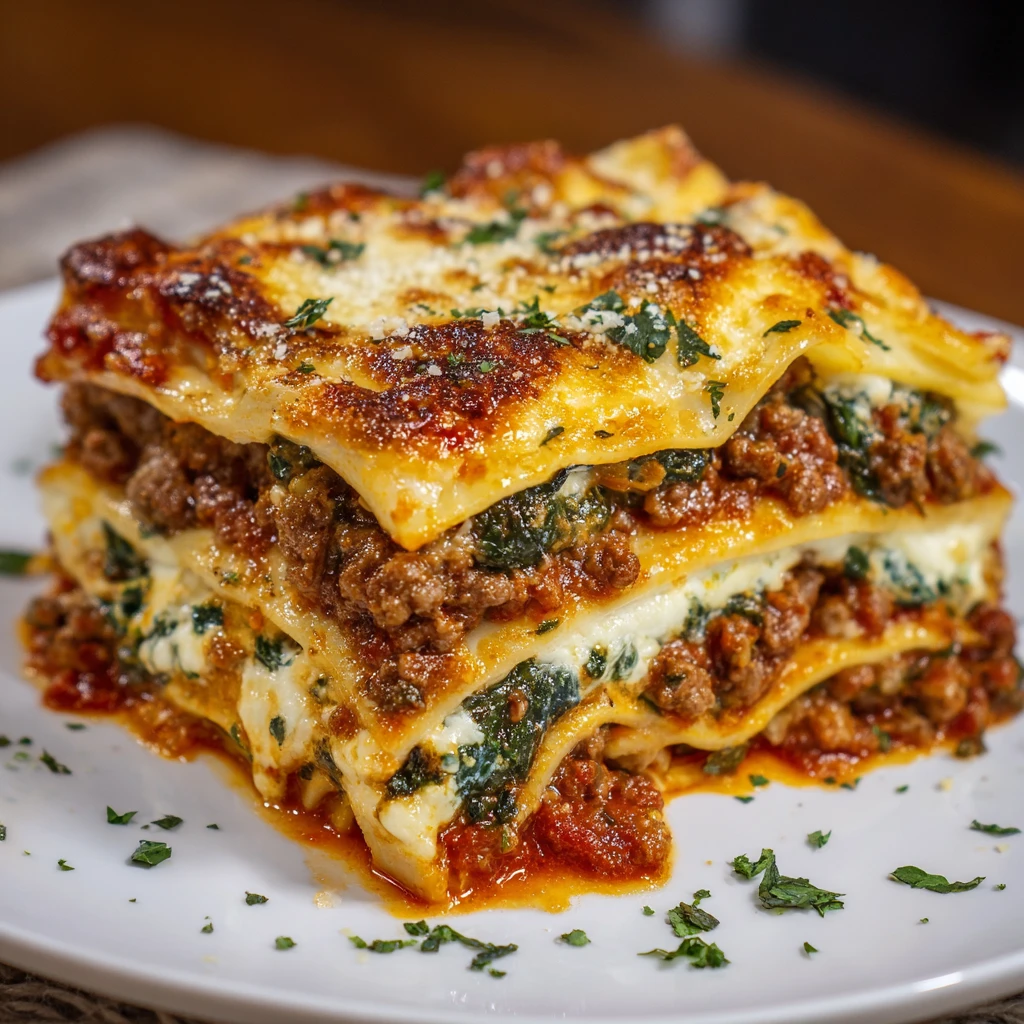
Beef and Spinach Lasagna
Ingredients
- 1 pound ground beef
- 1 large onion, chopped
- 2 cloves garlic, minced
- 1 (28 ounce) can crushed tomatoes
- 1 (15 ounce) can tomato sauce
- 1 (6 ounce) can tomato paste
- 1 teaspoon dried oregano
- 1 teaspoon dried basil
- 1/2 teaspoon salt
- 1/4 teaspoon black pepper
- 1 (10 ounce) package frozen spinach, thawed and squeezed dry
- 15 lasagna noodles
- 15 ounces ricotta cheese
- 1/2 cup grated Parmesan cheese
- 2 large eggs, lightly beaten
- 3 cups shredded mozzarella cheese
Step-by-Step
1. Preheat oven to 375 degrees F (190 degrees C).

2. In a large skillet, brown ground beef over medium-high heat. Drain off any excess grease.
3. Add the chopped onion and minced garlic to the skillet and cook until softened, about 5 minutes.
4. Stir in the crushed tomatoes, tomato sauce, tomato paste, oregano, basil, salt, and pepper. Bring to a simmer and cook for 15 minutes, stirring occasionally.
5. While the sauce is simmering, cook the lasagna noodles according to package directions. Drain and set aside.
6. In a medium bowl, combine the ricotta cheese, Parmesan cheese, and eggs. Mix well.
7. In a separate bowl, combine the spinach with 1 cup of the mozzarella cheese.
8. Spread a thin layer of the meat sauce in the bottom of a 9×13 inch baking dish.
9. Layer 5 lasagna noodles over the sauce.
10. Spread half of the ricotta cheese mixture over the noodles.
11. Sprinkle half of the spinach mixture over the ricotta cheese.
12. Spoon half of the remaining meat sauce over the spinach.
13. Repeat layers: noodles, ricotta cheese mixture, spinach mixture, and meat sauce.
14. Top with the remaining 5 lasagna noodles and the remaining mozzarella cheese.
15. Cover the baking dish with aluminum foil and bake for 25 minutes.
16. Remove the foil and bake for an additional 20-25 minutes, or until the cheese is melted and bubbly and the lasagna is heated through.
17. Let stand for 10-15 minutes before cutting and serving.
The Heart of the Dish: Assembling the Perfect Lasagna
Lasagna is more than just a layered pasta dish. It’s a symphony of flavors and textures. The assembly process is critical to ensure each bite is balanced and satisfying.
Ensuring Even Distribution
Evenly distributing the ingredients prevents any single layer from overpowering the others. This is especially important for the ricotta and spinach fillings.
Use a spatula or spoon to spread the cheese mixture thinly and consistently across the noodles. Avoid clumping, which can result in uneven cooking and flavor distribution.
Layering Techniques for Success
The order of the layers also influences the final result. Starting with a thin layer of meat sauce on the bottom prevents the noodles from sticking. This also creates a moisture barrier.
Don’t overload the lasagna with too much filling in each layer. Thinner, more uniform layers ensure the dish cooks evenly and holds its shape when sliced.
Noodle Considerations
There’s a debate: Do you pre-cook your lasagna noodles? Pre-cooking helps to reduce the overall baking time and ensures the noodles are tender.
If you choose not to pre-cook, ensure the sauce is sufficiently liquid to hydrate the noodles during baking. Use oven-ready noodles for an even easier process.
Flavor Boosters: Elevating Your Lasagna
While the basic recipe is delicious, there are many ways to customize your beef and spinach lasagna. Tweaking the sauce, cheese, or vegetable components can create a unique flavor profile.
Supercharging the Meat Sauce
Consider adding red wine to your meat sauce for a richer, more complex flavor. About a cup of dry red wine, simmered for 20-30 minutes, can make a big difference.
For a spicier kick, add a pinch of red pepper flakes to the sauce. Alternatively, use Italian sausage in place of or in addition to ground beef for a deeper savory flavor.
Cheese Variations for Depth
Experiment with different types of cheese in the ricotta mixture. Adding a bit of Pecorino Romano cheese can enhance the salty, savory notes.
Consider using a blend of mozzarella and provolone cheese on top for a more complex and stretchy topping. Fresh mozzarella, sliced thinly, also adds a creamy texture.
Vegetable Additions
Don’t limit yourself to just spinach. Other vegetables like mushrooms, zucchini, or bell peppers can add texture and nutritional value.
Sauté these vegetables with the onion and garlic at the beginning of the recipe. This softens them and enhances their flavor before they’re layered into the lasagna.
Cooking and Baking: Mastering the Art of the Bake
Proper cooking and baking are crucial for a perfectly cooked lasagna. Mastering temperature control and baking times ensures a bubbly, golden-brown masterpiece.
Temperature Control is Key
Baking at the right temperature ensures that all the layers cook evenly. Too high, and the top will burn before the inside is heated through. Too low, and the lasagna may become soggy.
375 degrees F (190 degrees C) is a good starting point. Adjust based on your oven and the dish’s appearance.
Baking Times and Techniques
Covering the lasagna with foil during the first part of baking prevents the cheese from browning too quickly. It also helps to trap moisture, ensuring the noodles cook properly.
Remove the foil during the last 20-30 minutes to allow the cheese to melt and brown beautifully. Watch closely to prevent burning.
Testing for Doneness
To test for doneness, insert a knife into the center of the lasagna. It should slide in easily with little resistance.
The lasagna should also be bubbly around the edges, and the cheese should be melted and lightly browned. Let it rest for 10-15 minutes before slicing to allow the layers to set.
Serving and Storage: Enjoying and Preserving Your Creation
Proper serving and storage techniques ensure your lasagna remains delicious and fresh. This includes cutting, reheating, and freezing.
Slicing and Serving
Let the lasagna cool slightly before slicing. This allows the layers to set, making it easier to cut clean slices.
Use a sharp knife to cut through the layers. A pizza cutter can also work well, especially for a large lasagna. Serve warm, garnished with fresh basil or parsley.
Reheating Leftovers
Leftover lasagna can be reheated in the oven or microwave. For the oven, cover the lasagna with foil and bake at 350 degrees F (175 degrees C) until heated through.
For the microwave, heat individual slices on medium power, checking frequently to prevent overheating. Add a splash of water to the plate to keep it moist.
Freezing for Future Enjoyment
Lasagna freezes well. To freeze, let it cool completely, then cut it into individual portions. Wrap each portion tightly in plastic wrap and then in aluminum foil.
Freeze for up to 2-3 months. To reheat, thaw in the refrigerator overnight and then bake as directed above.
Health and Nutrition: A Balanced Take on Lasagna
Lasagna can be a part of a balanced diet. Making informed choices about ingredients can help you create a healthier version of this classic dish.
Ingredient Swaps for Healthier Choices
Use lean ground beef or ground turkey to reduce the fat content. You can also substitute whole wheat lasagna noodles for added fiber.
Consider using part-skim ricotta cheese and low-fat mozzarella to further reduce the fat content.
Adding Vegetables for Nutrients
Increase the vegetable content by adding more spinach, mushrooms, or other vegetables. This adds vitamins, minerals, and fiber.
You can also sneak in pureed vegetables, such as carrots or butternut squash, into the tomato sauce for added nutrients without significantly altering the flavor.
Portion Control for a Balanced Diet
Be mindful of portion sizes. Lasagna is calorie-dense, so enjoying a moderate portion is important.
Serve lasagna with a side salad to add more vegetables and balance the meal.

FAQ: Common Questions About Beef and Spinach Lasagna
Here are answers to some frequently asked questions about making beef and spinach lasagna.
Can I use no-boil lasagna noodles?
Yes, no-boil lasagna noodles are a convenient option. Make sure the sauce is liquid enough to properly hydrate them during baking.
How do I prevent my lasagna from being watery?
Ensure you thoroughly drain the spinach and ground beef to remove excess moisture. Also, avoid over-layering the sauce.
Can I make lasagna ahead of time?
Yes, you can assemble the lasagna a day ahead of time and store it in the refrigerator. Add a few minutes to the baking time.
How long does lasagna last in the fridge?
Properly stored lasagna will last for 3-4 days in the refrigerator.
Can I freeze leftover lasagna?
Yes, lasagna freezes well. Wrap it tightly in plastic wrap and then in aluminum foil for best results.