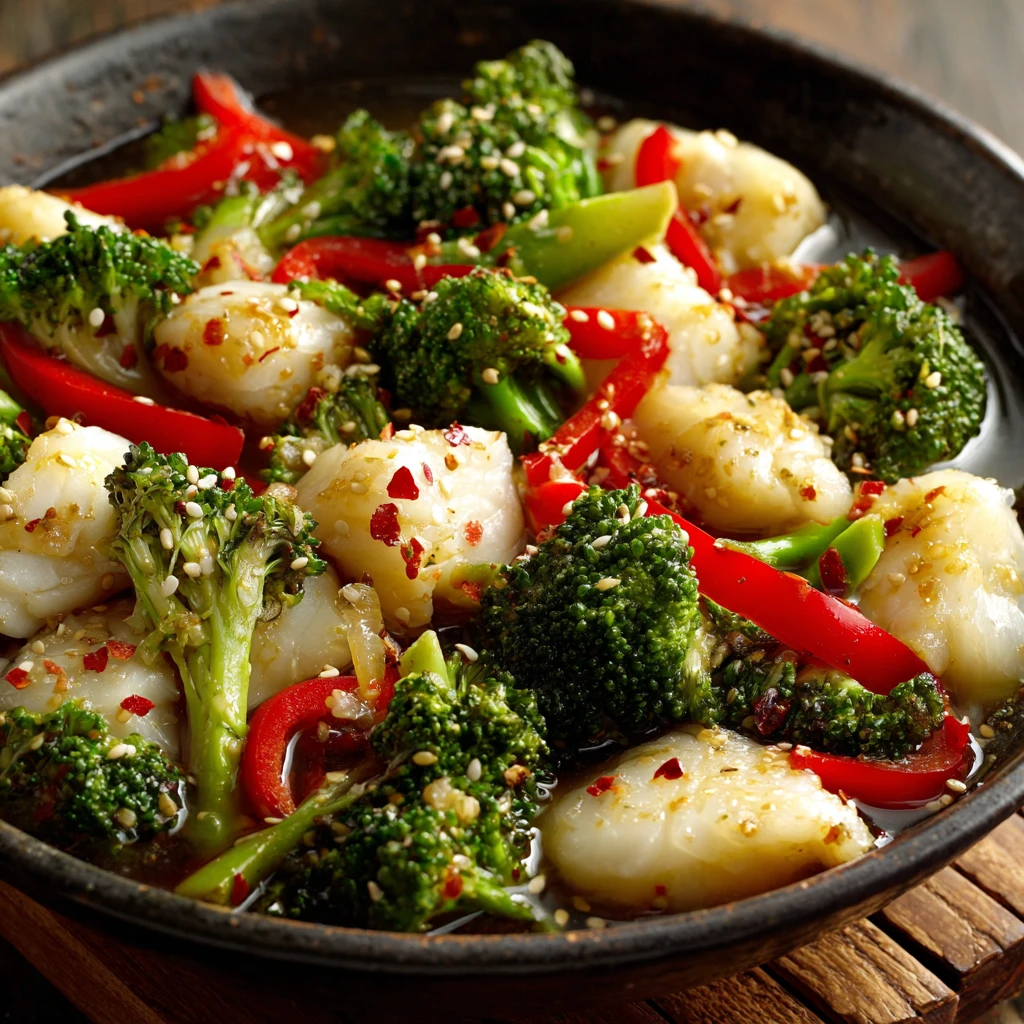
Broccoli and fillet Skillet
Ingredients
- 1 pound cod fillets (or similar white fish), cut into 1-inch pieces
- 1 large broccoli head, cut into florets
- 1 tablespoon olive oil
- 1 red bell pepper, sliced
- 2 cloves garlic, minced
- 1/4 cup chicken broth (low sodium)
- 2 tablespoons soy sauce (low sodium)
- 1 tablespoon cornstarch
- 1 teaspoon sesame oil
- 1/2 teaspoon ground ginger
- 1/4 teaspoon red pepper flakes (optional)
- Salt and pepper to taste
- Sesame seeds for garnish (optional)
- Cooked rice or quinoa for serving (optional)
Step-by-Step
1. In a small bowl, whisk together the chicken broth, soy sauce, cornstarch, sesame oil, and ginger. Set aside.

2. Heat the olive oil in a large skillet or wok over medium-high heat.
3. Add the broccoli florets and red bell pepper to the skillet. Cook, stirring occasionally, for 5-7 minutes, or until the broccoli is tender-crisp.
4. Add the minced garlic to the skillet and cook for another minute, until fragrant. Be careful not to burn the garlic.
5. Push the vegetables to one side of the skillet. Add the cod pieces to the empty space.
6. Cook the fish for 3-4 minutes per side, or until it is cooked through and flakes easily with a fork.
7. Pour the sauce mixture over the fish and vegetables. Bring to a simmer and cook for 2-3 minutes, or until the sauce has thickened slightly.
8. Stir in the red pepper flakes, if using. Season with salt and pepper to taste.
9. Garnish with sesame seeds, if desired.
10. Serve immediately over cooked rice or quinoa, if desired.
The Simplicity of Skillet Cooking
Skillet cooking offers a streamlined approach to meal preparation. It minimizes cleanup and maximizes flavor infusion. This Broccoli and Fish Skillet recipe perfectly embodies these advantages.
It delivers a healthy and delicious meal using just one pan.
### Why Choose a Skillet?
Skillets provide even heat distribution. This ensures that the fish and vegetables cook uniformly. They also simplify the searing and sauce-reduction process.
The convenience is undeniable. It’s a game-changer for busy weeknights.
Skillet cooking also allows for easy flavor layering. Each ingredient contributes to a harmonious and satisfying dish.
### Selecting the Right Skillet
A large non-stick skillet is ideal for this recipe. It prevents sticking and facilitates easy cleanup. Cast iron skillets also work well, distributing heat evenly.
Be sure your skillet is large enough to accommodate all the ingredients without overcrowding.
A crowded skillet can steam the food instead of searing it. This results in a less desirable texture and flavor.
### Tips for Skillet Success
Preheat your skillet thoroughly before adding any ingredients. This ensures proper searing and prevents sticking. Don’t overcrowd the pan. Work in batches if necessary.
Choosing Your Fish Wisely
The quality of the fish is paramount. Fresh, sustainably sourced cod fillets are highly recommended for this recipe. Other white fish options work too.
### Cod Alternatives
If cod is unavailable, consider using halibut, tilapia, or pollock. These are all mild-flavored white fish that cook quickly and evenly.
Adjust the cooking time based on the thickness of the fillets. Thicker fillets will require slightly longer cooking.
### Ensuring Freshness
Look for fish with firm flesh and a fresh, ocean-like smell. Avoid fish that appears dull or has a strong, fishy odor.
Fresh fish should be consumed within a day or two of purchase. Store it properly in the refrigerator to maintain its quality.
### Sustainable Seafood Choices
Choose fish that is certified sustainable by organizations. This helps protect marine ecosystems. Look for labels from reputable sources.
Elevating the Flavor Profile
While this recipe is delicious as is, there are several ways to customize it. Enhance the flavor to suit your personal preferences.
### Spice Variations
Experiment with different spices. Consider adding a pinch of smoked paprika, garlic powder, or onion powder.
A dash of curry powder can also add a unique and warming flavor. Adjust the amount of red pepper flakes to control the level of spiciness.
### Sauce Enhancements
Add a splash of lemon juice or lime juice to the sauce. This will brighten the flavors and add a touch of acidity.
A tablespoon of honey or maple syrup can add a subtle sweetness. Balance the savory flavors in the dish.
### Vegetable Additions
Feel free to add other vegetables to the skillet. Sliced mushrooms, snap peas, or water chestnuts would all be great additions.
Adjust the cooking time based on the type of vegetables you add. Add them at the beginning of the cooking process.
The Health Benefits of Broccoli and Fish
This Broccoli and Fish Skillet recipe is not only delicious. It’s also packed with nutrients. It offers a range of health benefits.
### Broccoli’s Nutritional Powerhouse
Broccoli is an excellent source of vitamins C and K. Also, it contains fiber and antioxidants.
It supports immune function, bone health, and digestive health. Broccoli is a versatile and nutritious vegetable.
### The Benefits of Fish
Fish is a lean source of protein. It is rich in omega-3 fatty acids.
Omega-3 fatty acids are beneficial for heart health, brain function, and reducing inflammation. Incorporating fish into your diet is a smart choice.
### A Balanced and Healthy Meal
This skillet recipe combines the nutritional benefits of broccoli and fish. This creates a well-rounded and healthy meal. It is low in calories and high in protein. It is a great option for weight management.
Serving Suggestions and Pairings
The Broccoli and Fish Skillet is a versatile dish. It pairs well with a variety of side dishes. It can be adapted to suit different dietary preferences.
### Complementary Side Dishes
Serve this skillet with cooked rice, quinoa, or couscous. These grains provide a healthy source of carbohydrates.
A simple side salad with a light vinaigrette is also a great option. Add a refreshing contrast to the richness of the skillet.
### Wine Pairings
Pair this dish with a crisp, dry white wine. Sauvignon Blanc or Pinot Grigio are excellent choices. The acidity of the wine complements the flavors of the fish and vegetables.
### Dietary Adaptations
For a low-carb option, serve the skillet over cauliflower rice. Adjust the recipe to accommodate dietary restrictions. This can include gluten-free or dairy-free diets.
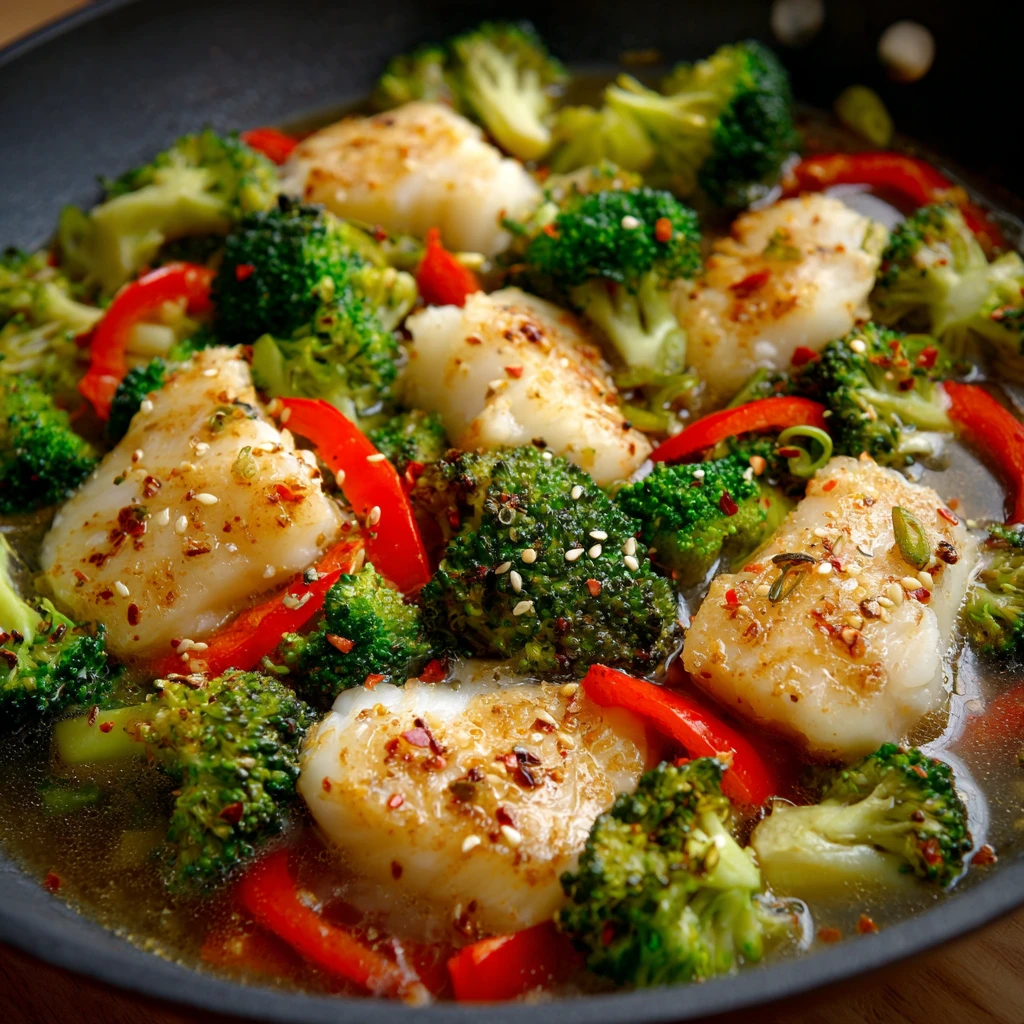
FAQ
Can I use frozen broccoli?
Yes, frozen broccoli florets can be used. Add them directly to the skillet. Cook until they are tender-crisp. Frozen broccoli may release more water. You may need to cook the sauce for a slightly longer time.
What other types of fish can I use?
Besides cod, you can use halibut, tilapia, or pollock. Ensure the fish is fresh. Adjust cooking times depending on the thickness of the fillets.
Can I make this dish ahead of time?
It’s best to serve this dish immediately after cooking. You can prepare the sauce ahead of time and store it in the refrigerator. Cook the fish and vegetables right before serving for optimal flavor and texture.
How do I store leftovers?
Store leftovers in an airtight container in the refrigerator for up to 2 days. Reheat gently in a skillet or microwave. Be careful not to overcook the fish.
Can I add other vegetables to this dish?
Yes, feel free to add other vegetables. Sliced mushrooms, snow peas, or carrots would all be great additions. Adjust cooking times accordingly.