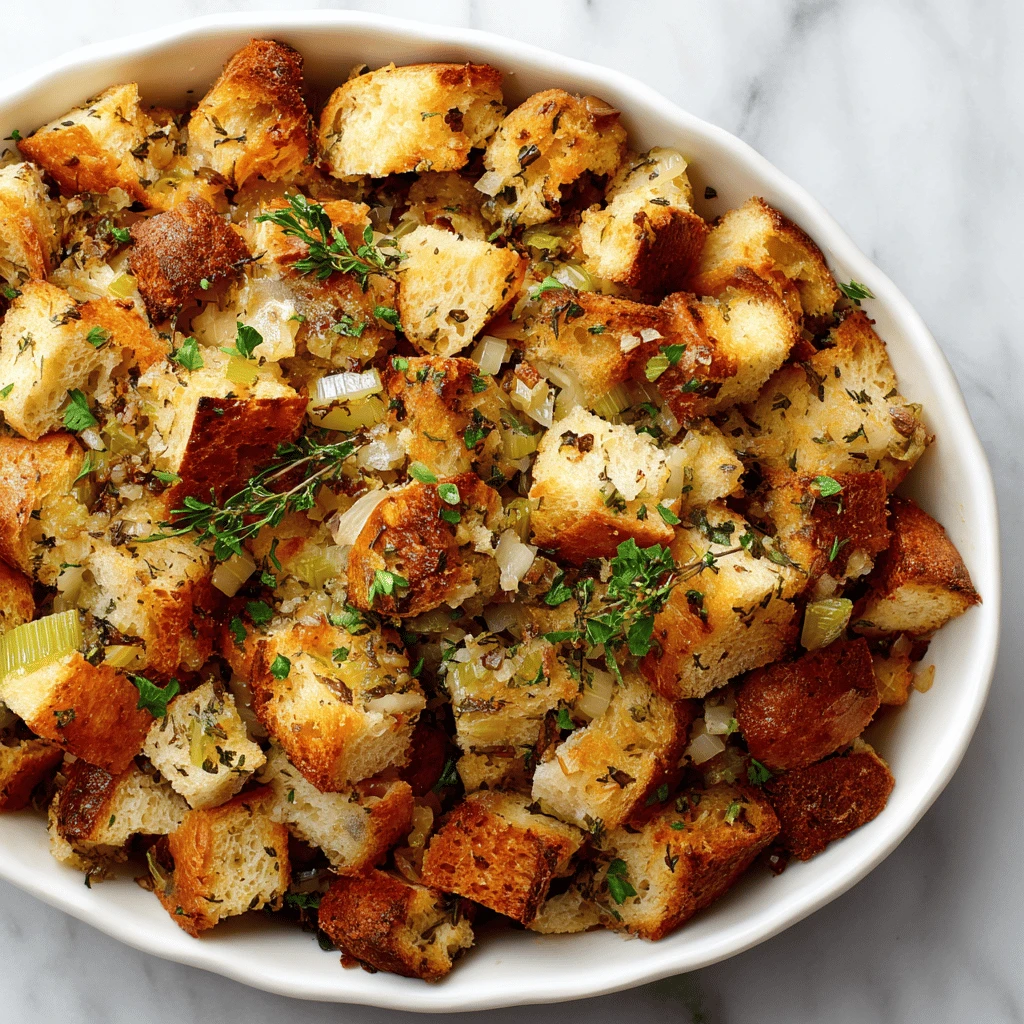
Classic Bread Stuffing for Thanksgiving
Ingredients
- 1 loaf (1 pound) day-old bread, such as Italian, French, or sourdough, cut into 1-inch cubes
- 1/2 cup (1 stick) unsalted butter
- 1 large onion, chopped
- 2 celery stalks, chopped
- 1 teaspoon dried sage
- 1/2 teaspoon dried thyme
- 1/4 teaspoon dried marjoram
- 1/4 cup chopped fresh parsley
- 4 cups chicken broth
- 1 large egg, lightly beaten
- Salt and freshly ground black pepper to taste
Step-by-Step
1. Preheat your oven to 350°F (175°C).
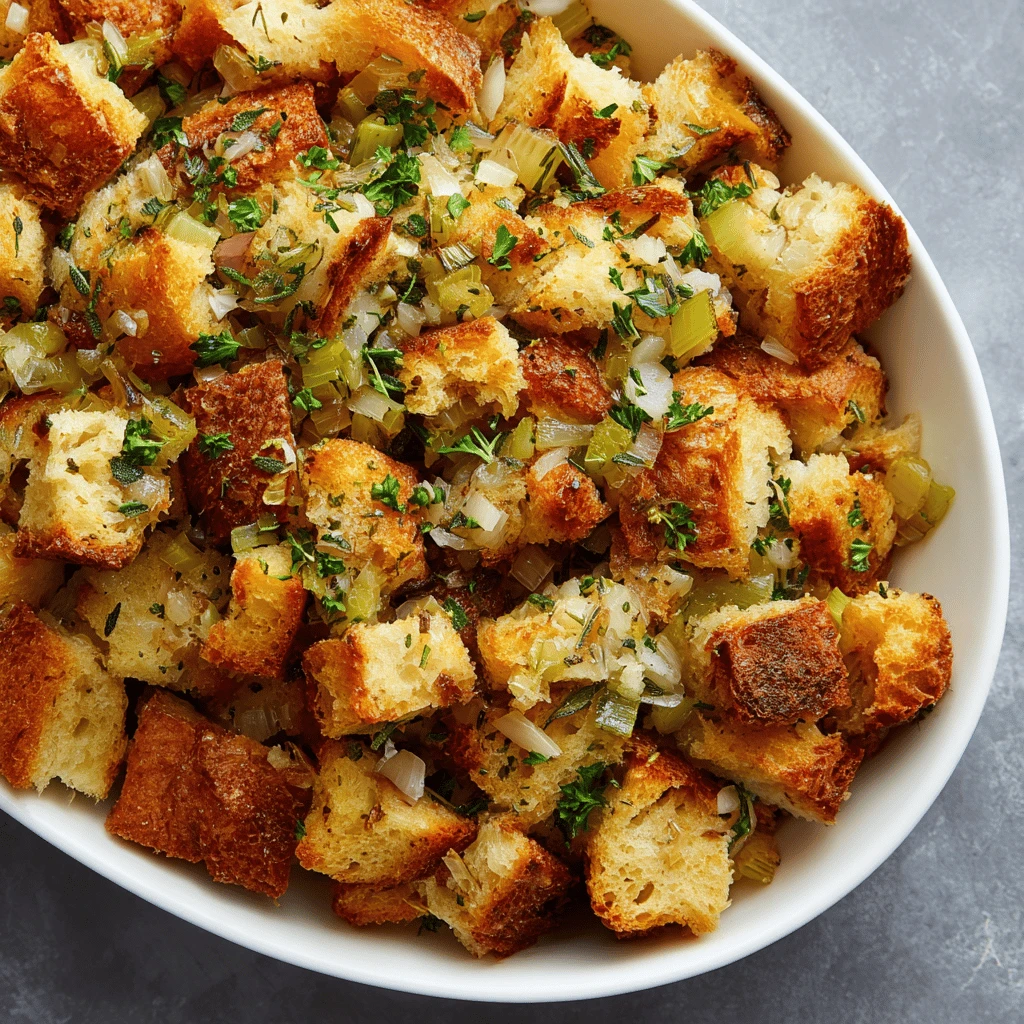
2. Spread the bread cubes on a baking sheet and bake for 10-15 minutes, or until lightly toasted. This helps prevent the stuffing from becoming soggy. Remove from oven and set aside.
3. In a large skillet or Dutch oven, melt the butter over medium heat.
4. Add the onion and celery and cook until softened, about 5-7 minutes.
5. Stir in the sage, thyme, and marjoram. Cook for another minute until fragrant.
6. Transfer the toasted bread cubes to a large bowl.
7. Pour the cooked onion and celery mixture over the bread cubes.
8. Add the chopped parsley and toss to combine.
9. In a separate bowl, whisk together the chicken broth and egg.
10. Pour the chicken broth mixture over the bread mixture. Gently toss to moisten evenly. Do not overmix.
11. Season with salt and pepper to taste.
12. Transfer the stuffing to a greased 9×13 inch baking dish.
13. Cover with foil and bake for 25 minutes.
14. Remove the foil and bake for an additional 20-25 minutes, or until golden brown and heated through.
15. Let the stuffing rest for 10 minutes before serving.
Mastering Your Thanksgiving Stuffing
Thanksgiving stuffing is a culinary centerpiece. It complements turkey and other holiday dishes. Many consider it the best part of the Thanksgiving meal.
Selecting the Perfect Bread
The bread is the foundation of any great stuffing. Choosing the right type is crucial. Day-old bread works best.
Italian, French, or sourdough are excellent choices. These breads have a good texture. They absorb moisture well. Avoid using soft, enriched breads. These can become mushy.
Aromatics and Herbs: Building Flavor
Aromatics and herbs elevate the flavor profile. Onions and celery are essential. They provide a savory base.
Sage, thyme, and marjoram are classic Thanksgiving herbs. Fresh parsley adds a bright, herbaceous note. Adjust the herb quantities to your preference.
Binding and Moistening the Stuffing
Chicken broth is the most common liquid used. It adds richness and flavor. Some recipes also call for a beaten egg. The egg acts as a binder.
It helps the stuffing hold its shape. Be careful not to over-saturate the bread. The stuffing should be moist, not soggy.
Troubleshooting Common Stuffing Problems
Even experienced cooks encounter stuffing issues. Understanding these problems helps avoid them. Knowing how to fix them ensures success.
Avoiding Soggy Stuffing
Soggy stuffing is a common complaint. To avoid this, use day-old bread. Toasting the bread is crucial.
Don’t over-saturate the bread with broth. Add the broth gradually. Mix gently.
Preventing Dry Stuffing
Dry stuffing is equally undesirable. Ensure sufficient moisture by using enough broth. Covering the baking dish with foil initially helps.
This traps steam and keeps the stuffing moist. Remove the foil for the last part of baking. This allows the top to brown.
Enhancing Flavor
If your stuffing lacks flavor, consider adding more aromatics. Increase the amount of onion and celery. Use a higher quality chicken broth.
Experiment with different herbs and spices. Sausage or mushrooms can add a savory depth. A splash of dry sherry or white wine can also enhance the flavor.
Variations and Add-Ins for a Unique Twist
Classic stuffing is delicious. However, there are many ways to customize it. Add-ins can create a unique and memorable dish.
Sausage and Cranberry Stuffing
Adding cooked sausage and dried cranberries provides a delightful contrast. The savory sausage complements the tart cranberries. Cook the sausage before adding it to the stuffing mixture.
Use a good quality sausage, such as Italian sausage. Add the cranberries along with the herbs and parsley.
Mushroom and Walnut Stuffing
This variation adds an earthy and nutty flavor. Sauté the mushrooms until they are tender. Use a variety of mushrooms for a more complex flavor.
Chop the walnuts and toast them lightly. Add the mushrooms and walnuts to the stuffing mixture.
Cornbread Stuffing
Substitute some or all of the bread with crumbled cornbread. This adds a slightly sweet and crumbly texture. Use a homemade or store-bought cornbread.
Crumble the cornbread and toast it along with the other bread cubes. Adjust the amount of broth as needed. Cornbread absorbs more moisture.
Make-Ahead Tips and Storage Instructions
Thanksgiving is a busy day. Preparing the stuffing in advance can save time. Proper storage ensures it stays fresh.
Preparing the Stuffing Ahead of Time
You can assemble the stuffing a day or two in advance. Prepare the bread, sauté the vegetables, and mix all the ingredients. Store the unbaked stuffing in a covered container in the refrigerator.
Add the broth just before baking. This prevents the bread from becoming too soggy. You may need to add a few minutes to the baking time.
Storing Leftover Stuffing
Store leftover stuffing in an airtight container in the refrigerator. It will keep for 3-4 days. Reheat the stuffing in the oven or microwave.
Add a little broth or water to prevent it from drying out. You can also freeze leftover stuffing. Thaw it in the refrigerator overnight before reheating.
Can you freeze uncooked stuffing?
Yes, you can freeze uncooked stuffing. Assemble the stuffing as directed. Do not add the broth.
Wrap it tightly in plastic wrap and then foil. Freeze for up to 2 months. Thaw completely in the refrigerator before adding the broth and baking.
Pairing Stuffing with Your Thanksgiving Menu
Stuffing complements many Thanksgiving dishes. Consider how it fits into your overall menu. Some combinations work better than others.
Complementary Flavors
Stuffing pairs well with turkey, mashed potatoes, and gravy. The savory flavors of the stuffing complement the richness of the turkey. Cranberry sauce provides a sweet and tart contrast.
Green bean casserole and sweet potato casserole are also popular Thanksgiving sides. Choose sides that balance the flavors and textures of the meal.
Serving Suggestions
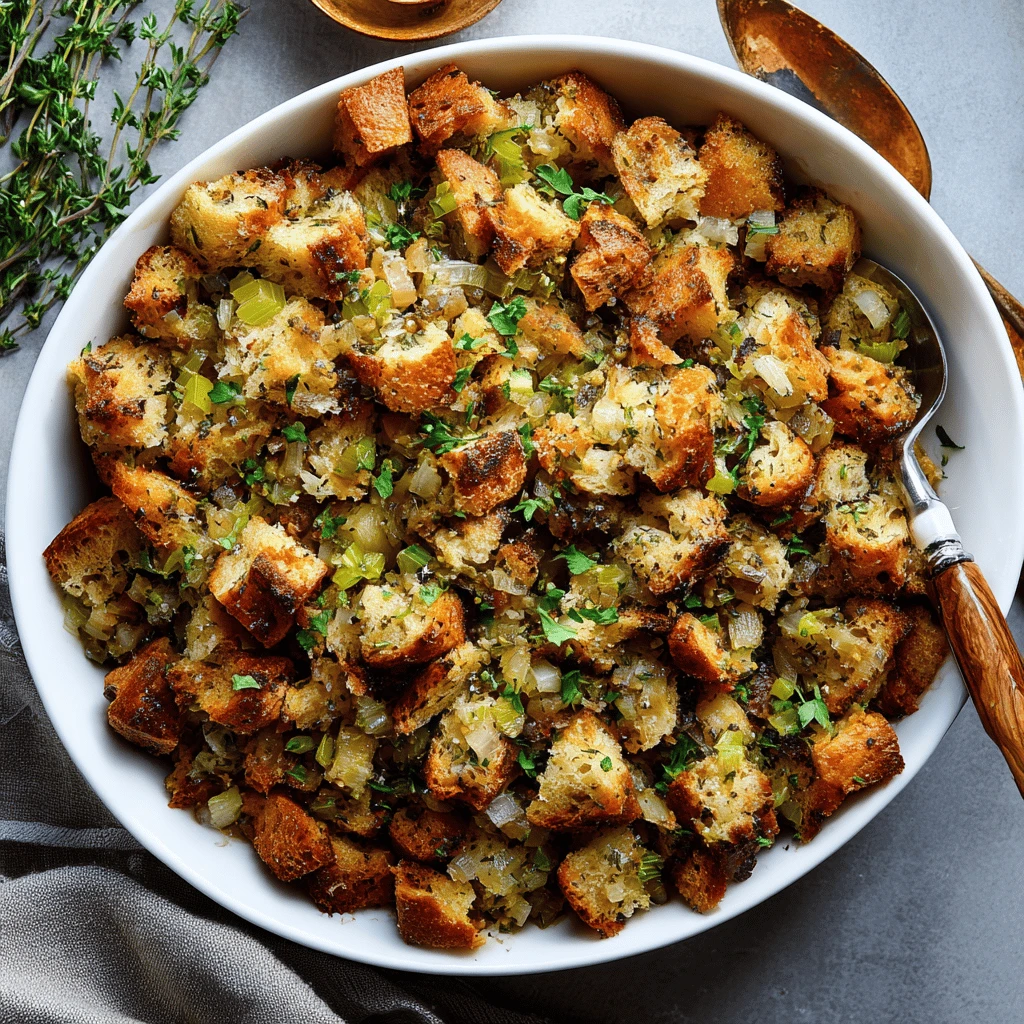
Serve the stuffing hot. Garnish it with fresh parsley or thyme. You can also serve it alongside a dollop of cranberry sauce.
Arrange the stuffing attractively on a platter. This makes it more appealing. Ensure there is enough for everyone to enjoy.
FAQ
Should I bake stuffing inside the turkey?
Baking stuffing inside the turkey is a matter of preference. It can add flavor to the turkey. However, it also increases the cooking time. It also poses a food safety risk if the stuffing doesn’t reach a safe internal temperature. It is generally safer to bake the stuffing separately.
What kind of bread is best for stuffing?
Day-old bread, such as Italian, French, or sourdough, is best for stuffing. These breads have a good texture. They absorb moisture well. Avoid using soft, enriched breads, as these can become mushy.
How do I keep my stuffing from being dry?
To prevent dry stuffing, use enough broth. Cover the baking dish with foil initially. Remove the foil for the last part of baking to allow the top to brown.
How do I keep my stuffing from being soggy?
To avoid soggy stuffing, use day-old bread. Toast the bread before adding it to the other ingredients. Don’t over-saturate the bread with broth.
Can I make stuffing ahead of time?
Yes, you can assemble the stuffing a day or two in advance. Store the unbaked stuffing in a covered container in the refrigerator. Add the broth just before baking.