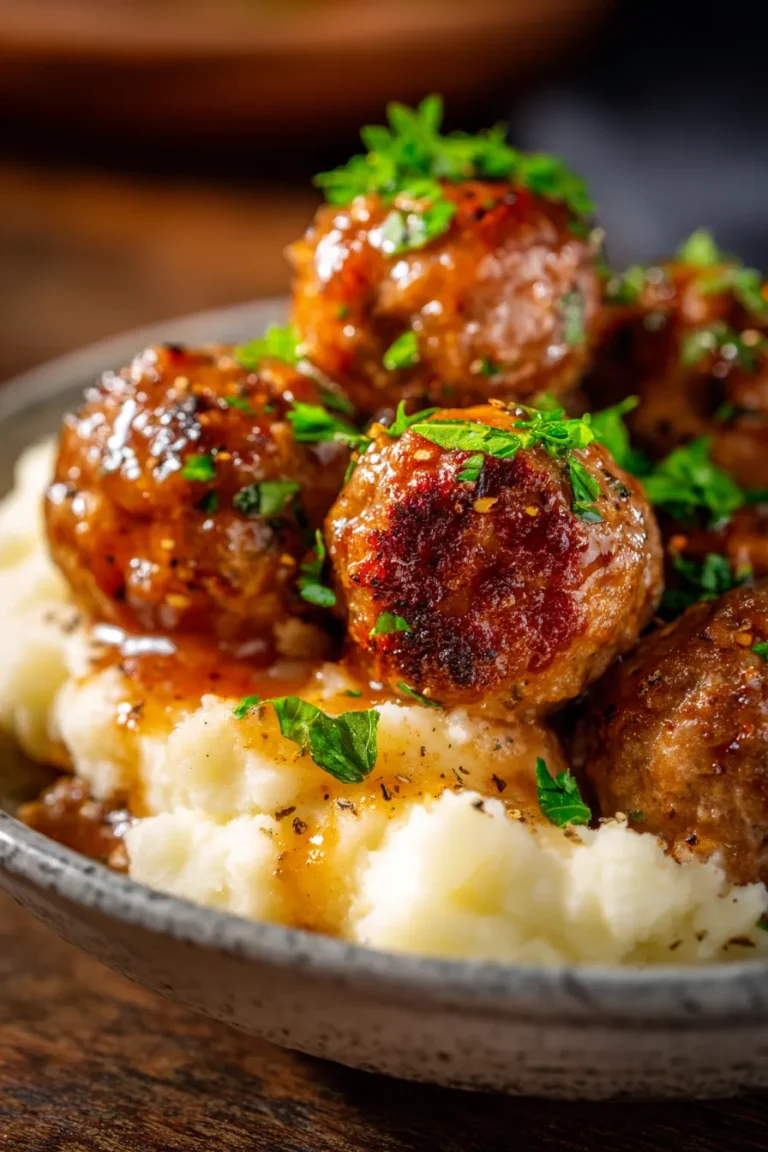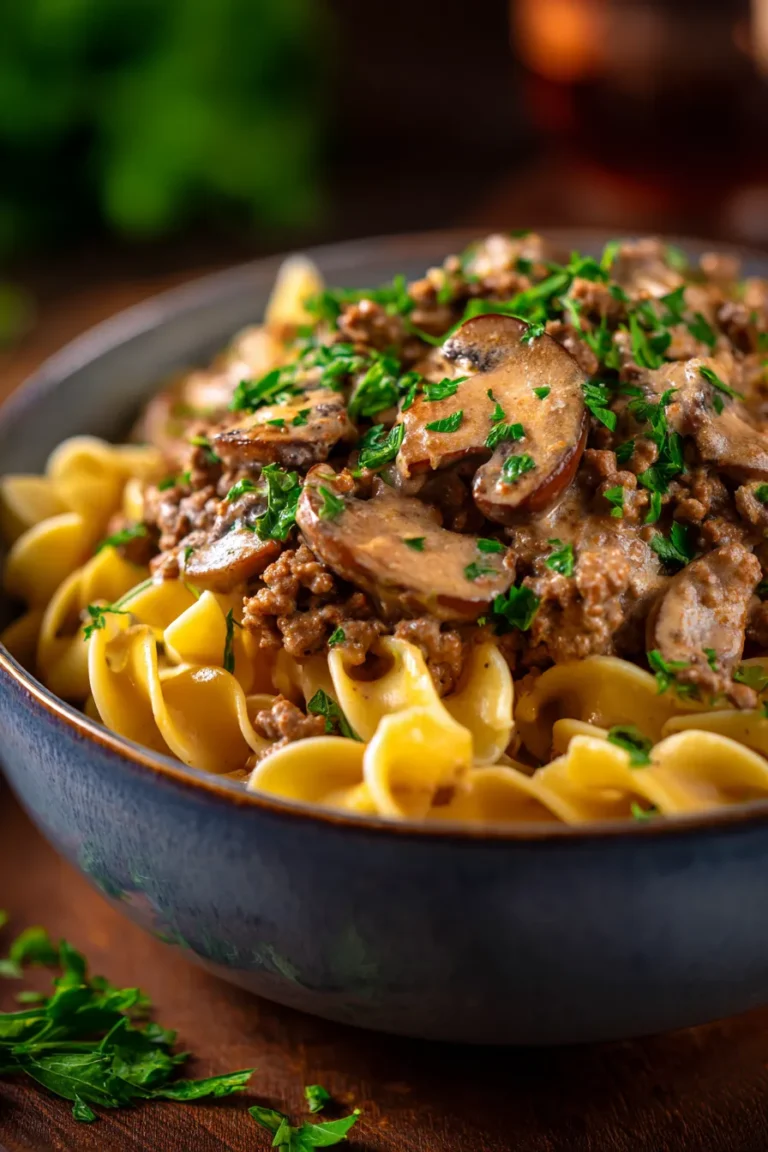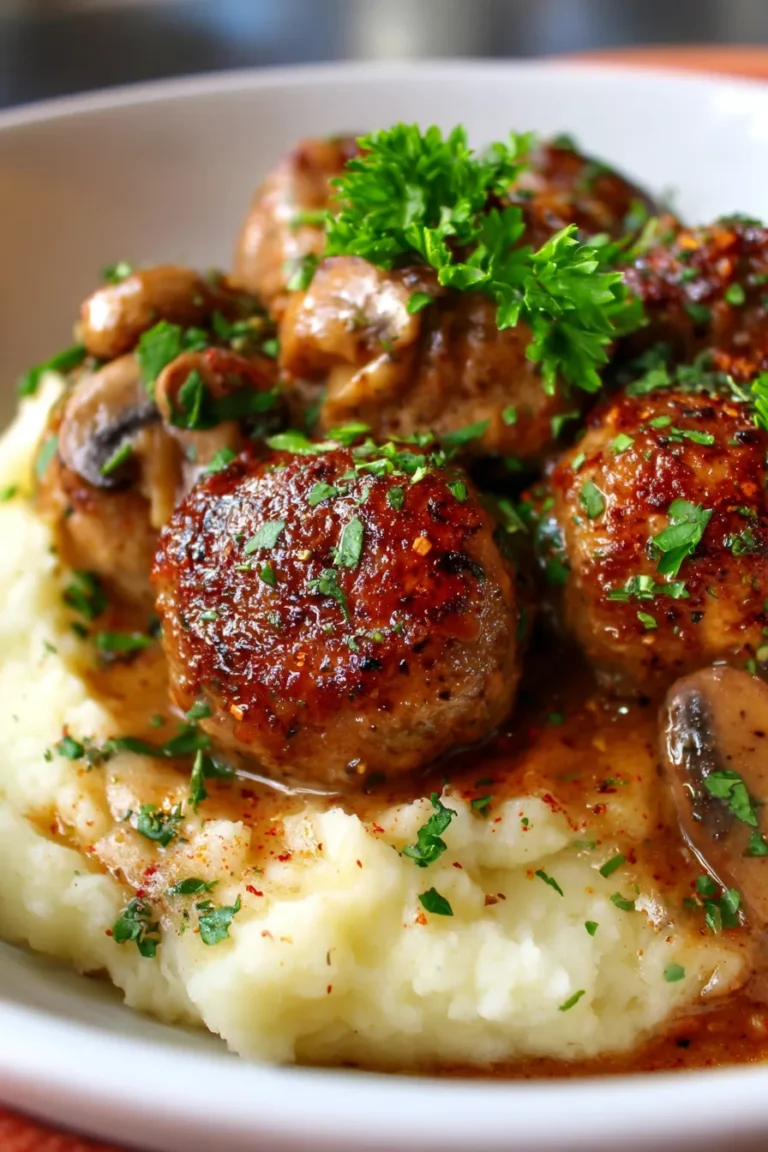

Easy Recipe Beef and Mushroom Skillet
Ingredients
- 1 pound ground beef
- 8 ounces sliced mushrooms
- 1 medium onion, chopped
- 2 cloves garlic, minced
- 1/2 cup beef broth
- 1/4 cup Worcestershire sauce
- 2 tablespoons all-purpose flour
- 1 tablespoon olive oil
- 1 teaspoon dried thyme
- 1/2 teaspoon salt
- 1/4 teaspoon black pepper
- Cooked egg noodles, rice, or mashed potatoes for serving (optional)
- Fresh parsley, chopped (for garnish)
Step-by-Step
1. Heat olive oil in a large skillet over medium-high heat.
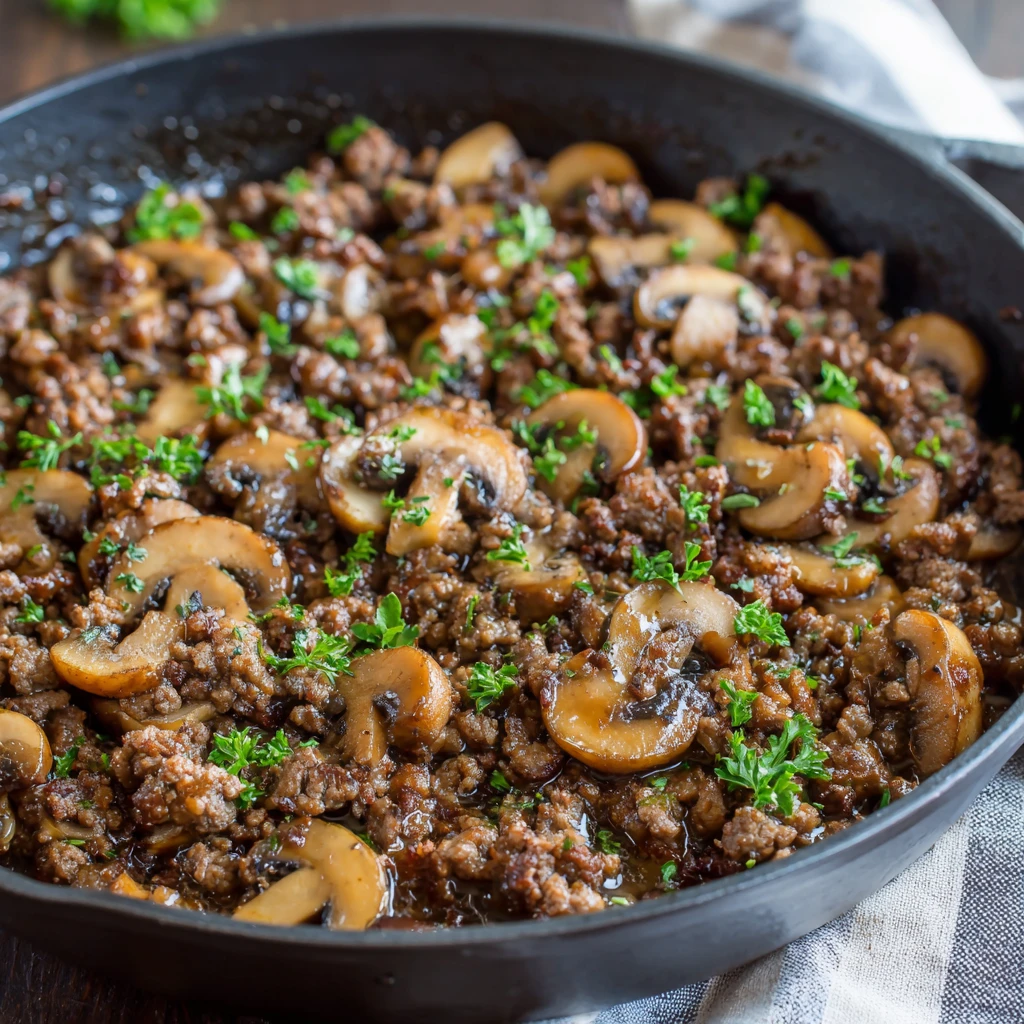
2. Add ground beef and cook, breaking it up with a spoon, until browned. Drain off any excess grease.
3. Add chopped onion and cook until softened, about 3-5 minutes.
4. Stir in minced garlic and cook for 1 minute more until fragrant.
5. Add sliced mushrooms to the skillet and cook until softened and browned, about 5-7 minutes.
6. In a small bowl, whisk together beef broth, Worcestershire sauce, flour, thyme, salt, and pepper.
7. Pour the sauce mixture into the skillet with the beef and mushrooms.
8. Bring to a simmer and cook until the sauce has thickened, about 3-5 minutes.
9. Serve hot over cooked egg noodles, rice, or mashed potatoes, if desired.
10. Garnish with fresh parsley before serving.
Elevating Your Beef and Mushroom Skillet
This easy beef and mushroom skillet is a fantastic weeknight meal, but with a few simple tweaks, you can take it to the next level. Let’s explore some ways to enhance the flavor and presentation of this classic dish.
Adding Depth of Flavor
Consider adding a splash of dry red wine to the skillet after browning the beef. Allow the wine to reduce slightly before adding the other ingredients. This will add a richness and complexity to the sauce.
A bay leaf simmered in the sauce can also subtly enhance the savory notes. Remember to remove it before serving.
A teaspoon of Dijon mustard stirred into the sauce adds a tangy depth that complements the beef and mushrooms beautifully.
Mushroom Variations
While button mushrooms are a readily available and affordable option, experimenting with different types of mushrooms can significantly impact the flavor profile.
Cremini mushrooms, also known as baby bellas, offer a deeper, earthier flavor than button mushrooms. Shiitake mushrooms, with their umami richness, provide a more pronounced savory taste.
For a truly luxurious experience, consider adding a handful of chopped porcini mushrooms. Their intense, nutty flavor will elevate the dish to gourmet status.
Serving Suggestions and Pairings
While egg noodles, rice, and mashed potatoes are excellent accompaniments, don’t be afraid to explore other options.
Creamy polenta provides a comforting and flavorful base for the skillet. Crusty bread, perfect for soaking up the delicious sauce, is always a welcome addition.
For a healthier option, serve the skillet over cauliflower rice or quinoa.
This beef and mushroom skillet pairs well with a variety of side dishes. A simple green salad with a vinaigrette dressing provides a refreshing contrast to the richness of the skillet. Steamed green beans or roasted asparagus are also excellent choices.
A glass of medium-bodied red wine, such as Pinot Noir or Merlot, complements the flavors of the dish beautifully.
Beef and Mushroom Skillet: A Nutritional Overview
Understanding the nutritional content of your meals is essential for maintaining a balanced diet. Let’s break down the nutritional components of this beef and mushroom skillet.
Protein Powerhouse
Beef is an excellent source of protein, which is crucial for building and repairing tissues, supporting immune function, and providing energy.
Mushrooms also contribute a small amount of protein, adding to the overall protein content of the dish.
Vitamins and Minerals
Mushrooms are packed with essential vitamins and minerals, including B vitamins (riboflavin, niacin, and pantothenic acid), which play a vital role in energy metabolism. They are also a good source of selenium, an antioxidant that helps protect against cell damage.
Beef provides iron, which is essential for carrying oxygen throughout the body, and zinc, which supports immune function and wound healing.
Carbohydrate Considerations
The carbohydrate content of the skillet depends on the serving base you choose. Egg noodles, rice, and mashed potatoes will add a significant amount of carbohydrates to the meal.
Choosing cauliflower rice or quinoa will reduce the carbohydrate content while still providing a satisfying base.
Fat Content
The fat content of the dish comes primarily from the ground beef. Choosing lean ground beef will help reduce the overall fat content.
You can also trim any excess fat from the beef after cooking to further reduce the fat content.
Making it Healthier
To make this dish even healthier, consider using extra-lean ground beef, increasing the amount of vegetables, and using whole wheat pasta or brown rice.
You can also reduce the sodium content by using low-sodium beef broth and limiting the amount of salt added to the dish.
Tips and Tricks for Skillet Success
Mastering the beef and mushroom skillet is all about understanding the nuances of the recipe and employing a few key techniques. Here are some tips and tricks to help you achieve skillet perfection.
Achieving the Perfect Sear
A good sear on the beef is crucial for developing deep, savory flavors. Make sure the skillet is hot before adding the beef, and avoid overcrowding the pan. Brown the beef in batches if necessary.
Don’t move the beef around too much while it’s searing; allow it to develop a nice crust before flipping it.
Mushroom Mastery
Don’t wash mushrooms before cooking them, as they will absorb water and become soggy. Instead, wipe them clean with a damp cloth.
Cook the mushrooms until they are nicely browned and have released their moisture. This will concentrate their flavor.
Sauce Secrets
Whisk the flour thoroughly into the beef broth to prevent lumps from forming in the sauce.
Simmer the sauce until it has thickened to your desired consistency. If the sauce is too thick, add a little more beef broth. If it’s too thin, simmer it for a few more minutes.
Skillet Selection
A cast iron skillet is ideal for this recipe because it distributes heat evenly and retains heat well, resulting in perfectly seared beef and browned mushrooms.
If you don’t have a cast iron skillet, a stainless steel skillet or a nonstick skillet will also work.
Storage and Reheating
Store any leftover beef and mushroom skillet in an airtight container in the refrigerator for up to 3-4 days.
Reheat the skillet in a skillet over medium heat, adding a splash of beef broth or water if necessary to prevent it from drying out. You can also reheat it in the microwave.
Variations and Adaptations of the Classic Skillet
The beauty of this beef and mushroom skillet lies in its versatility. It’s a blank canvas that can be adapted to suit your preferences and dietary needs. Let’s explore some variations and adaptations that you can try.
Creamy Mushroom Sauce
For a richer, more decadent version, add a dollop of sour cream or cream cheese to the skillet at the end of cooking. Stir until melted and smooth.
A splash of heavy cream or half-and-half will also add richness and creaminess to the sauce.
Spicy Skillet
Add a pinch of red pepper flakes or a dash of hot sauce to the skillet for a touch of heat.
Chopped jalapenos or serrano peppers can also be added for a more intense spicy kick.
Vegetarian Skillet
Replace the ground beef with lentils or crumbled vegetarian ground beef for a vegetarian-friendly version.
Add extra vegetables, such as bell peppers, zucchini, or spinach, to the skillet for added flavor and nutrition.
Gluten-Free Adaptation
Use gluten-free flour or cornstarch to thicken the sauce for a gluten-free version.
Serve the skillet over gluten-free pasta, rice, or mashed potatoes.
Wine Pairing Options
Pair this recipe with a flavorful red wine like Cabernet Sauvignon or a Merlot. The rich flavors of the wine complement the savory taste of the dish.
Low-Carb Skillet
Serve over cauliflower rice for a low-carb variation. You can add other low-carb vegetables to make it more filling as well.
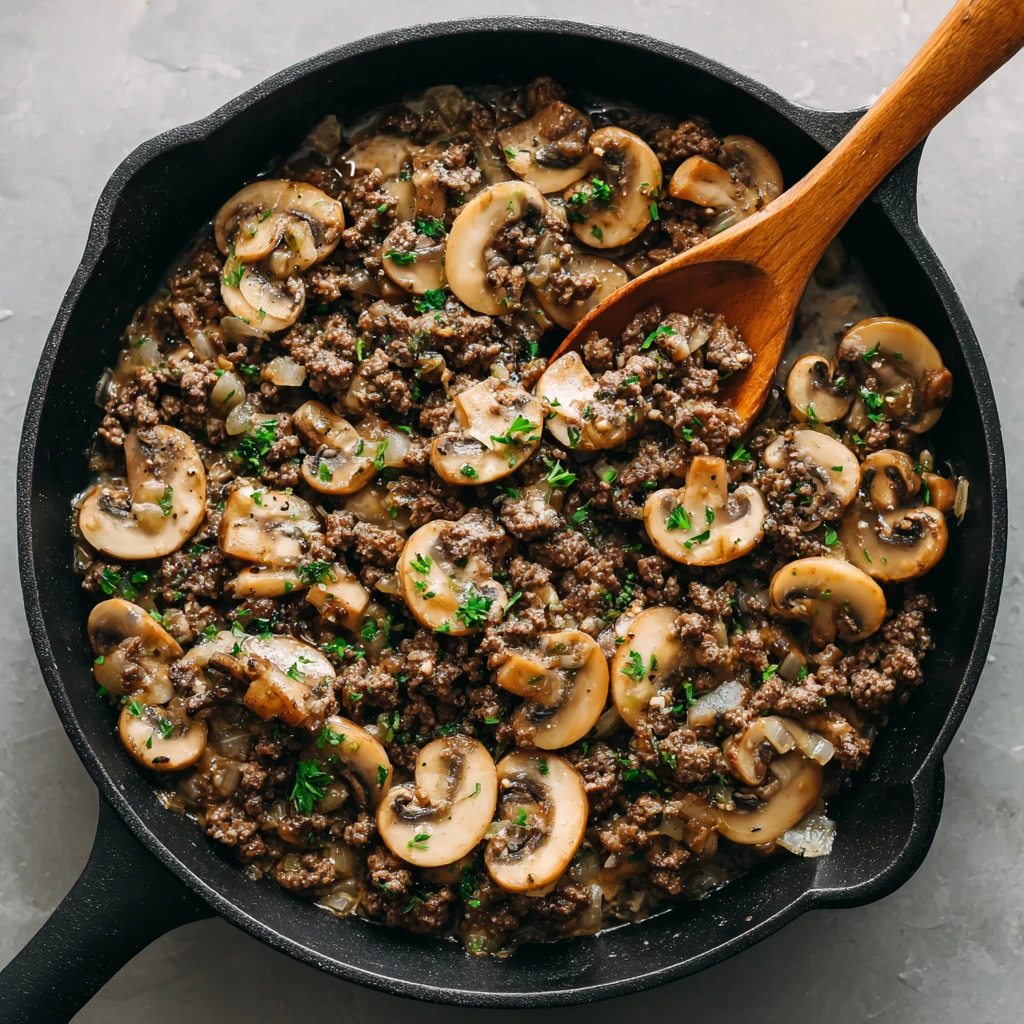
FAQ About Beef and Mushroom Skillet
Here are some frequently asked questions about making the perfect beef and mushroom skillet.
Can I use different types of beef?
Yes, you can use different types of ground beef depending on your preference. Lean ground beef is a healthier option, while ground sirloin will provide a richer flavor. Ground chuck also works well.
Can I freeze the beef and mushroom skillet?
Yes, you can freeze it. Allow it to cool completely before transferring it to a freezer-safe container. Freeze for up to 2-3 months. Thaw overnight in the refrigerator before reheating.
What other vegetables can I add?
Bell peppers, carrots, celery, peas, and spinach are all great additions.
Can I make this in a slow cooker?
Yes, you can adapt this recipe for a slow cooker. Brown the beef and onions first, then transfer everything to the slow cooker. Cook on low for 6-8 hours or on high for 3-4 hours. Thicken the sauce with a cornstarch slurry (cornstarch mixed with cold water) during the last 30 minutes of cooking.
How do I prevent the mushrooms from being soggy?
Don’t wash them! Wipe them clean instead. Cook them over medium-high heat until they release their moisture and begin to brown.