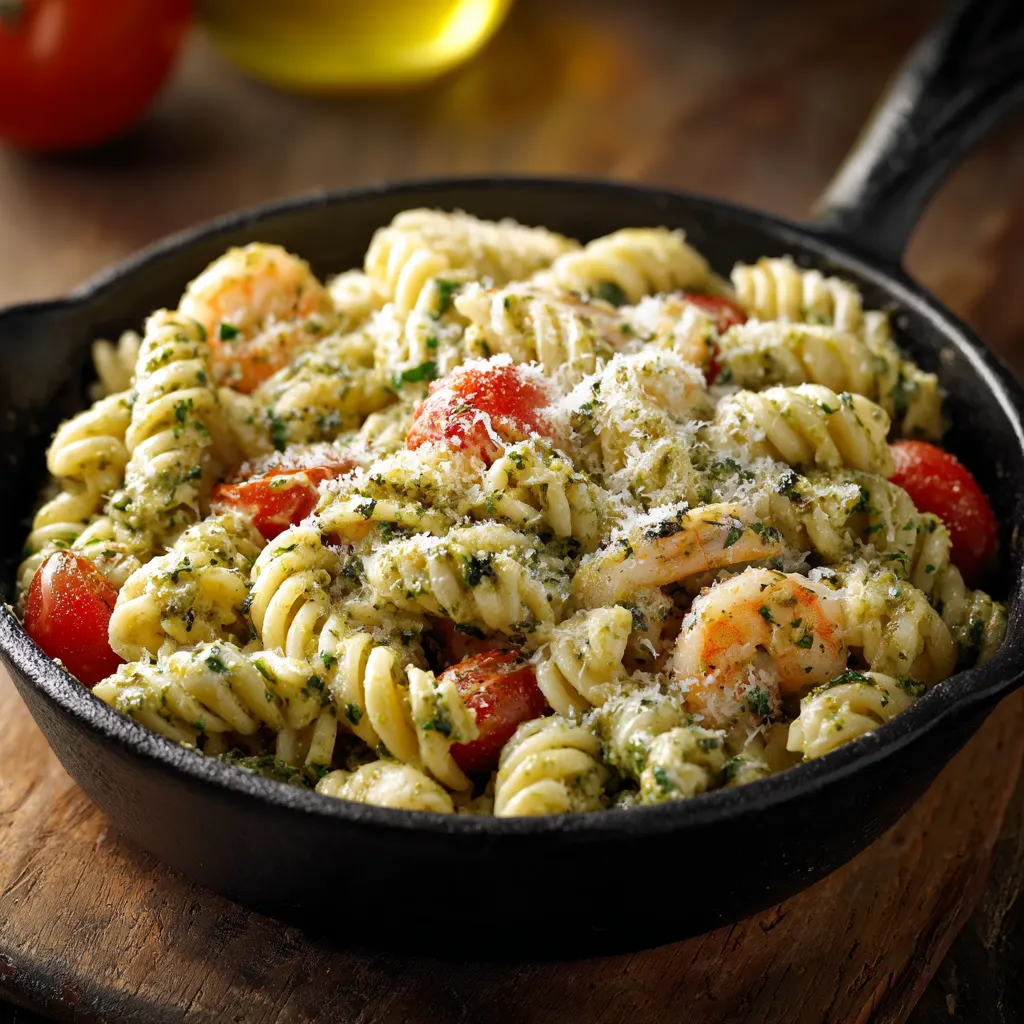
Easy Recipe Creamy Pesto Pasta
Ingredients
- 1 pound pasta (penne, fusilli, rotini, or your favorite shape)
- 1/2 cup pesto (store-bought or homemade)
- 1/2 cup heavy cream
- 1/4 cup grated Parmesan cheese, plus more for serving
- 2 tablespoons butter
- 2 cloves garlic, minced
- Salt and black pepper to taste
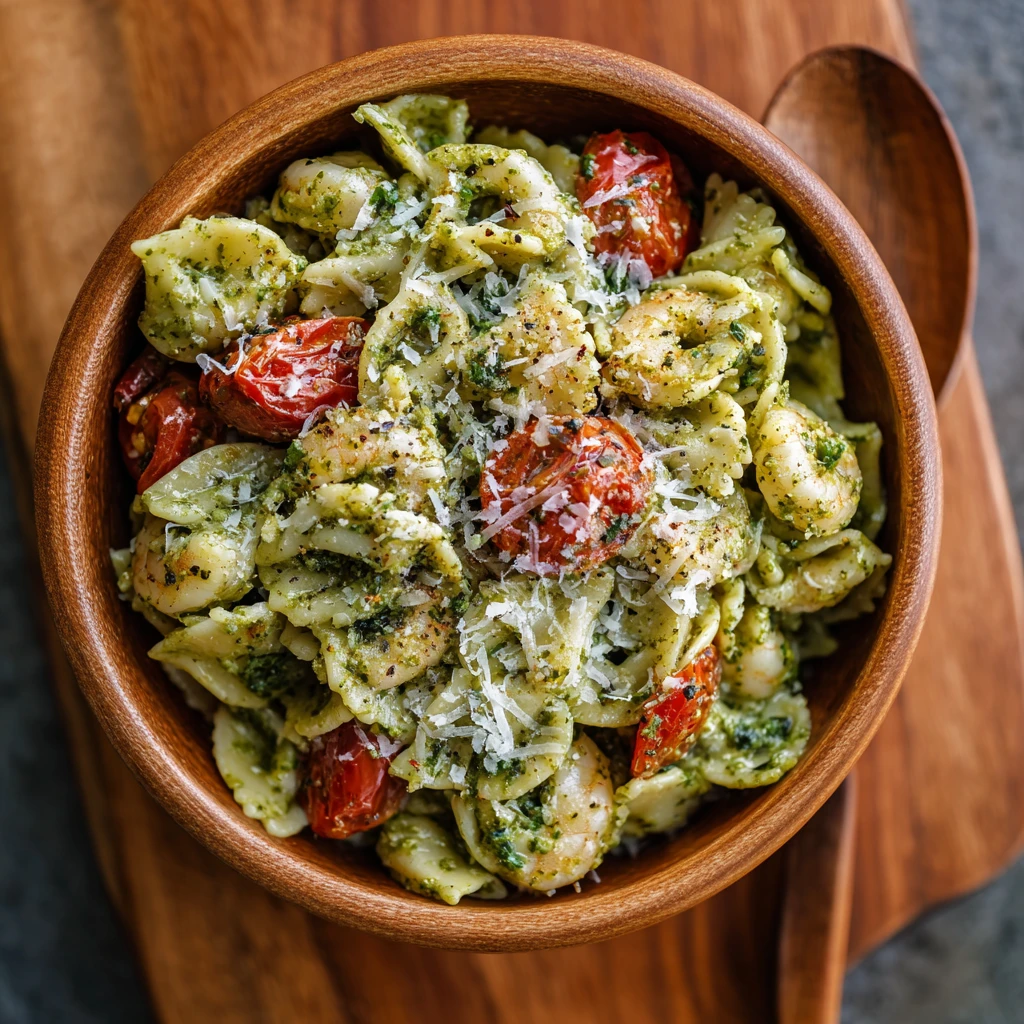
- Optional: cherry tomatoes, spinach, chicken, shrimp, or pine nuts for garnish
Step-by-Step
1. Bring a large pot of salted water to a boil. Add the pasta and cook according to package directions until al dente. Reserve about 1 cup of pasta water before draining.
2. While the pasta is cooking, melt the butter in a large skillet over medium heat. Add the minced garlic and cook for about 1 minute, until fragrant. Be careful not to burn the garlic.
3. Reduce the heat to low and stir in the pesto and heavy cream. Simmer for 2-3 minutes, stirring constantly, until the sauce is heated through.
4. Stir in the Parmesan cheese until melted and smooth. Season with salt and black pepper to taste.
5. Add the drained pasta to the skillet with the pesto cream sauce. Toss to coat. If the sauce is too thick, add a little of the reserved pasta water until it reaches your desired consistency.
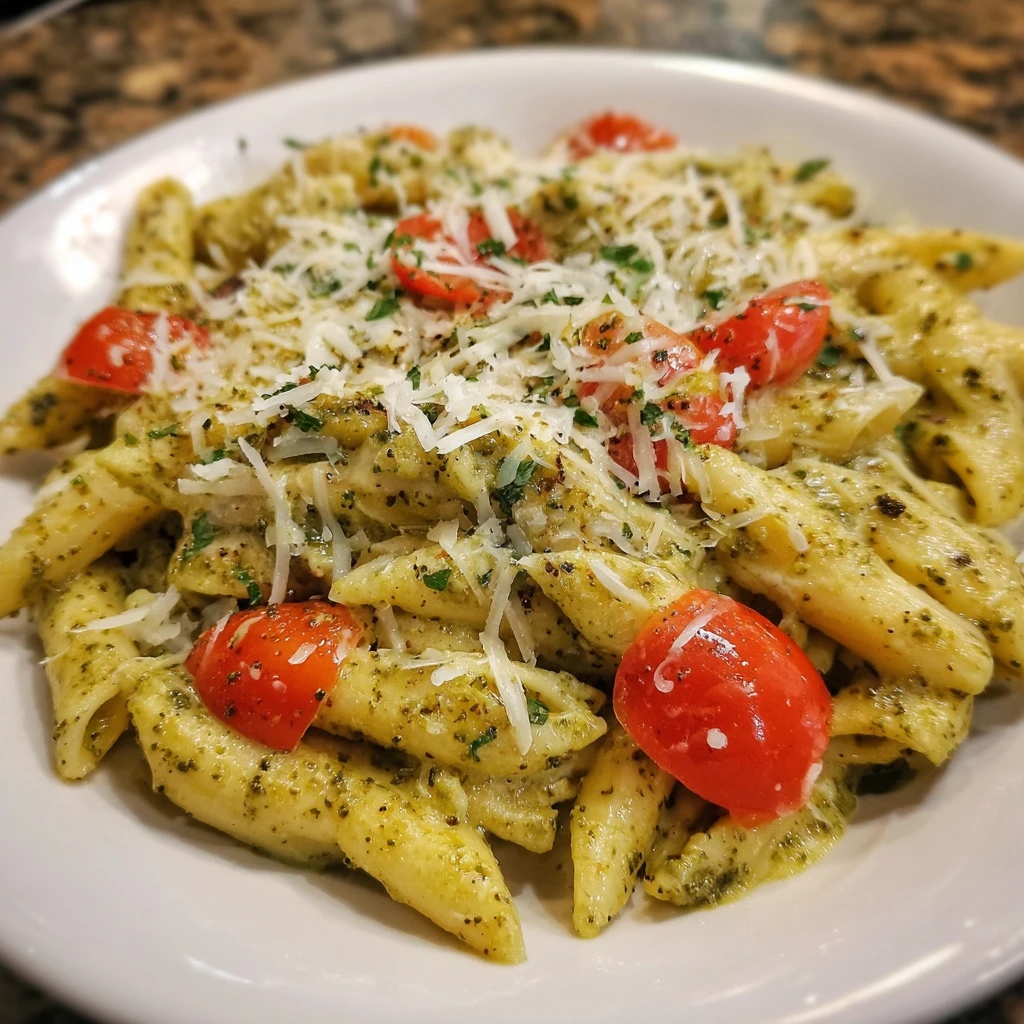
6. Serve immediately, garnished with extra Parmesan cheese and any optional toppings, such as cherry tomatoes, spinach, grilled chicken, sautéed shrimp, or toasted pine nuts. Enjoy!
The Magic of Creamy Pesto Pasta
Creamy pesto pasta is a dish that’s greater than the sum of its parts. It’s a simple recipe, easy to execute, and delivers a huge payoff in flavor. Let’s delve into why this dish is so beloved.
Pesto: The Star of the Show
Pesto, originating from Genoa, Italy, is traditionally made with fresh basil, pine nuts, garlic, Parmesan cheese, Pecorino cheese, and olive oil. The blend creates a vibrant, herbaceous flavor that is both rich and refreshing.
Whether you use store-bought or homemade pesto, make sure it’s of good quality. Fresh pesto will significantly impact the final flavor of your dish.
Experiment with different variations of pesto. Sun-dried tomato pesto, arugula pesto, or even kale pesto can bring a unique twist to this classic recipe.
Creamy Dream
The addition of heavy cream transforms pesto pasta into a luxurious, comforting meal. The cream mellows out the intense flavors of the pesto and adds a velvety texture that is irresistible.
Don’t be afraid to adjust the amount of cream to your liking. If you prefer a lighter sauce, use half-and-half or even milk. For a richer sauce, add an extra splash of heavy cream.
For a dairy-free option, try using cashew cream or coconut cream. These alternatives provide a similar creaminess while catering to dietary restrictions.
Pasta Perfection
The type of pasta you choose can also affect the overall experience of the dish. Short, tubular pasta shapes like penne, fusilli, and rotini are ideal for capturing the creamy pesto sauce in their crevices.
Long pasta shapes like spaghetti or linguine also work well, but the sauce may not cling to them as effectively. Experiment with different pasta shapes to find your favorite pairing.
Cooking the pasta al dente is crucial. Overcooked pasta will become mushy and lose its texture. Al dente pasta, meaning “to the tooth” in Italian, should be firm to the bite.
Variations and Additions
One of the best things about creamy pesto pasta is its versatility. You can easily customize it with different ingredients to suit your taste and dietary preferences. Let’s explore some exciting possibilities.
Adding Protein
Adding protein turns creamy pesto pasta into a complete and satisfying meal. Grilled chicken, sautéed shrimp, or crumbled Italian sausage are all excellent choices.
For a vegetarian option, try adding chickpeas or white beans. These legumes are a great source of protein and fiber.
Tofu or tempeh can also be added for a plant-based protein boost. Marinate the tofu or tempeh in a flavorful sauce before adding it to the pasta.
Veggie Power
Adding vegetables not only enhances the nutritional value of the dish but also adds color and texture. Cherry tomatoes, spinach, zucchini, and bell peppers are all great options.
Sauté the vegetables in a pan with garlic before adding them to the pasta. This will soften them slightly and bring out their flavors.
Roasted vegetables, such as broccoli or asparagus, can also be added. The roasting process caramelizes the vegetables and gives them a slightly smoky flavor.
Nutty Delights
Toasted pine nuts are a classic addition to pesto, but you can also use other nuts like walnuts, almonds, or pistachios. Toasting the nuts beforehand enhances their flavor and adds a satisfying crunch.
Sprinkle the toasted nuts over the finished dish as a garnish. You can also add them directly to the pesto sauce for a more intense nutty flavor.
For a nut-free option, try using sunflower seeds or pumpkin seeds. These seeds offer a similar crunch and nutritional benefits.
Tips for Success
While creamy pesto pasta is a straightforward recipe, there are a few tips and tricks that can help you achieve perfect results every time.
Pasta Water is Key
Reserving some of the pasta water before draining is essential. The starchy water helps to emulsify the sauce and create a silky smooth texture.
Add a little pasta water at a time, until the sauce reaches your desired consistency. You may not need to use all of the reserved water.
If you forget to reserve pasta water, you can use plain water or chicken broth as a substitute. However, the sauce may not be as creamy or flavorful.
Fresh is Best
Using fresh ingredients, especially basil for the pesto, will significantly improve the flavor of the dish. If you’re using store-bought pesto, look for brands that use high-quality ingredients.
Freshly grated Parmesan cheese will also melt more smoothly and add a richer flavor to the sauce. Avoid using pre-grated Parmesan cheese, as it often contains cellulose, which can prevent it from melting properly.
Fresh garlic is another key ingredient. Avoid using jarred minced garlic, as it often has a bitter taste.
Seasoning Matters
Taste the sauce frequently and adjust the seasoning as needed. Salt and black pepper are essential for balancing the flavors.
You can also add a pinch of red pepper flakes for a little heat. A squeeze of lemon juice can brighten up the sauce and add a touch of acidity.
If the sauce is too thick, add more pasta water or cream. If it’s too thin, simmer it for a few more minutes to reduce it slightly.
Serving and Storage
Creamy pesto pasta is best served immediately, while the sauce is still warm and creamy. Garnish with extra Parmesan cheese and any desired toppings.
Serving Suggestions
Serve creamy pesto pasta as a main course or as a side dish. It pairs well with grilled chicken, fish, or vegetables.
For a more elegant presentation, serve the pasta in individual bowls or on a large platter. Garnish with fresh basil leaves and a drizzle of olive oil.
Creamy pesto pasta is also a great option for potlucks and parties. It’s easy to transport and can be served at room temperature.
Storage and Reheating
Leftover creamy pesto pasta can be stored in an airtight container in the refrigerator for up to 3 days. The sauce may thicken as it cools, so you may need to add a little milk or cream when reheating.
To reheat, microwave the pasta in 30-second intervals, stirring in between, until heated through. You can also reheat it in a skillet over low heat, adding a little milk or cream to loosen the sauce.
Avoid freezing creamy pesto pasta, as the sauce may separate and become grainy when thawed.
FAQ
Can I use store-bought pesto?
Yes, you can use store-bought pesto. Look for high-quality brands with fresh ingredients. Homemade pesto is always a great option, but store-bought is convenient.
Can I make this recipe dairy-free?
Yes, you can make this recipe dairy-free by using cashew cream or coconut cream instead of heavy cream. You can also use a dairy-free Parmesan cheese substitute.
What kind of pasta is best for pesto?
Short, tubular pasta shapes like penne, fusilli, and rotini are ideal for capturing the sauce. Long pasta like spaghetti also works well.
Can I add protein to this dish?
Yes, you can add protein like grilled chicken, shrimp, Italian sausage, chickpeas, or tofu.
How do I prevent the pasta from sticking together?
Cook the pasta al dente and toss it with the sauce immediately after draining. Also, make sure the sauce is creamy enough to coat the pasta.