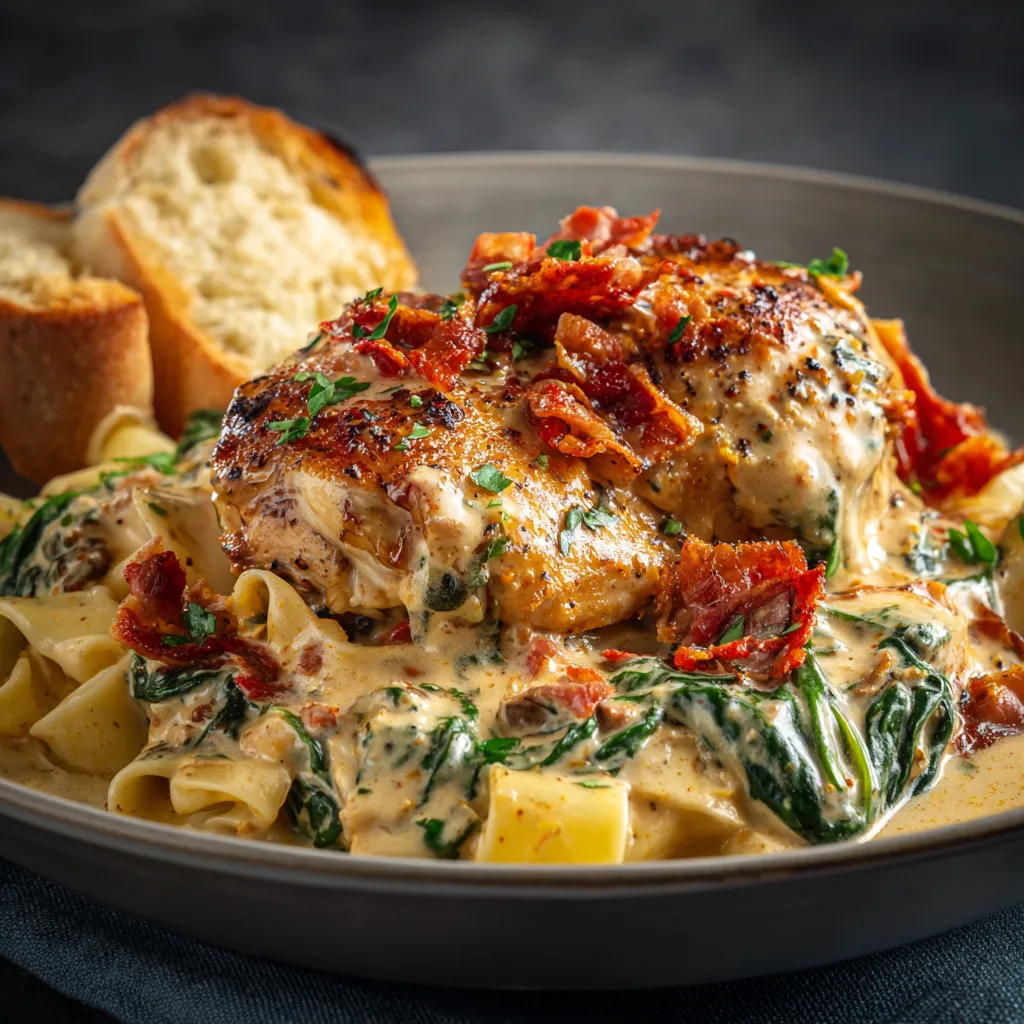
Creamy Tuscan Chicken is an absolute weeknight marvel, bringing the rich, aromatic flavors of the Italian countryside into a single skillet in under half an hour. This dish takes tender, perfectly seared chicken and marries it with a luscious, deeply savory sauce built on heavy cream, freshly grated Parmesan, bright sun-dried tomatoes, and vibrant baby spinach. It’s a restaurant-quality meal that relies on simple pantry staples and efficient cooking techniques, making it a perfect addition to any home cook’s rotation. The key to its success lies in building flavor layers—from the initial golden sear on the chicken to the crucial deglazing step—ensuring every bite is complex, satisfying, and utterly unforgettable.
Ingredients
For the Chicken
-
4 boneless, skinless chicken breasts (about 1.5 lbs total), sliced horizontally into 8 thin cutlets
-
1 teaspoon Italian seasoning
-
1 teaspoon Kosher salt
-
½ teaspoon black pepper
-
1 tablespoon all-purpose flour (optional, for a better sear)
-
2 tablespoons olive oil
-
1 tablespoon unsalted butter
For the Creamy Tuscan Sauce
-
1 tablespoon olive oil (or oil reserved from sun-dried tomato jar)
-
1 small yellow onion or shallot, finely chopped (optional, but recommended)
-
4 cloves garlic, minced
-
½ cup sun-dried tomatoes, drained and roughly chopped (use oil-packed for best flavor)
-
½ cup low-sodium chicken broth OR dry white wine (e.g., Pinot Grigio)
-
1 ½ cups heavy cream (or heavy whipping cream)
-
½ cup freshly grated Parmesan cheese, plus extra for garnish
-
4 cups (packed) fresh baby spinach
-
Pinch of crushed red pepper flakes (optional, for heat)
-
Fresh basil, chopped (for garnish)
Step-by-Step Instructions
1. Prepare and Sear the Chicken
Slice each chicken breast horizontally to create two thinner cutlets. Pat the chicken dry, then season both sides generously with salt, pepper, and Italian seasoning. If using flour, lightly dredge the seasoned cutlets. In a large, deep skillet (cast iron or non-stick preferred), heat the olive oil and butter over medium-high heat. Once the butter foams, add the chicken cutlets without crowding the pan (work in batches if necessary). Sear for 3–4 minutes per side, until deeply golden brown and cooked through (internal temperature of 165°F). Remove the chicken and set it aside on a clean plate, reserving any juices.
2. Build the Sauce Base
Reduce the heat to medium. Add the remaining tablespoon of oil to the skillet. If using onion or shallot, sauté until soft and translucent, about 3 minutes. Add the minced garlic and chopped sun-dried tomatoes. Sauté for one minute until the garlic is fragrant, taking care not to burn it.
3. Deglaze and Simmer the Cream
Pour in the chicken broth or white wine. Use a wooden spoon to scrape up any browned bits (known as “fond”) stuck to the bottom of the pan—this is essential for flavor depth. Let the liquid simmer and reduce by about half, which takes 1–2 minutes. Stir in the heavy cream, Parmesan cheese, and crushed red pepper flakes (if using). Bring the sauce to a gentle simmer.
4. Finish the Sauce and Return the Chicken
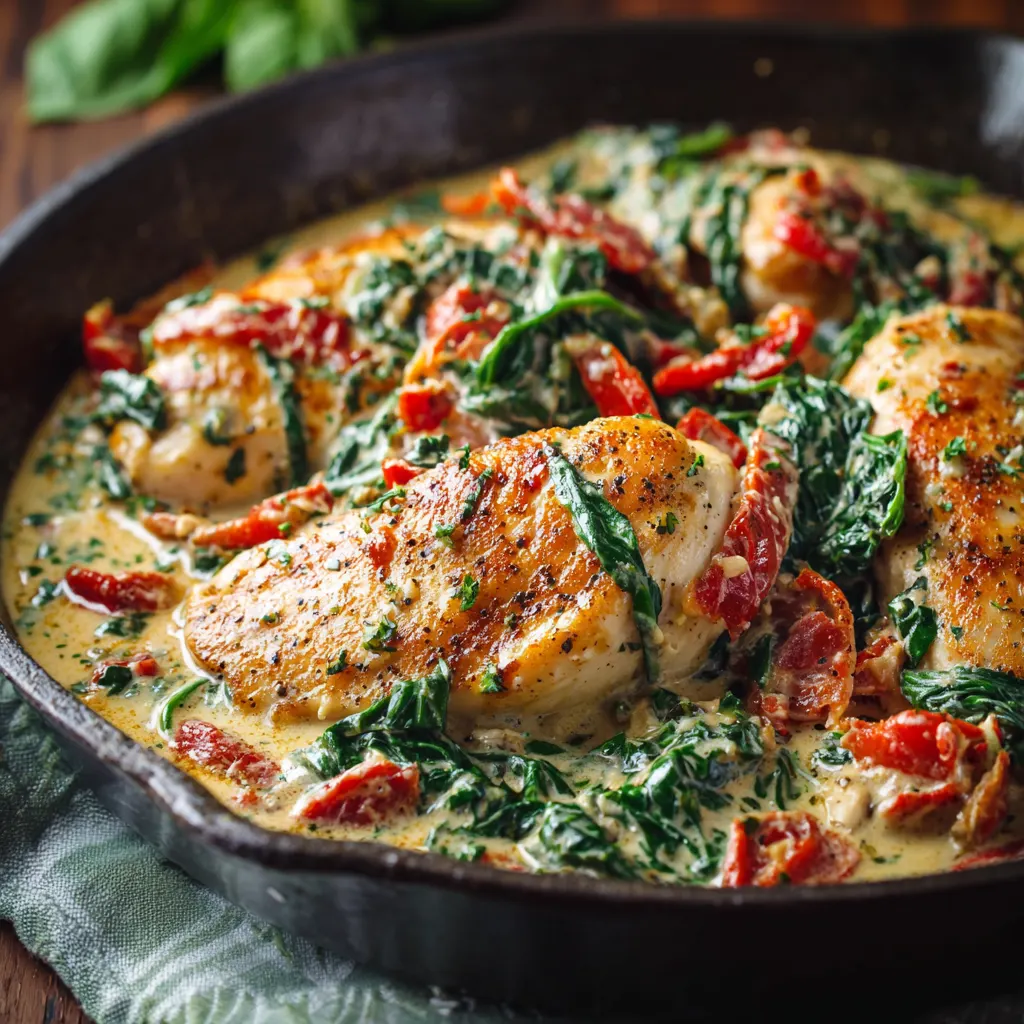
Stir the sauce continuously as the Parmesan melts and the sauce begins to thicken slightly. Add the baby spinach, one handful at a time, stirring until it wilts down into the cream sauce. Nestle the seared chicken cutlets back into the skillet, along with any resting juices accumulated on the plate. Allow the chicken to simmer in the sauce for 2–3 minutes to warm through and allow the flavors to meld.
5. Serve
Garnish with fresh chopped basil and an extra sprinkle of grated Parmesan. Serve immediately.
Mastering the Italian-Inspired Sauce and Flavor Depth
The “Tuscan” aspect of this dish hinges entirely on the quality and technique used to create the creamy sauce. While seemingly simple, a few critical steps elevate it from a basic cream sauce to a complex, savory base that beautifully coats the chicken and its accompaniments.
The Crucial Role of Deglazing
After searing the chicken, the pan will have a layer of browned, caramelized chicken bits (the fond). Do not wash this away. The process of deglazing—adding a cold liquid like wine or broth—and scraping up the fond dissolves these flavor particles into the liquid, forming the concentrated foundation of your sauce. White wine (like a dry Sauvignon Blanc or Pinot Grigio) adds a layer of bright acidity that cuts through the richness of the cream, balancing the dish perfectly. If avoiding alcohol, high-quality chicken broth works well, providing savory depth without the tang.
Sun-Dried Tomatoes: The Signature Ingredient
There are two main choices for the tomato element: fresh cherry tomatoes or sun-dried tomatoes. Sun-dried tomatoes, particularly those packed in oil, are the superior choice for this recipe. Their flavor is intensely concentrated, savory, and slightly sweet, providing the dish with its unmistakable richness and complexity. The oil they are packed in can also be used in place of some olive oil during the initial searing step, adding another layer of tomato flavor to the chicken itself. If using sun-dried tomatoes that are not oil-packed, ensure they are soft and slightly pliable before chopping.
Maintaining Creamy Consistency
Heavy cream (also known as heavy whipping cream) is highly recommended because of its high-fat content, which makes it resistant to curdling. When adding the cream and Parmesan, keep the heat at a low simmer—never a rolling boil—to prevent the sauce from separating. For a richer, smoother sauce, always grate the Parmesan cheese freshly from the block. Pre-shredded or bagged Parmesan often contains anti-caking agents that prevent it from melting smoothly, resulting in a grainy sauce texture. If you are aiming for a lighter sauce, you can substitute with half-and-half, but be prepared to thicken it later, and be extra careful to keep the heat low.
Essential Techniques for Perfect Chicken Cutlets
The ideal Creamy Tuscan Chicken features meat that is juicy, tender, and sealed with a beautiful golden crust. Overcooked or rubbery chicken is the most common failure in this dish, but it is easily avoidable with proper preparation and temperature control.
Slicing for Speed and Tenderness
Using boneless, skinless chicken breasts is standard, but they often have a thick center that cooks slower than the edges. To ensure quick, even cooking and maximum tenderness, slice each large breast horizontally through the center to create two thinner cutlets of uniform thickness. This preparation drastically cuts down the cooking time, allowing the chicken to sear quickly while minimizing the chance of drying out.
The Art of the Perfect Sear
A successful sear is where the depth of flavor begins. Before placing the chicken in the pan, ensure the fat (oil and butter) is shimmering and hot. The chicken should sizzle immediately upon contact.
-
Pat it Dry: Always pat the chicken completely dry with paper towels before seasoning. Moisture creates steam, which prevents browning.
-
Season Generously: Use Kosher salt, black pepper, and Italian herbs. A light dusting of flour (optional) can help achieve a thicker, more beautiful crust.
-
Don’t Overcrowd: Sear the chicken in batches if your skillet is not large enough. Crowding the pan lowers the temperature and leads to steaming rather than searing.
-
Hands-Off: Once the chicken is in the pan, leave it alone for the first 3–4 minutes until a gorgeous golden crust develops. Resist the urge to move it.
Temperature Control
While the cutlets cook quickly, the only way to guarantee they are perfectly done—neither dry nor unsafe—is to use an instant-read meat thermometer. The chicken is finished when it reaches an internal temperature of $165^\circ\text{F}$ ($74^\circ\text{C}$). Since the chicken will return to the simmering sauce, it is acceptable to remove it when it is just slightly under the target temperature, as it will finish cooking gently in the sauce. This prevents residual heat (carryover cooking) from drying out the meat.
Variations, Substitutions, and Serving Pairings
Creamy Tuscan Chicken is an incredibly versatile recipe that can be adapted for dietary needs, flavor preferences, or simply whatever you have in your pantry.
Customizable Protein and Greens
While chicken breast cutlets offer quick cooking and a light texture, boneless, skinless chicken thighs are a fantastic substitution. Thighs are richer in flavor, stay moist more easily, and are less prone to drying out if slightly overcooked. The cooking time will need to be extended slightly, perhaps to 5–6 minutes per side.
If you don’t have baby spinach, kale is an excellent alternative. Be sure to remove the tough stems and chop the kale finely. Since kale is heartier than spinach, add it to the simmering sauce a few minutes earlier to ensure it fully wilts and softens. For a lighter twist on the “Tuscan” components, you can substitute the sun-dried tomatoes with roasted red peppers or a handful of fresh cherry tomatoes added during the sauce simmering phase.
Dairy-Free and Lighter Options
To make this dish dairy-free, substitute the heavy cream with full-fat canned coconut cream (not coconut milk, which is too thin) or a prepared cashew cream. While the sauce will taste slightly different, the high fat content of coconut cream maintains the thick, luxurious mouthfeel. Replace the Parmesan with nutritional yeast to provide a cheesy, nutty umami flavor, or use a high-quality vegan Parmesan alternative.
For those aiming for a lower-fat sauce while still using dairy, half-and-half can be used in place of heavy cream, but the sauce will be thinner and is more likely to curdle if overheated. To prevent curdling, ensure all ingredients are at room temperature and thicken the sauce with a cornstarch slurry (1 teaspoon cornstarch mixed with 1 teaspoon cold water) stirred into the simmering liquid.
Serving Suggestions and Perfect Pairings
This rich skillet dish pairs wonderfully with sides designed to soak up the abundant sauce:
-
Pasta: Tossed with long, thin noodles like linguine, fettuccine, or spaghetti to create a full Creamy Tuscan Chicken Pasta meal.
-
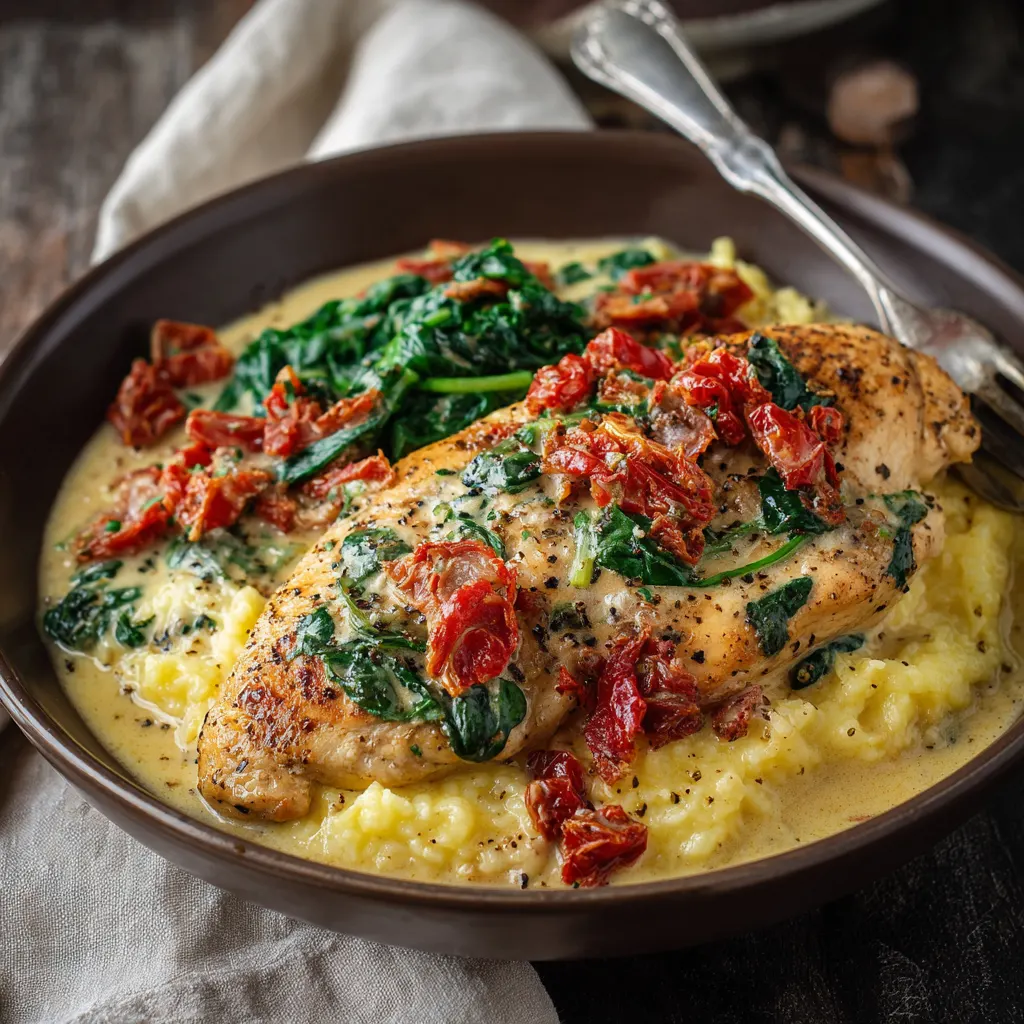
Starches: Served over fluffy white rice, creamy polenta, or traditional mashed potatoes.
-
Low-Carb: Pair with cauliflower rice, mashed cauliflower, or a large portion of steamed asparagus or green beans.
-
The Classic: Serve with simple, crusty Italian bread to mop up every last drop of sauce.
For a wine pairing, match the richness of the dish with a crisp, dry white wine like a Pinot Grigio, Vermentino, or Sauvignon Blanc. The acidity in the wine will contrast the creaminess and enhance the herbal notes.
Making Ahead and Troubleshooting Common Issues
While this is a quick weeknight meal, understanding how to manage leftovers, prep components in advance, and troubleshoot common sauce issues ensures success every time.
Storage and Reheating
Creamy Tuscan Chicken is best eaten fresh, but leftovers can be stored in an airtight container in the refrigerator for up to three days.
Reheating Tip: Cream-based sauces often thicken considerably when cold. When reheating the dish (either on the stovetop or in the microwave), add a splash (1–2 tablespoons) of chicken broth or extra cream to the skillet. This helps restore the sauce to its intended consistency and prevents the chicken from drying out as it warms.
Freezing: Freezing cream sauces is generally discouraged, as the freezing and thawing process can cause the fat and liquid components to separate, leading to a grainy or curdled texture upon reheating. If you must freeze, make the sauce with evaporated milk instead of heavy cream, though this alters the flavor profile.
Troubleshooting a Thin Sauce
If your sauce is too thin after simmering, you have two simple options to quickly thicken it:
-
Parmesan Reduction: Simply let the sauce continue to simmer gently, uncovered, for an extra 3–5 minutes. The reduction process, aided by the natural starches in the Parmesan cheese, will cause it to thicken naturally.
-
Cornstarch Slurry: For immediate results, whisk together 1 teaspoon of cornstarch with 1 teaspoon of cold water or cold chicken broth in a small bowl until smooth. While the sauce is simmering, whisk the slurry into the pan and let it simmer for 1 minute; the sauce will rapidly thicken.
Preventing Curdling
The primary risk in cream-based sauces is curdling, especially when using lower-fat dairy like milk or half-and-half.
-
Mind the Temperature: Never add cold dairy directly to a hot, rapidly boiling skillet. Ensure the heat is reduced to a low, gentle simmer before stirring in the heavy cream.
-
Add Acid Slowly (If Using Wine): If deglazing with white wine, ensure the wine has completely reduced and evaporated before adding the heavy cream. This ensures that the high concentration of acid doesn’t shock and separate the cream.
-
Use High-Quality Dairy: The higher fat content of heavy cream provides a buffer against temperature changes and acidity, making it the most reliable choice for a smooth, stable sauce.