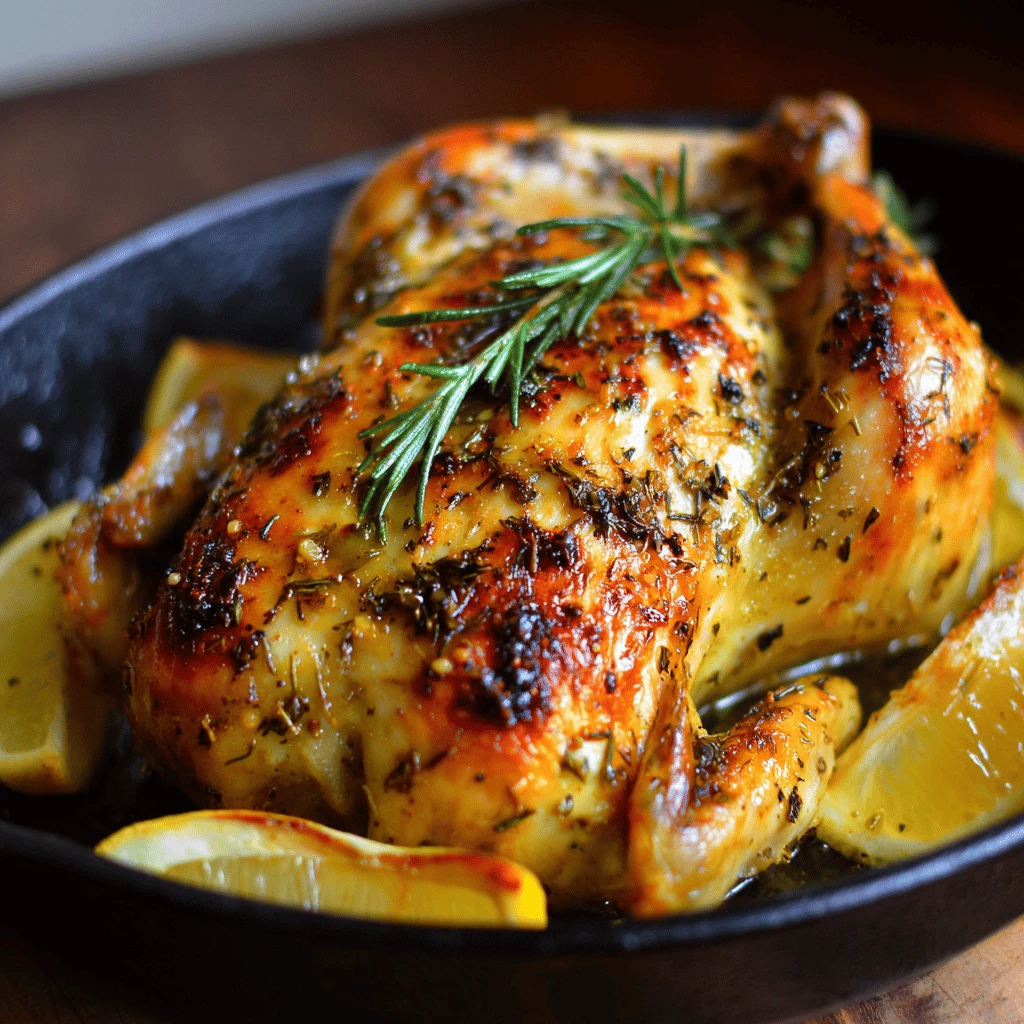
Easy Recipe Lemon Herb Roasted Chicken
Lemon herb roasted chicken is a classic dish that’s both comforting and flavorful. This easy recipe requires minimal ingredients and effort, making it perfect for a weeknight dinner or a weekend gathering. The bright, zesty lemon combined with aromatic herbs creates a succulent and unforgettable meal. Let’s dive into how to make this crowd-pleasing dish.

Preparing Your Lemon Herb Roasted Chicken
The key to a perfect lemon herb roasted chicken lies in proper preparation. This involves selecting the right chicken, creating the herb butter, and preparing the roasting pan.
Selecting the Right Chicken
Choosing the right chicken is crucial. Opt for a whole chicken, ideally between 3 to 5 pounds. Organic or free-range chickens often have better flavor and texture, but a conventional chicken will work just fine. Make sure the chicken is fresh and has no unusual odor. Before starting, pat the chicken dry with paper towels, inside and out. This helps the skin crisp up beautifully during roasting.
Making the Lemon Herb Butter
The lemon herb butter is what infuses the chicken with flavor and moisture. Here’s what you’ll need:
- 1/2 cup unsalted butter, softened
- 2 tablespoons lemon zest
- 3 tablespoons lemon juice
- 2 cloves garlic, minced
- 2 tablespoons fresh rosemary, chopped
- 2 tablespoons fresh thyme, chopped
- 1 tablespoon fresh parsley, chopped
- Salt and pepper to taste
In a bowl, combine the softened butter, lemon zest, lemon juice, minced garlic, rosemary, thyme, and parsley. Season generously with salt and pepper. Mix well until all ingredients are evenly distributed. This fragrant butter will work wonders on your chicken.
Preparing the Roasting Pan
Preparing the roasting pan properly ensures even cooking and easy cleanup. You’ll need a roasting pan with a rack. Place the rack inside the pan. This allows air to circulate around the chicken, promoting even browning. Add about 1 cup of chicken broth or water to the bottom of the pan. This creates steam, keeping the chicken moist during the roasting process.
Roasting the Chicken to Perfection
Roasting is where the magic happens. Here’s how to ensure your chicken comes out perfectly golden and juicy every time.
Applying the Lemon Herb Butter
Loosen the skin of the chicken breast by gently sliding your fingers between the skin and the meat. Be careful not to tear the skin. Stuff about two-thirds of the lemon herb butter under the skin, spreading it evenly over the breast meat. This will keep the breast moist and infuse it with flavor. Rub the remaining butter all over the outside of the chicken, ensuring every part is coated.
Adding Aromatics to the Cavity
For extra flavor, stuff the cavity of the chicken with aromatics. Consider using:
- 1/2 lemon, quartered
- 2 sprigs of rosemary
- 2 sprigs of thyme
- 1 clove of garlic, halved
- 1/2 onion, quartered
These aromatics will infuse the chicken from the inside out, adding depth and complexity to the flavor profile.
Setting the Oven Temperature and Roasting Time
Preheat your oven to 425°F (220°C). Place the prepared chicken on the rack in the roasting pan. Roast for 15 minutes at 425°F, then reduce the oven temperature to 375°F (190°C) and continue roasting for about 1 hour to 1 hour and 15 minutes, or until the internal temperature of the thickest part of the thigh reaches 165°F (74°C). Use a meat thermometer to ensure accuracy.
Basting for Extra Moisture
Basting the chicken every 20-30 minutes helps keep it moist and promotes even browning. Use the pan juices to baste the chicken. If the pan juices start to evaporate, add a little more chicken broth or water to the bottom of the pan.
Achieving the Perfect Golden Brown Finish
A golden brown finish is not only visually appealing but also adds to the overall flavor and texture of the chicken. Here’s how to achieve it.
Increasing the Oven Temperature
In the last 15-20 minutes of roasting, increase the oven temperature back to 425°F (220°C). This will help crisp up the skin and give it that beautiful golden-brown color. Keep a close eye on the chicken to prevent it from burning.
Using the Broiler (Optional)
If the chicken is cooked through but not quite as brown as you’d like, you can use the broiler for the last few minutes. Place the chicken under the broiler for 2-3 minutes, watching it carefully to prevent burning. Rotate the pan to ensure even browning.
Resting the Chicken
Once the chicken is cooked to perfection, remove it from the oven and let it rest for 10-15 minutes before carving. This allows the juices to redistribute throughout the meat, resulting in a more moist and flavorful bird. Tent the chicken loosely with foil to keep it warm while it rests.
Serving and Sides for Your Lemon Herb Roasted Chicken
Serving your lemon herb roasted chicken is an art in itself. Pair it with complementary sides to create a complete and satisfying meal.
Carving the Chicken
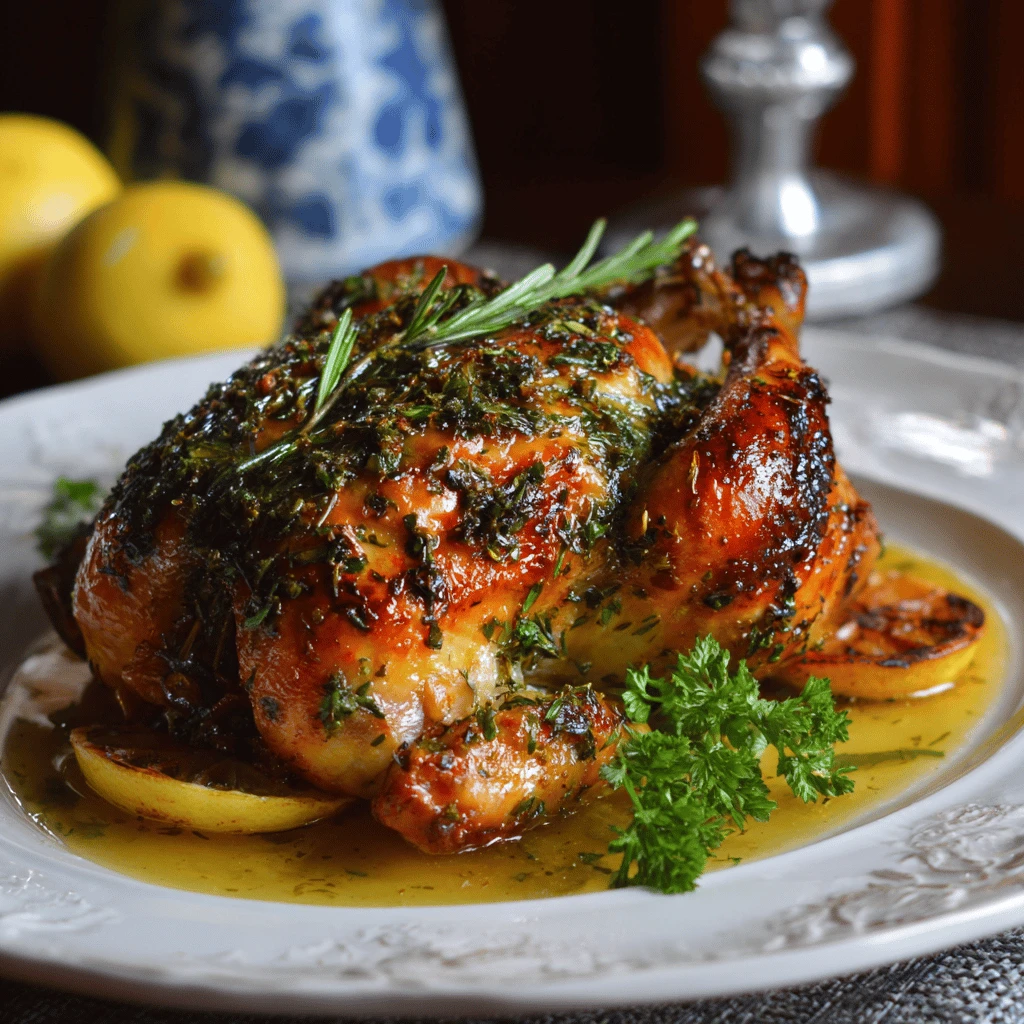
Carve the chicken by first removing the legs and thighs. Then, slice the breast meat, working along the breastbone. Arrange the carved chicken on a serving platter.
Complementary Side Dishes
Consider serving your lemon herb roasted chicken with the following side dishes:
- Roasted vegetables (such as potatoes, carrots, and broccoli)
- Garlic mashed potatoes
- Quinoa salad
- Green beans almondine
- A simple green salad
These sides complement the flavors of the chicken and create a well-rounded meal.
Making a Pan Sauce
Don’t let those delicious pan juices go to waste! Make a simple pan sauce by skimming off any excess fat from the pan juices. Place the pan over medium heat and add 1/2 cup of white wine or chicken broth. Bring to a simmer and cook for 5-7 minutes, scraping up any browned bits from the bottom of the pan. Stir in a tablespoon of butter for richness. Season with salt and pepper to taste. Serve the pan sauce alongside the chicken.
Tips and Variations for Lemon Herb Roasted Chicken
This recipe is incredibly versatile. Here are some tips and variations to customize it to your liking.
Herb Variations
Experiment with different herbs. Try using oregano, sage, or marjoram in addition to or in place of the rosemary, thyme, and parsley.
Citrus Variations
Use different citrus fruits, such as oranges or grapefruits, in place of the lemon. The different citrus will impart their own unique flavor profiles to the dish.
Adding Vegetables to the Roasting Pan
For a one-pan meal, add vegetables to the roasting pan alongside the chicken. Root vegetables like potatoes, carrots, and onions work particularly well. Toss the vegetables with olive oil, salt, and pepper before adding them to the pan.
Using Wine or Beer
Add a splash of white wine or beer to the bottom of the roasting pan for extra flavor. The alcohol will evaporate during cooking, leaving behind a subtle and complex flavor.
Brining the Chicken
For an even more moist and flavorful chicken, consider brining it overnight before roasting. A simple brine can be made with water, salt, sugar, and your favorite herbs and spices.
Frequently Asked Questions (FAQ)
Q: How do I know when the chicken is done?
A: The best way to tell if the chicken is done is to use a meat thermometer. Insert the thermometer into the thickest part of the thigh, avoiding the bone. The internal temperature should reach 165°F (74°C).
Q: Can I use dried herbs instead of fresh herbs?
A: Yes, you can use dried herbs, but fresh herbs will provide a more vibrant flavor. If using dried herbs, use about half the amount called for in the recipe.
Q: Can I roast the chicken at a lower temperature?
A: Yes, you can roast the chicken at a lower temperature, such as 325°F (160°C), but it will take longer to cook. Use a meat thermometer to ensure the chicken reaches an internal temperature of 165°F (74°C).
Q: How long can I store leftover roasted chicken?
A: Leftover roasted chicken can be stored in the refrigerator for up to 3-4 days. Make sure to store it in an airtight container.
Q: Can I freeze roasted chicken?
A: Yes, you can freeze roasted chicken. Allow the chicken to cool completely before wrapping it tightly in plastic wrap and then in foil. Freeze for up to 2-3 months.