Greek Salad Meal Prep Idea: Fresh, Flavorful & Ready to Go!
Introduction: Why Greek Salad is Perfect for Meal Prep
In today’s fast-paced world, finding healthy and delicious meal options that fit into our busy schedules can be a challenge. That’s where Greek salad meal prep comes in! This vibrant and refreshing salad is not only packed with nutrients but also incredibly easy to prepare in advance. Its simple ingredients—crisp vegetables, salty feta, tangy olives, and a zesty dressing—hold up well over several days, making it an ideal choice for lunch, dinner, or even a light snack. Ditch the processed lunches and embrace the freshness of a homemade Greek salad that’s ready whenever you are. We will guide you through creating the perfect Greek Salad Meal Prep, including how to keep your ingredients fresh, variations, and answer frequently asked questions.
Section 1: The Ultimate Greek Salad Meal Prep Recipe
Creating the perfect Greek Salad for meal prep is all about balance and knowing which ingredients to prepare and store separately. Here’s a recipe that will serve you well throughout the week:
Ingredients:
- 1 English cucumber, diced
- 1 red bell pepper, diced
- 1 green bell pepper, diced
- 1 pint cherry tomatoes, halved or quartered
- 1/2 red onion, thinly sliced
- 4 oz Kalamata olives, pitted
- 4 oz feta cheese, crumbled
- 3 tbsp extra virgin olive oil
- 2 tbsp red wine vinegar
- 1 tsp dried oregano
- 1/2 tsp garlic powder
- Salt and pepper to taste
- Optional: grilled chicken, chickpeas, or quinoa for added protein and fiber
Instructions:
1. Prepare the Vegetables: Wash and chop all the vegetables (cucumber, bell peppers, tomatoes, and red onion) into bite-sized pieces. It is best to make sure your ingredients are properly dried before storing to prolong freshness.
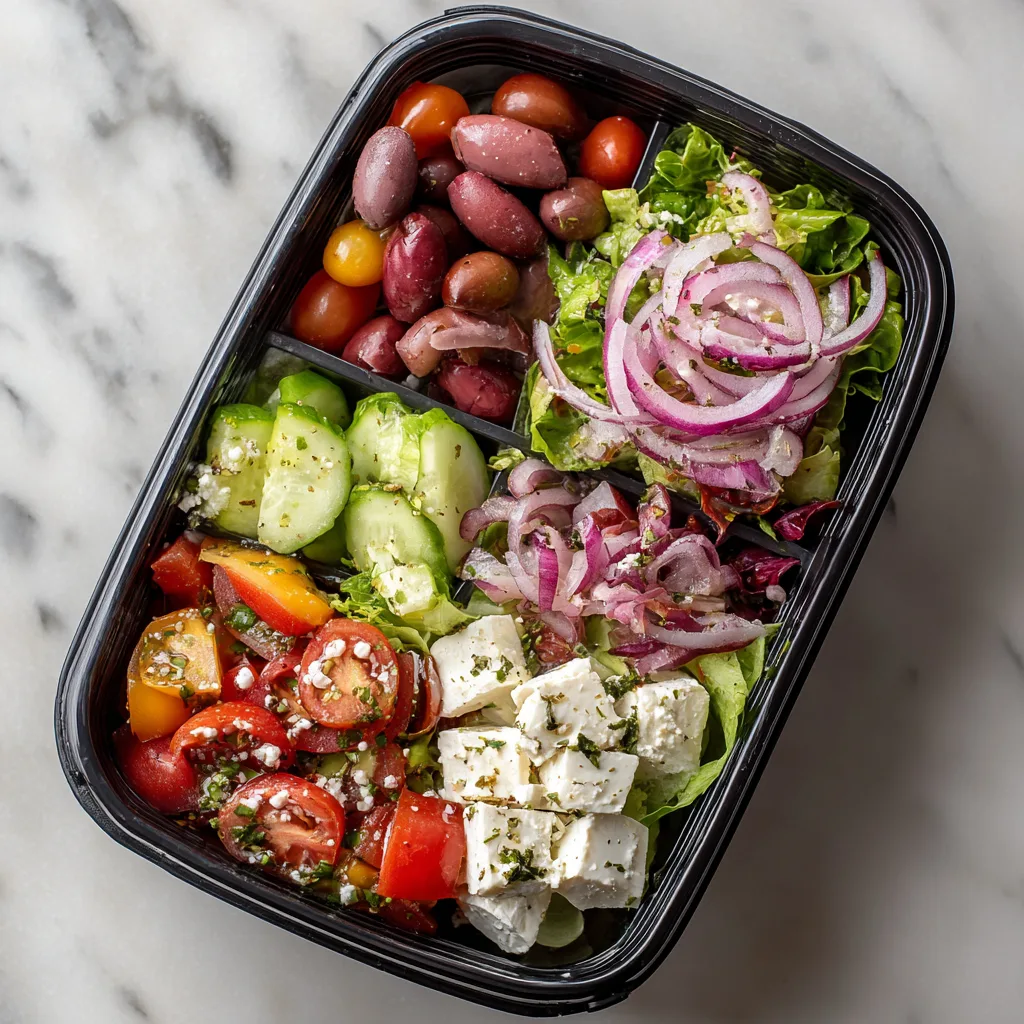
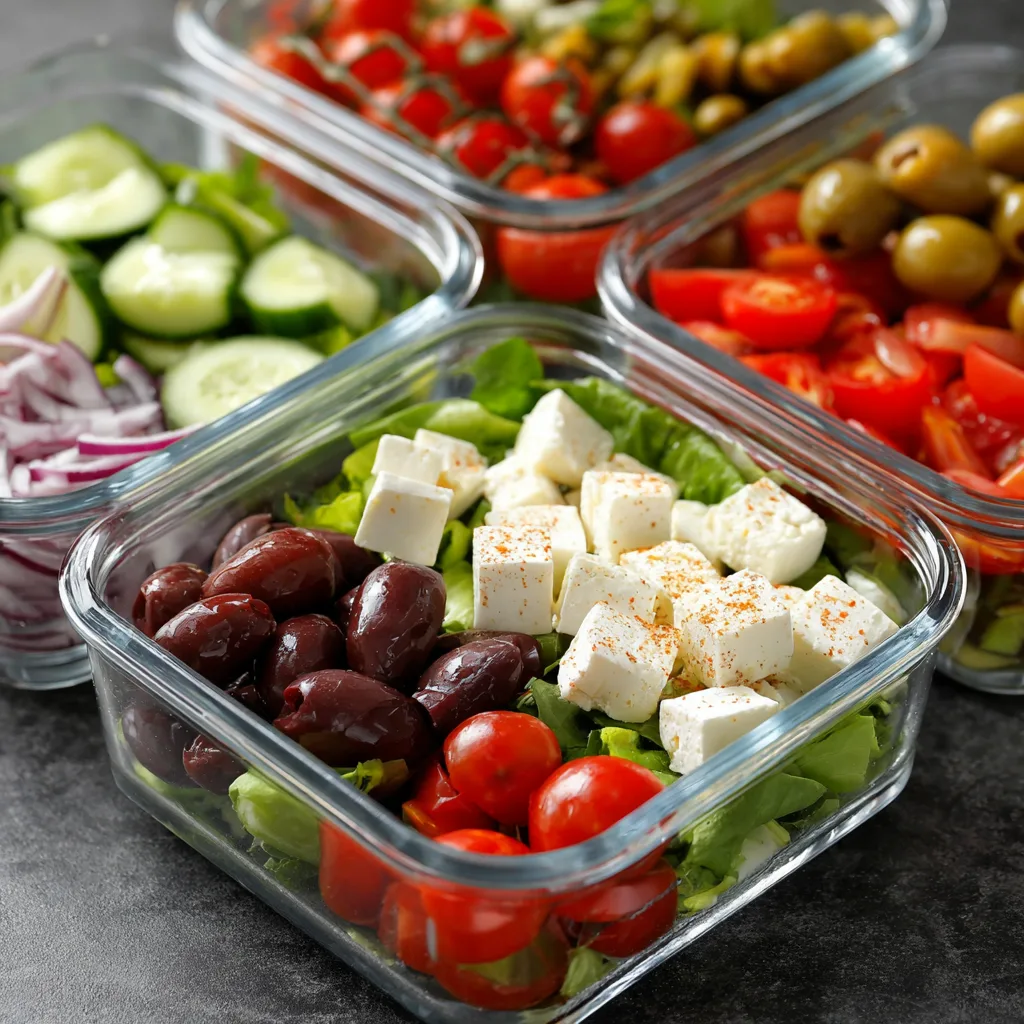
2. Divide into Containers: Divide the chopped vegetables evenly among your meal prep containers. Consider using containers with separate compartments to keep wet ingredients, like tomatoes, away from the drier ones.
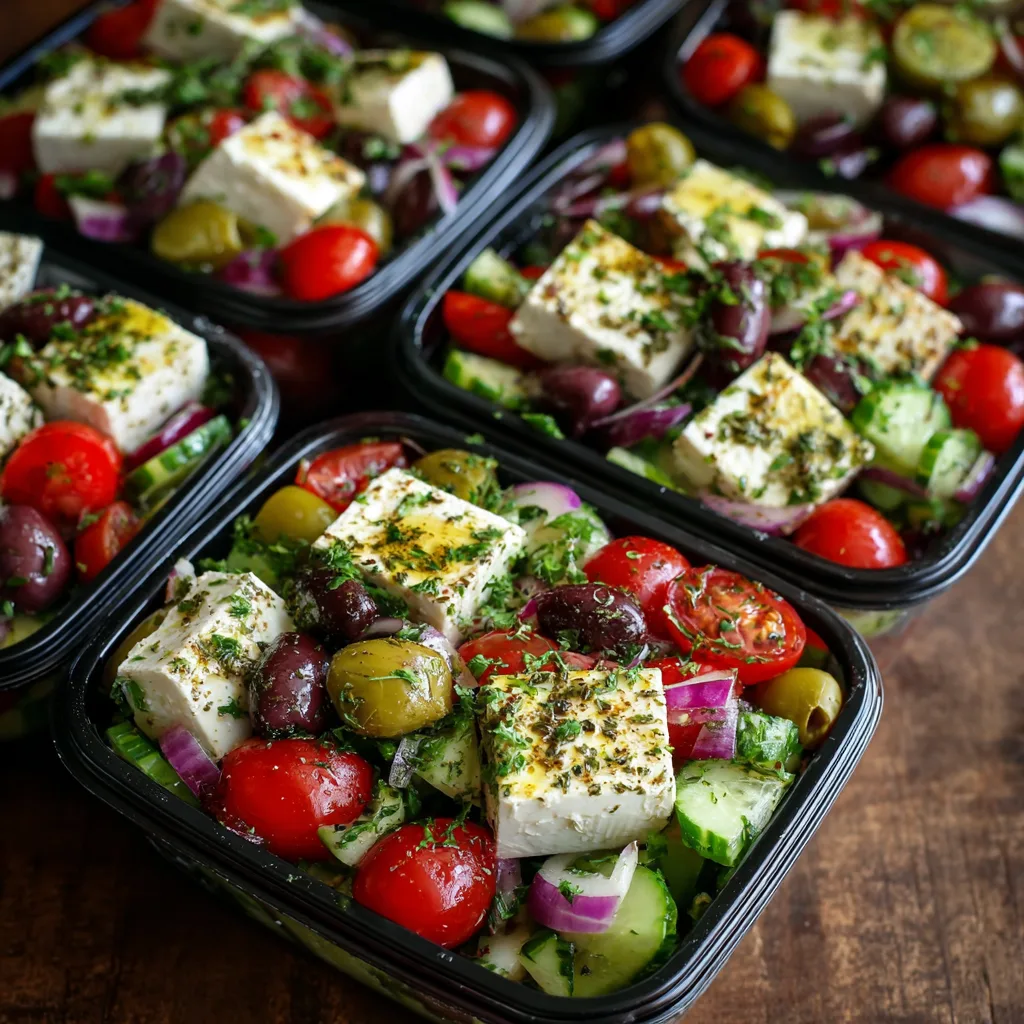
3. Add the Olives and Feta: Add the Kalamata olives and crumbled feta cheese to each container on top of the vegetables.
4. Prepare the Dressing: In a small jar or container, whisk together the olive oil, red wine vinegar, dried oregano, garlic powder, salt, and pepper.
5. Store Separately: It’s crucial to keep the dressing separate from the salad until you’re ready to eat it. This prevents the salad from becoming soggy.
6. Add Protein (Optional): If you’re adding grilled chicken, chickpeas, or quinoa, divide it among the containers as well.
7. Refrigerate: Store the containers in the refrigerator for up to 5 days.
Section 2: Meal Prep Containers and Storage Tips
Choosing the right meal prep containers and utilizing proper storage techniques are crucial for maintaining the freshness and quality of your Greek salad throughout the week.
Best Types of Meal Prep Containers:
- Glass Containers: Glass containers are excellent for meal prepping because they are non-reactive, meaning they won’t absorb flavors or odors from your food. They are also easy to clean and can be used in the microwave and oven (be sure to check manufacturer instructions).
- BPA-Free Plastic Containers: If you prefer plastic containers, opt for BPA-free options. These are lightweight and durable, making them convenient for transporting your meals.
- Containers with Dividers: Containers with dividers are ideal for keeping wet and dry ingredients separate. This is particularly useful for Greek salad, as it prevents the vegetables from becoming soggy from the dressing.
Storage Tips for Maximum Freshness:
- Dry Your Vegetables Thoroughly: After washing and chopping your vegetables, pat them dry with paper towels or use a salad spinner to remove excess moisture. This will help prevent them from becoming soggy in the container.
- Layer Ingredients Properly: When packing your containers, layer the vegetables in a way that minimizes contact with the dressing. For example, place the tomatoes and cucumbers (which tend to release moisture) on top of the other vegetables.
- Store Dressing Separately: As mentioned earlier, always store the dressing separately in a small container or jar. Add it to the salad just before eating to maintain the crispness of the vegetables.
- Keep Containers Airtight: Ensure that your meal prep containers are airtight to prevent air exposure, which can lead to spoilage.
- Refrigerate Promptly: Store your prepared Greek salad in the refrigerator as soon as possible after assembling. This will help to maintain its freshness and prevent bacterial growth.
Section 3: Greek Salad Meal Prep Variations and Add-Ins
One of the best things about Greek salad is its versatility. You can easily customize it to your liking by adding different ingredients or swapping out existing ones. Here are a few variations and add-ins to try:
- Protein Power: Add grilled chicken, chickpeas, or quinoa for a protein boost. These options will keep you feeling fuller for longer and provide essential nutrients.
- Spice it Up: A pinch of red pepper flakes to your dressing.
- Mediterranean Twist: Add artichoke hearts, sun-dried tomatoes, or roasted red peppers for a more intense Mediterranean flavor.
- Greens Galore: Add spinach or romaine lettuce to the salad.
Section 4: Health Benefits of Greek Salad
Greek salad is not only delicious but also incredibly nutritious. It’s packed with vitamins, minerals, and antioxidants that offer a variety of health benefits.
- Rich in Nutrients: Greek salad is an excellent source of vitamins A and C, which are essential for immune function and skin health. It also contains potassium, which helps regulate blood pressure, and calcium, which is important for bone health.
- High in Fiber: The vegetables in Greek salad, such as cucumbers, tomatoes, and bell peppers, are high in fiber. Fiber promotes digestive health, helps regulate blood sugar levels, and can aid in weight management by keeping you feeling full.
- Healthy Fats: The olive oil in Greek salad is a source of healthy monounsaturated fats, which are beneficial for heart health.
- Antioxidant Properties: Greek salad is rich in antioxidants, which help protect your cells from damage caused by free radicals. These antioxidants can help reduce the risk of chronic diseases such as heart disease and cancer.
- Low in Calories: Greek salad is relatively low in calories, making it a great choice for those who are watching their weight.
Section 5: Tips for Making the Best Greek Salad Meal Prep
Here are some additional tips to ensure that your Greek salad meal prep is a success:
- Quality Ingredients: Use the freshest and highest-quality ingredients possible. This will make a noticeable difference in the taste and texture of your salad.
- Don’t Overdress: Be mindful of how much dressing you use. A little goes a long way, and you can always add more if needed.
- Prep in Advance: Spend some time on the weekend preparing your vegetables and dressing. This will make it much easier to assemble your meal prep containers during the week.
- Experiment with Flavors: Don’t be afraid to experiment with different herbs and spices in your dressing. A pinch of dill, mint, or parsley can add a unique twist to your Greek salad.
- Enjoy Within 5 Days: For the best quality and freshness, consume your Greek salad meal prep within 5 days.
Frequently Asked Questions (FAQs)
Q: How long does Greek salad last in the fridge?
A: Prepared Greek salad can last in the fridge for up to 5 days if stored properly in airtight containers and with the dressing kept separate.
Q: Can I freeze Greek salad?
A: Freezing Greek salad is not recommended. The vegetables will become mushy and lose their texture when thawed. The feta cheese can also become crumbly.
Q: How do I keep my Greek salad from getting soggy?
A: To prevent your Greek salad from getting soggy, make sure to dry your vegetables thoroughly after washing them. Also, store the dressing separately and add it just before serving.
Q: Can I add lettuce to Greek salad for meal prep?
A: While traditional Greek salad doesn’t include lettuce, you can add it for extra greens. However, lettuce tends to wilt more quickly than other vegetables, so it’s best to add it fresh each day or store it separately and add it just before eating.
Q: What protein sources can I add to Greek salad for meal prep?
A: Grilled chicken, chickpeas, quinoa, and hard-boiled eggs are all excellent protein sources to add to Greek salad for meal prep.