
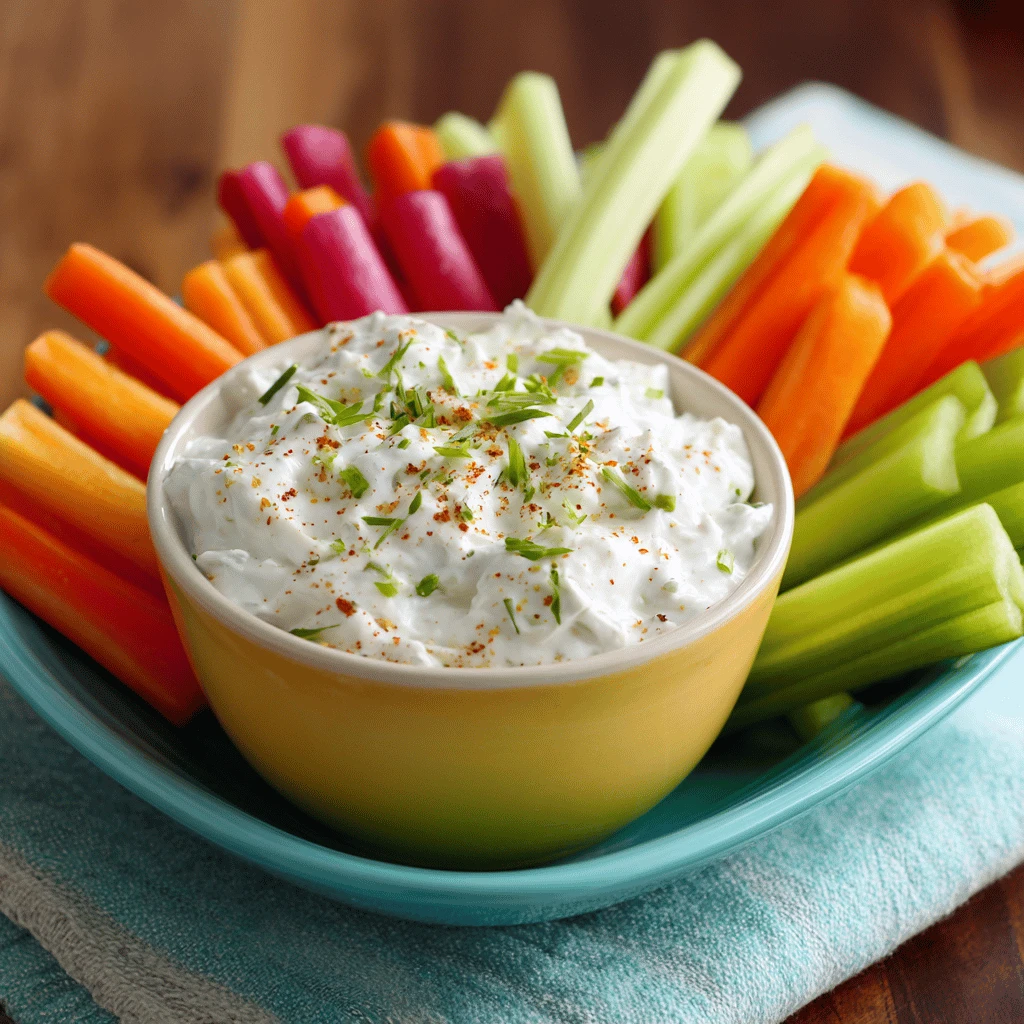
Greek Yogurt Dip with Veggies Healthy Snacks
Ingredients
- 1 cup plain Greek yogurt (non-fat or low-fat)
- 1/4 cup chopped fresh dill
- 1/4 cup chopped fresh parsley
- 1 tablespoon lemon juice
- 1 clove garlic, minced
- 1/2 teaspoon salt
- 1/4 teaspoon black pepper
- Assorted vegetables for dipping (carrots, celery, cucumber, bell peppers, broccoli, cherry tomatoes)
Step-by-Step
1. In a medium bowl, combine the Greek yogurt, dill, parsley, lemon juice, minced garlic, salt, and pepper.
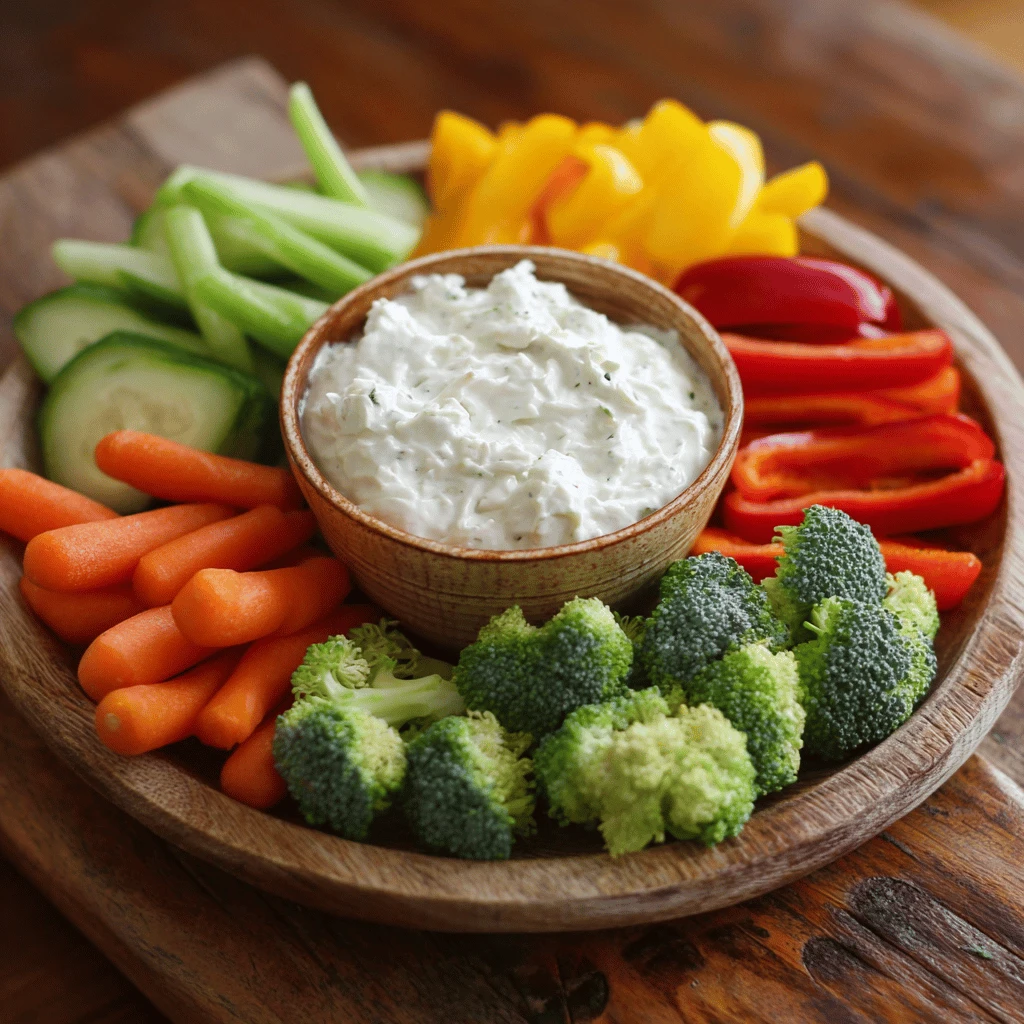
2. Stir well until all ingredients are thoroughly mixed and the dip is smooth and creamy.
3. Taste and adjust seasonings as needed. Add more lemon juice for extra tang, or more salt and pepper to enhance the flavor.
4. Cover the bowl and refrigerate for at least 30 minutes to allow the flavors to meld together. This step is crucial for optimal taste.
5. While the dip is chilling, prepare your vegetables. Wash and cut them into bite-sized pieces or sticks for easy dipping.
6. Arrange the vegetables on a platter or in individual serving cups.
7. Transfer the chilled Greek yogurt dip to a serving bowl.
8. Serve the dip with the assorted vegetables and enjoy!
9. Store any leftover dip in an airtight container in the refrigerator for up to 3-4 days.
The Health Benefits of Greek Yogurt Dip and Vegetables
Greek yogurt dip paired with fresh vegetables is a powerhouse of nutrients.
It provides a healthy and satisfying snack option that is packed with protein, vitamins, and minerals.
H3: Protein Powerhouse
Greek yogurt is an excellent source of protein.
Protein is essential for building and repairing tissues, supporting immune function, and keeping you feeling full and satisfied.
Including a good source of protein in your snacks can help prevent overeating and maintain stable blood sugar levels.
This is particularly beneficial for weight management and overall health.
H3: Vitamin and Mineral Rich Vegetables
Vegetables are loaded with essential vitamins and minerals.
Carrots are rich in vitamin A, which is important for vision and immune function.
Celery provides vitamin K, crucial for blood clotting and bone health.
Bell peppers are packed with vitamin C, a powerful antioxidant that supports the immune system.
Broccoli offers fiber, vitamin C, and vitamin K, promoting digestive health and bone strength.
Cherry tomatoes are a good source of vitamin C and antioxidants like lycopene.
Consuming a variety of vegetables ensures you receive a wide range of nutrients.
H3: Low-Calorie and Low-Fat Snack
Compared to many other dips, Greek yogurt dip is naturally lower in calories and fat.
Using non-fat or low-fat Greek yogurt further reduces the calorie content.
This makes it an ideal snack choice for those watching their weight or following a healthy eating plan.
Pairing it with low-calorie vegetables creates a filling and satisfying snack without excessive calories.
Creative Variations of Greek Yogurt Dip
The basic Greek yogurt dip recipe is a blank canvas for creativity.
Experimenting with different herbs, spices, and flavors can create endless variations to suit your taste preferences.
H3: Spicy Feta Dip
Add crumbled feta cheese and a pinch of red pepper flakes for a spicy and salty twist.
This variation adds a creamy texture and a flavorful kick to the dip.
It pairs well with vegetables like cucumber, bell peppers, and carrots.
H3: Lemon Herb Dip
Enhance the lemon flavor by adding lemon zest and a mix of fresh herbs like thyme, oregano, and rosemary.
This variation offers a bright and refreshing taste.
It complements vegetables such as asparagus, zucchini, and snap peas.
H3: Cucumber Dill Dip
Grate some cucumber and squeeze out the excess water before adding it to the dip.
This variation adds a cool and refreshing element.
It pairs perfectly with carrots, celery, and bell peppers.
H3: Roasted Red Pepper Dip
Roast red bell peppers until softened, then peel and puree them before adding to the dip.
This variation adds a smoky and sweet flavor.
It pairs well with vegetables like broccoli, cauliflower, and cherry tomatoes.
Tips for Preparing the Best Greek Yogurt Dip
Making the perfect Greek yogurt dip is easy, but a few key tips can elevate your results.
Follow these suggestions for a flavorful and satisfying snack every time.
H3: Choose the Right Greek Yogurt
Opt for plain, unflavored Greek yogurt.
Non-fat or low-fat versions are generally preferred for a healthier option, but full-fat Greek yogurt will provide a richer and creamier texture.
Make sure the yogurt is fresh and has not expired.
Check the label for ingredients and avoid yogurts with added sugars or artificial sweeteners.
H3: Fresh Herbs are Key
Using fresh herbs will significantly enhance the flavor of the dip.
Dried herbs can be used in a pinch, but they will not provide the same vibrant taste.
Chop the herbs finely to ensure they are evenly distributed throughout the dip.
Consider growing your own herbs for the freshest possible flavor.
H3: Mince the Garlic Finely
Mincing the garlic finely ensures that it blends evenly into the dip.
Use a garlic press or mince the garlic by hand with a sharp knife.
Avoid adding too much garlic, as it can overpower the other flavors.
Adjust the amount of garlic according to your personal preference.
H3: Let the Dip Chill
Chilling the dip for at least 30 minutes allows the flavors to meld together and intensifies the taste.
This step is crucial for achieving the best flavor profile.
If you have more time, chilling the dip for a few hours will result in an even more flavorful snack.
H3: Adjust Seasonings to Taste
Taste the dip after mixing all the ingredients and adjust the seasonings as needed.
Add more lemon juice for extra tang, or more salt and pepper to enhance the flavor.
Remember that the flavors will continue to develop as the dip chills.
Pairing Vegetables with Greek Yogurt Dip for Optimal Taste
The type of vegetables you choose to serve with Greek yogurt dip can significantly impact the overall taste and experience.
Consider the flavors and textures of different vegetables when making your selection.
H3: Crunchy Vegetables
Crunchy vegetables like carrots, celery, and bell peppers provide a satisfying texture that complements the creamy dip.
These vegetables are also easy to cut into sticks or slices, making them ideal for dipping.
Their mild flavors allow the flavor of the dip to shine through.
H3: Leafy Greens
Leafy greens like romaine lettuce and endive can be used for dipping, although they may not be as sturdy as other vegetables.
These greens offer a refreshing and slightly bitter taste that contrasts well with the creamy dip.
They are also packed with vitamins and minerals, making them a healthy choice.
H3: Cruciferous Vegetables
Cruciferous vegetables like broccoli, cauliflower, and Brussels sprouts can be steamed or blanched before serving with the dip.
This helps to soften their texture and make them easier to eat.
These vegetables have a slightly earthy flavor that pairs well with the tangy dip.
H3: Sweet Vegetables
Sweet vegetables like cherry tomatoes and sugar snap peas provide a burst of sweetness that balances the savory flavors of the dip.
These vegetables are also visually appealing and can add color to your platter.
They are a great option for those who enjoy a sweeter snack.
Storing and Serving Greek Yogurt Dip and Vegetables
Proper storage and serving techniques can help preserve the freshness and flavor of Greek yogurt dip and vegetables.
Follow these guidelines to ensure your snack is always at its best.
H3: Storing the Dip
Store leftover Greek yogurt dip in an airtight container in the refrigerator.
The dip will typically stay fresh for up to 3-4 days.
Be sure to label the container with the date to keep track of its freshness.
If the dip appears watery, you can stir it before serving to restore its creamy texture.
H3: Storing the Vegetables
Store cut vegetables in an airtight container in the refrigerator.
To help maintain their crispness, line the container with a paper towel to absorb excess moisture.
Vegetables like carrots and celery can be stored in water to keep them hydrated.
Use the vegetables within a few days for optimal freshness.
H3: Serving Suggestions
Serve the Greek yogurt dip chilled.
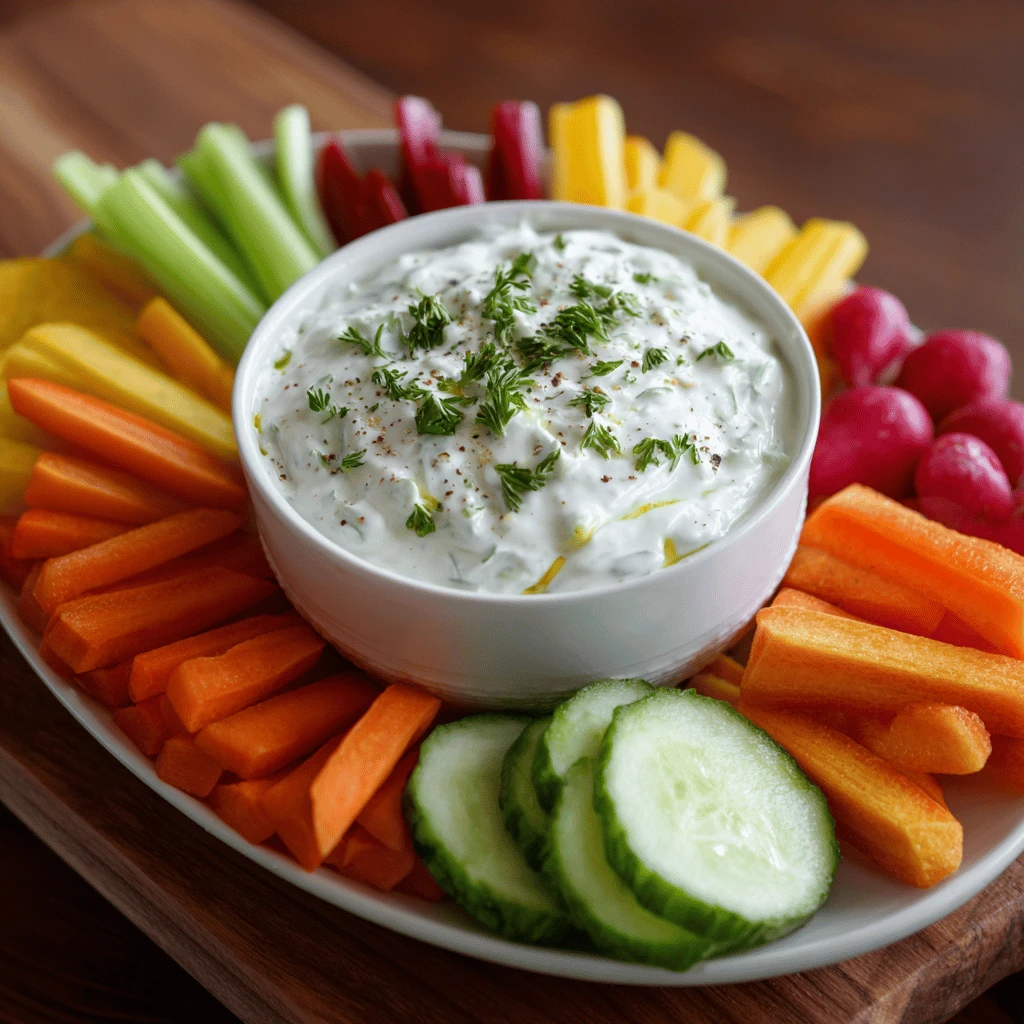
Arrange the vegetables attractively on a platter or in individual serving cups.
Consider offering a variety of vegetables to cater to different tastes.
Garnish the dip with fresh herbs or a sprinkle of paprika for visual appeal.
Provide small spoons or knives for serving the dip.
H3: Transporting the Dip and Vegetables
If you are transporting the dip and vegetables, pack them separately in insulated containers.
This will help keep them cool and prevent the vegetables from becoming soggy.
Include ice packs in the containers to maintain a low temperature.
Transport the dip and vegetables as close to serving time as possible.
FAQ About Greek Yogurt Dip
Is Greek yogurt dip healthy?
Yes, Greek yogurt dip is a healthy snack option. It’s high in protein and lower in calories and fat than many other dips. Plus, when paired with vegetables, it provides essential vitamins and minerals.
Can I use flavored Greek yogurt?
It’s best to use plain, unflavored Greek yogurt. Flavored yogurts often contain added sugars and artificial ingredients.
How long does Greek yogurt dip last?
Greek yogurt dip can last for up to 3-4 days when stored in an airtight container in the refrigerator.
Can I freeze Greek yogurt dip?
Freezing Greek yogurt dip is not recommended, as it can alter the texture and make it watery upon thawing.
What vegetables are best for dipping?
Crunchy vegetables like carrots, celery, bell peppers, and cucumber are excellent choices. Broccoli, cherry tomatoes, and snap peas are also great options.