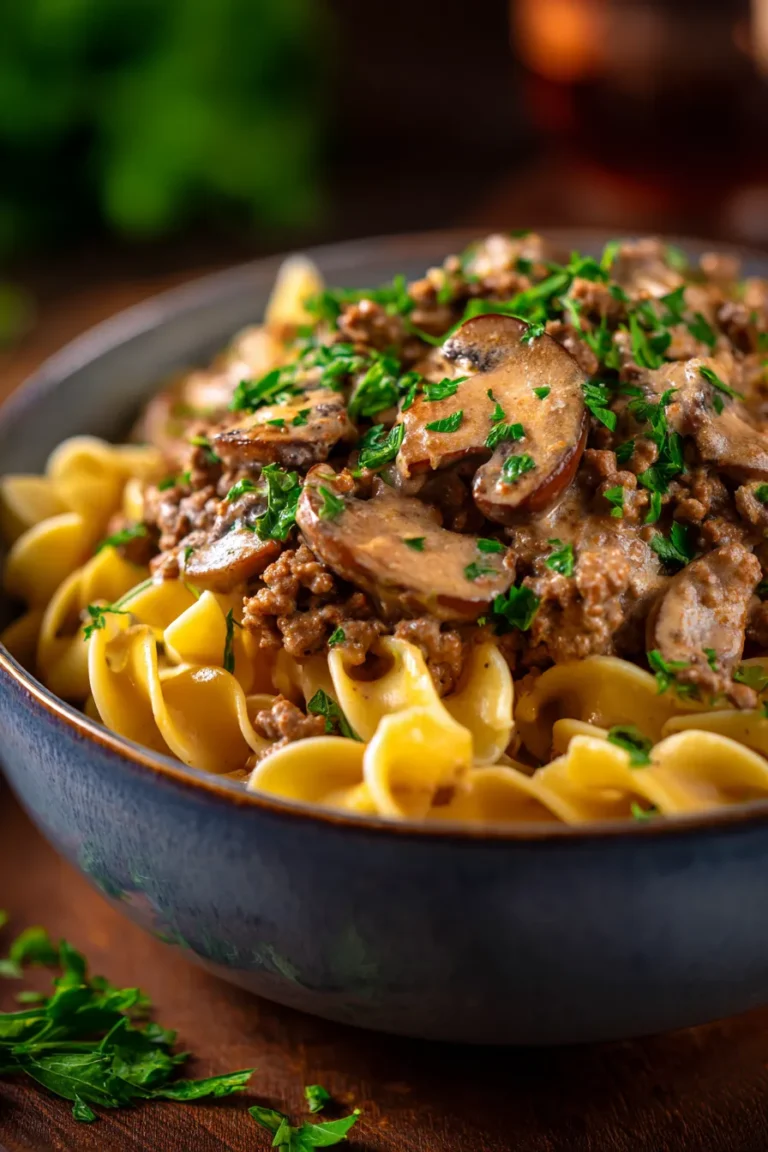
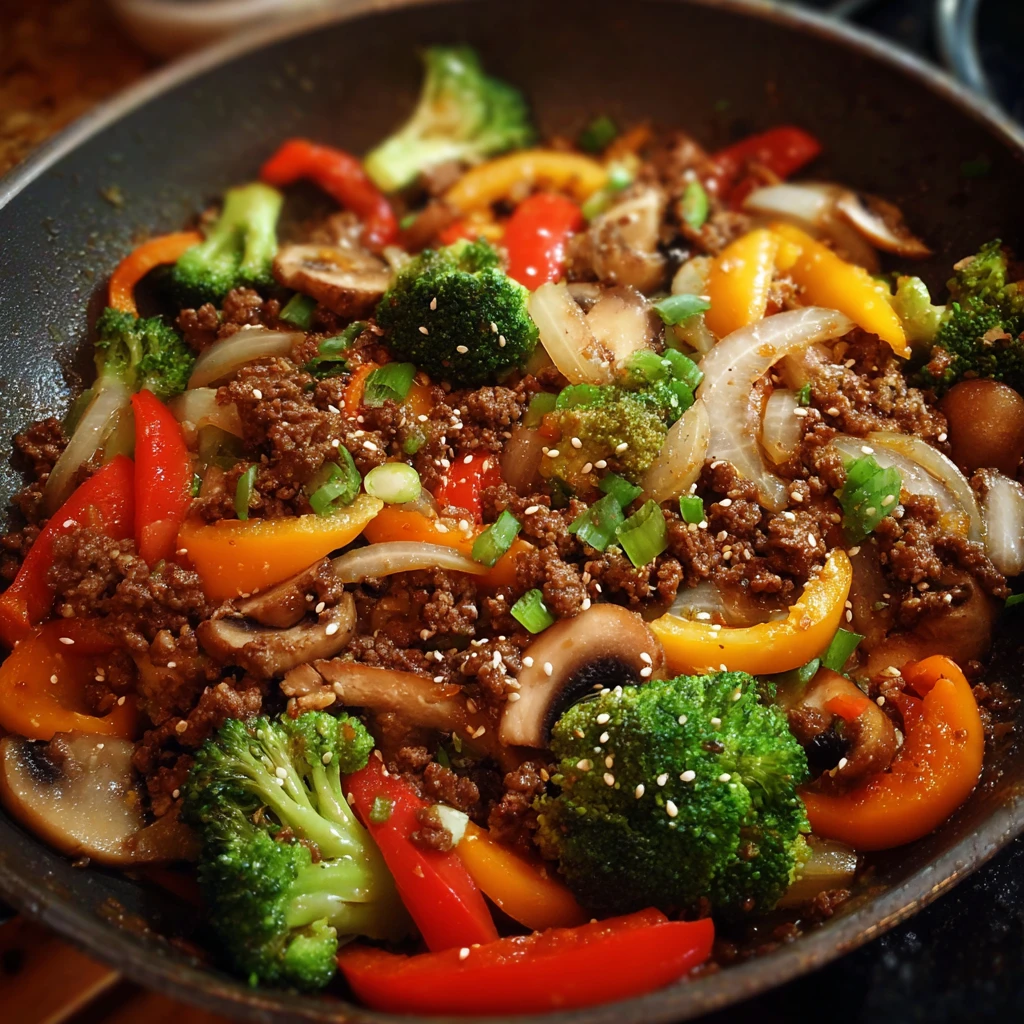
Ground Beef Stir-Fry with Vegetables
Ingredients
- 1 pound ground beef
- 1 tablespoon olive oil or vegetable oil
- 1 onion, thinly sliced
- 2 cloves garlic, minced
- 1 bell pepper (any color), sliced
- 1 cup broccoli florets
- 1 cup sliced carrots
- 1/2 cup sliced mushrooms
- 2 tablespoons soy sauce (low sodium preferred)
- 1 tablespoon sesame oil
- 1 tablespoon cornstarch
- 1 tablespoon brown sugar or honey
- 1/2 teaspoon ground ginger
- 1/4 teaspoon red pepper flakes (optional)
- Cooked rice, for serving
- Sesame seeds and chopped green onions, for garnish (optional)
Step-by-Step
1. In a large skillet or wok, heat the olive oil over medium-high heat.
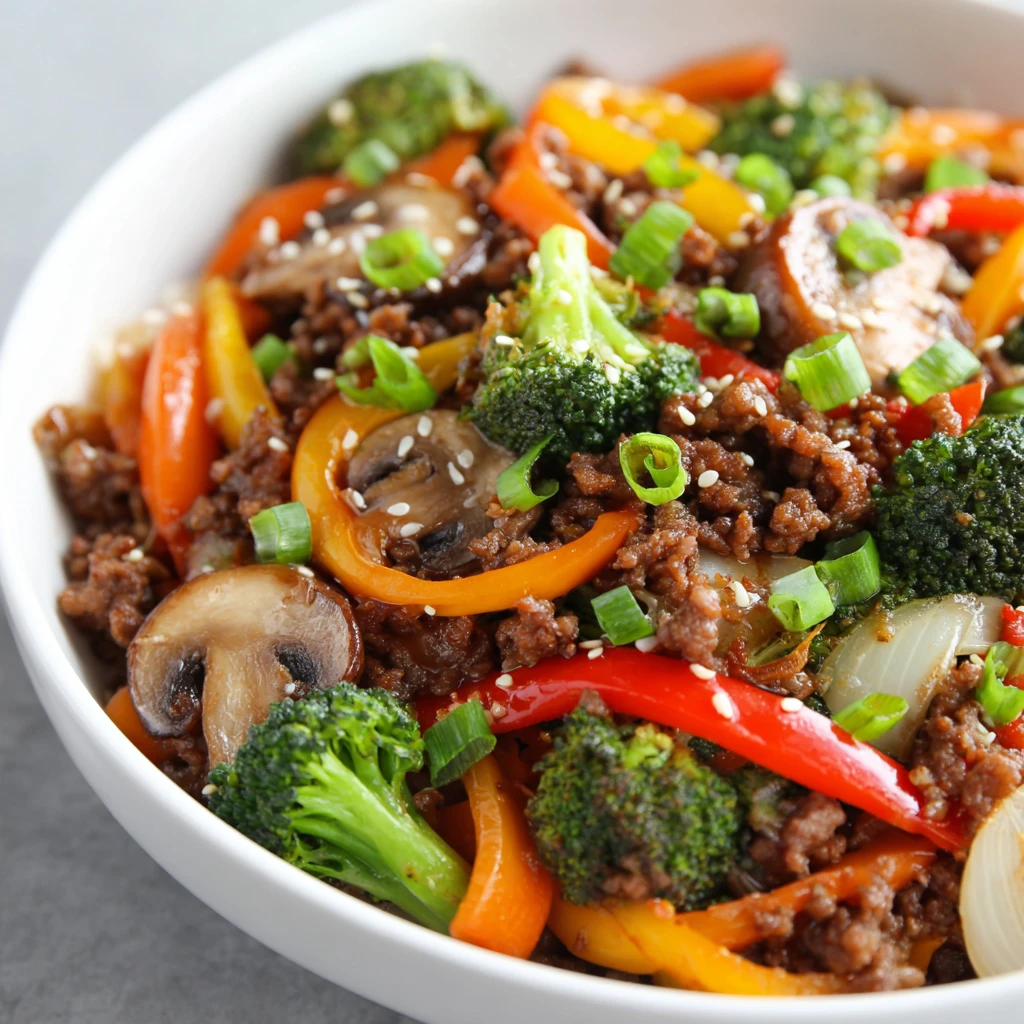
2. Add the ground beef and cook, breaking it up with a spoon, until browned. Drain any excess grease.
3. Add the sliced onion and cook until softened, about 3-5 minutes.
4. Stir in the minced garlic, bell pepper, broccoli florets, carrots, and mushrooms.
5. Cook until the vegetables are tender-crisp, about 5-7 minutes.
6. In a small bowl, whisk together the soy sauce, sesame oil, cornstarch, brown sugar, ground ginger, and red pepper flakes (if using).
7. Pour the sauce over the beef and vegetables and stir to coat.
8. Bring the sauce to a simmer and cook until it has thickened, about 1-2 minutes.
9. Serve the ground beef stir-fry over cooked rice.
10. Garnish with sesame seeds and chopped green onions, if desired.
Mastering Your Ground Beef Stir-Fry
Ground beef stir-fry with vegetables is a quick, easy, and healthy meal. It is highly adaptable, perfect for using up leftover vegetables. Let’s dive into how to make the best stir-fry possible.
Choosing the Right Ground Beef
The type of ground beef you use significantly impacts the final dish. Lean ground beef (90/10 or higher) is a great choice.
It minimizes the amount of grease you’ll need to drain.
Ground chuck (80/20) is also acceptable. Just remember to drain off the excess fat after browning.
Consider using ground sirloin for an even leaner option.
Selecting Your Vegetables
One of the best things about stir-fry is its versatility. You can use almost any vegetable you have on hand.
Good options include bell peppers, broccoli, carrots, mushrooms, snap peas, zucchini, and bok choy.
Consider the cooking time of each vegetable. Add harder vegetables like carrots and broccoli first. Softer vegetables like zucchini and mushrooms should be added later.
This prevents them from becoming overcooked and mushy.
Frozen vegetables can also be used. Thaw them slightly before adding them to the stir-fry.
Crafting the Perfect Sauce
The sauce is the heart of any stir-fry. It brings all the ingredients together and adds flavor.
A classic stir-fry sauce typically includes soy sauce, sesame oil, a sweetener, and a thickening agent.
Low-sodium soy sauce is preferable. It allows you to control the saltiness of the dish.
Sesame oil adds a nutty flavor. Use it sparingly, as it can be quite potent.
Brown sugar or honey adds sweetness. It balances the savory flavors of the soy sauce.
Cornstarch is used to thicken the sauce. Mix it with cold water before adding it to the skillet to prevent clumping.
Experiment with other flavors. Add ginger, garlic, red pepper flakes, or hoisin sauce to customize your sauce.
Elevating the Stir-Fry Experience
Beyond the basic recipe, there are many ways to elevate your ground beef stir-fry. Little tweaks can make a big difference.
Adding Protein Variations
While ground beef is the star of this recipe, you can easily substitute or add other proteins.
Consider using ground turkey or ground chicken for a leaner option.
Shrimp, tofu, or sliced steak are also great additions.
Adjust the cooking time based on the protein you choose.
Incorporating Noodles or Grains
While rice is a common accompaniment, you can also add noodles or grains directly to the stir-fry.
Cooked egg noodles, rice noodles, or ramen noodles work well.
Add them during the last few minutes of cooking. This allows them to soak up the sauce.
Quinoa or brown rice can also be added for a healthier option.
Garnishing for Flavor and Appeal
Garnishes add visual appeal and enhance the flavor of your stir-fry.
Sesame seeds add a nutty crunch.
Chopped green onions add a fresh, oniony flavor.
A drizzle of sriracha or chili oil adds a spicy kick.
Chopped peanuts or cashews add a satisfying crunch.
Tips and Tricks for Stir-Fry Success
Making a great stir-fry is all about technique. Here are some tips and tricks to help you succeed.
Achieving High Heat
Stir-frying requires high heat. This helps the ingredients cook quickly and evenly.
Use a large skillet or wok. Cast iron skillets are excellent at retaining heat.
Make sure your pan is hot before adding any ingredients.
Don’t overcrowd the pan. Cook the ingredients in batches if necessary.
The Importance of Prep
Proper preparation is crucial for a successful stir-fry.
Chop all your vegetables and measure out your sauce ingredients before you start cooking.
This will allow you to focus on the cooking process without scrambling.
Having everything ready to go ensures that nothing overcooks.
The Stir-Fry Technique
Stir-frying involves constant movement. This prevents the ingredients from sticking to the pan.
Use a spatula or wooden spoon to toss the ingredients frequently.
Keep the ingredients moving until they are cooked through.
Nutritional Benefits and Variations
Ground beef stir-fry with vegetables offers a variety of nutritional benefits. It can be easily adapted to meet different dietary needs.
The Health Benefits
This stir-fry is packed with protein, vitamins, and minerals.
Ground beef provides essential amino acids and iron.
Vegetables are rich in vitamins, minerals, and fiber.
The sauce adds flavor without adding excessive amounts of sodium or sugar (especially if using low-sodium soy sauce).
It’s a relatively low-calorie meal that can be customized to suit your dietary preferences.
Dietary Adaptations
This recipe can be easily adapted to meet different dietary needs.
For a gluten-free version, use tamari instead of soy sauce. Tamari is a gluten-free soy sauce alternative.
For a low-carb version, reduce the amount of brown sugar or honey in the sauce. Increase the amount of vegetables.
For a vegetarian or vegan version, substitute tofu or tempeh for the ground beef.
Adjust the vegetables to your liking. Add more of your favorites and omit any that you don’t enjoy.
FAQ
Can I use frozen vegetables in this stir-fry?
Yes, you can use frozen vegetables. Thaw them slightly before adding them to the stir-fry. This will help them cook more evenly.
How do I prevent the sauce from being too salty?
Use low-sodium soy sauce. You can also reduce the amount of soy sauce and add a little bit of water or broth to compensate.
Can I make this stir-fry ahead of time?
Yes, you can make the stir-fry ahead of time. Store it in an airtight container in the refrigerator for up to 3 days. Reheat it in a skillet or microwave before serving.
What other vegetables can I add to this stir-fry?
You can add almost any vegetable to this stir-fry. Good options include snap peas, zucchini, bean sprouts, and water chestnuts.
How can I make this stir-fry spicier?
Add more red pepper flakes to the sauce. You can also add a drizzle of sriracha or chili oil to the finished dish.