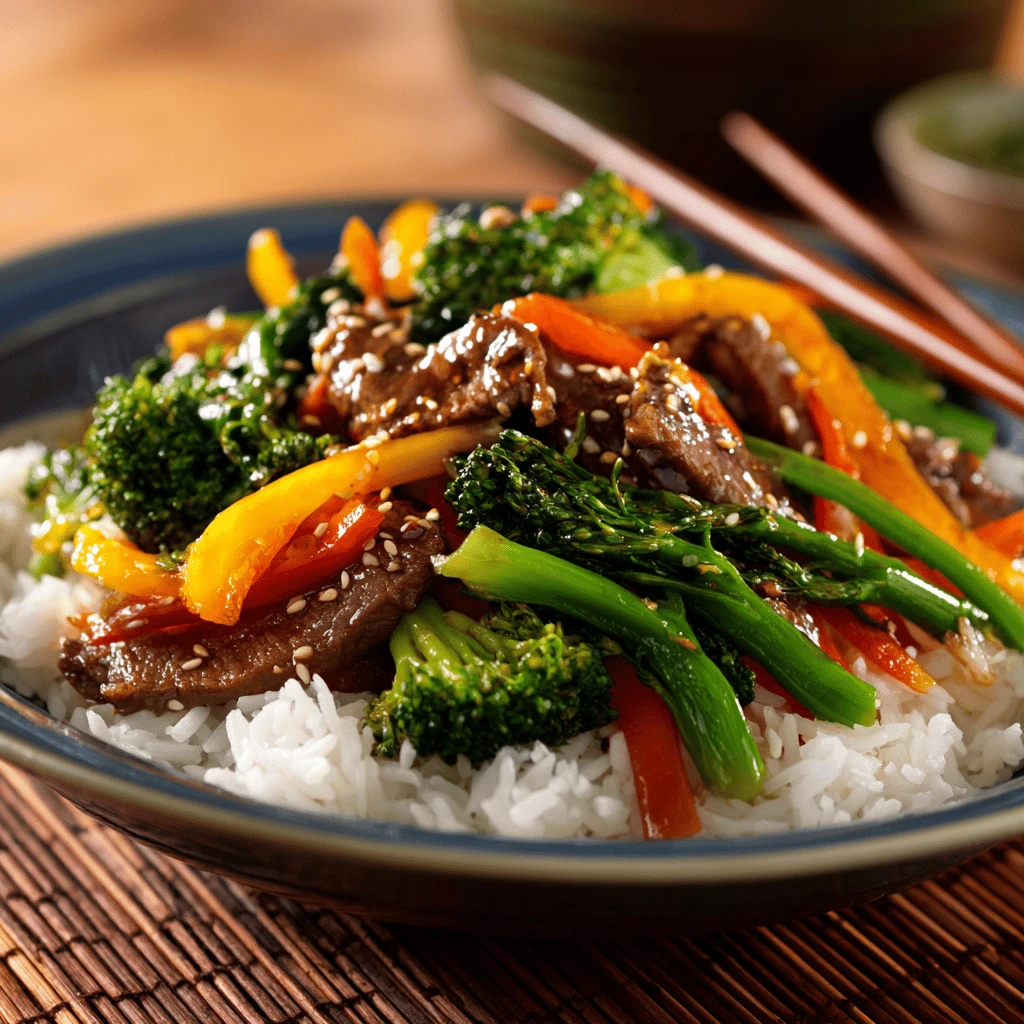
Quick Beef and Vegetable Stir-Fry
Craving a flavorful and satisfying meal that comes together in minutes? Look no further than a quick beef and vegetable stir-fry. This versatile dish is perfect for busy weeknights, allowing you to utilize fresh ingredients and customize the flavors to your liking. It’s a healthy, delicious, and adaptable option that will quickly become a family favorite.

Why Choose Stir-Fry? The Benefits Unveiled
Stir-frying offers numerous advantages over other cooking methods. First and foremost, it’s incredibly fast. The high heat and constant movement ensure that ingredients cook evenly and quickly, preserving their crispness and nutritional value. Stir-frying also requires minimal oil, making it a healthier option compared to deep-frying or pan-frying. Moreover, it’s a fantastic way to use up leftover vegetables and protein, reducing food waste and creating exciting new meals. Finally, the vibrant colors and textures of a well-executed stir-fry are incredibly appealing, making it a visually stimulating and satisfying dining experience.
Mastering the Basics: Key Ingredients and Techniques
The beauty of stir-fry lies in its simplicity, but mastering a few fundamental techniques will elevate your dish from good to great.
Selecting the Right Beef Cut
Choosing the right cut of beef is crucial for a tender and flavorful stir-fry. Look for cuts that are naturally tender and cook quickly at high heat, such as:
- Sirloin: A lean and versatile cut that’s ideal for stir-frying. Slice it thinly against the grain for maximum tenderness.
- Flank Steak: Known for its robust flavor, flank steak should also be sliced thinly against the grain. Marinating it beforehand will further enhance its tenderness.
- Ribeye: While typically reserved for grilling, thinly sliced ribeye can be used in stir-fries for a more decadent and flavorful option.
- Top Round: A more economical choice, top round requires careful slicing and marinating to prevent it from becoming tough.
Preparing the Vegetables
The key to perfectly cooked stir-fry vegetables is to cut them into uniform sizes so they cook evenly. Consider these popular choices:
- Broccoli: Cut into small florets for quick cooking.
- Bell Peppers: Slice into thin strips for a vibrant color and slightly sweet flavor.
- Carrots: Julienne or slice thinly for a touch of sweetness and crunch.
- Snap Peas: Add a satisfying snap and fresh flavor.
- Mushrooms: Sliced thinly, mushrooms add an earthy and umami element.
- Onions: Sliced thinly, onions provide a savory base flavor.
- Garlic & Ginger: Minced finely, they create an aromatic foundation for the stir-fry.
The Essential Stir-Fry Sauce
The sauce is what ties the entire stir-fry together. A classic stir-fry sauce typically includes:
- Soy Sauce: Provides a salty and umami base. Use low-sodium soy sauce to control the salt content.
- Oyster Sauce: Adds depth, richness, and a subtle sweetness. Vegetarian oyster sauce substitutes made from mushrooms are available.
- Sesame Oil: A small amount of sesame oil adds a nutty aroma and flavor.
- Cornstarch: Thickens the sauce and helps it cling to the ingredients.
- Sugar: Balances the salty and savory flavors. Brown sugar or honey can be used for a more complex sweetness.
- Rice Vinegar: Adds a touch of acidity to brighten the flavors.
- Optional Additions: Consider adding a pinch of red pepper flakes for heat, or a dash of ginger and garlic powder for enhanced aromatics.
Stir-Frying Techniques
- High Heat is Key: Preheat your wok or large skillet over high heat before adding any oil.
- Work in Batches: Avoid overcrowding the pan, as this will lower the temperature and result in steamed, rather than stir-fried, ingredients. Cook the beef in batches, if necessary.
- Constant Movement: Keep the ingredients moving constantly to ensure even cooking and prevent burning.
- Add Ingredients in Order of Cooking Time: Start with ingredients that take longer to cook, such as broccoli and carrots, and add quicker-cooking vegetables later.
- Add the Sauce at the End: Once the vegetables are tender-crisp and the beef is cooked through, add the sauce and stir-fry until it thickens and coats all the ingredients.
Recipe: Quick Beef and Vegetable Stir-Fry
This recipe is a great starting point; feel free to adapt it to your liking with your favorite vegetables and seasonings.
Ingredients:
-
- 1 pound beef sirloin, thinly sliced against the grain
- 1 tablespoon soy sauce
- 1 tablespoon cornstarch
- 1 tablespoon vegetable oil
- 1 onion, thinly sliced
- 2 cloves garlic, minced
- 1 inch ginger, minced
- 1 red bell pepper, thinly sliced
- 1 green bell pepper, thinly sliced
- 1 cup broccoli florets
- 1 cup sliced carrots
- 1/2 cup snap peas
- Sauce:
1/4 cup soy sauce
2 tablespoons oyster sauce
1 tablespoon sesame oil
1 tablespoon cornstarch
1 tablespoon brown sugar
1 tablespoon rice vinegar
1/4 cup water
- Cooked rice, for serving
Instructions:
1. In a bowl, combine the sliced beef with 1 tablespoon of soy sauce and 1 tablespoon of cornstarch. Marinate for at least 15 minutes.
2. In a small bowl, whisk together all the sauce ingredients and set aside.
3. Heat the vegetable oil in a wok or large skillet over high heat.
4. Add the beef and stir-fry until browned and cooked through. Remove from the pan and set aside.
5. Add the sliced onion, minced garlic, and minced ginger to the wok and stir-fry for about 1 minute, until fragrant.
6. Add the bell peppers, broccoli florets, and carrots to the wok and stir-fry for 3-5 minutes, until tender-crisp.
7. Add the snap peas and stir-fry for another minute.
8. Return the cooked beef to the wok.
9. Pour the sauce over the beef and vegetables and stir-fry until the sauce thickens and coats all the ingredients.
10. Serve immediately over cooked rice.
Beyond the Basics: Variations and Customizations
The possibilities for beef and vegetable stir-fry are endless. Here are some ideas to inspire your culinary creativity:
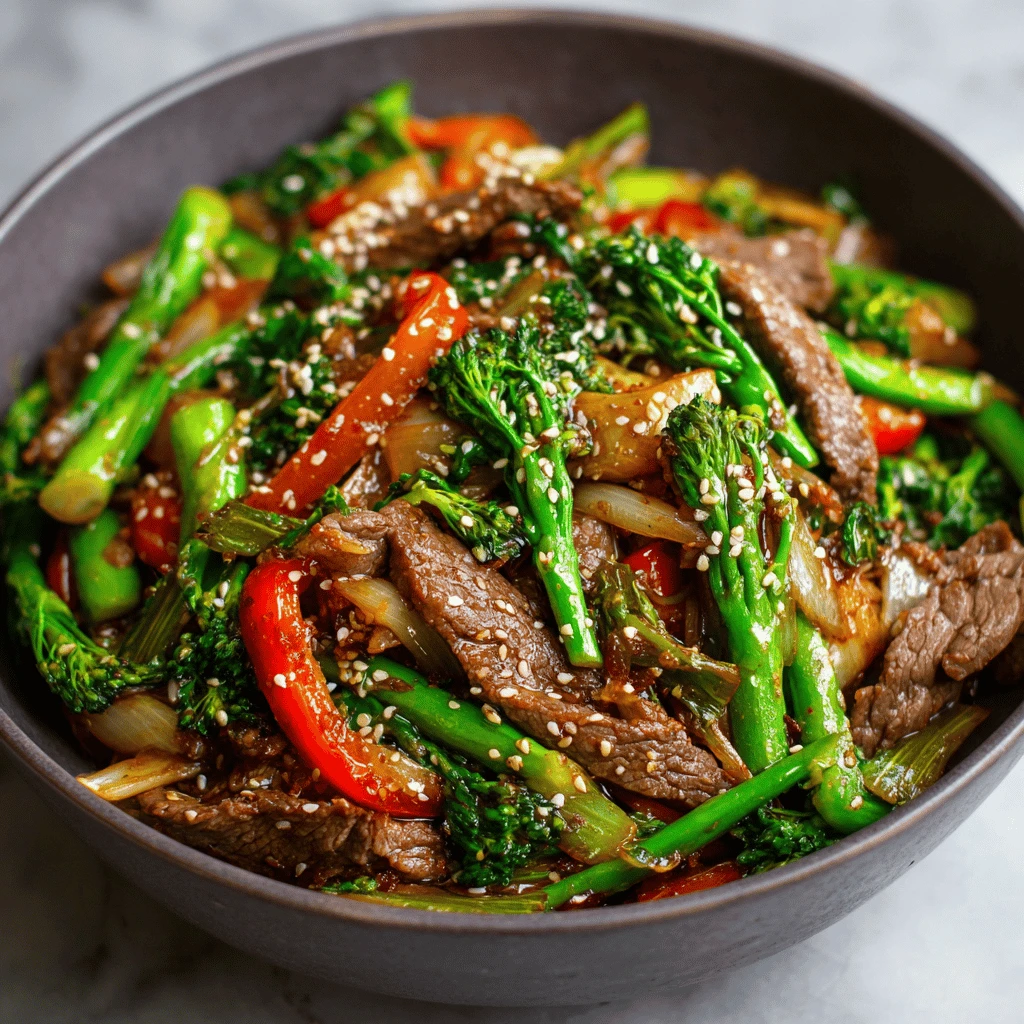
- Protein Variations: Swap the beef for chicken, pork, shrimp, or tofu.
- Vegetable Swaps: Use any vegetables you have on hand, such as zucchini, eggplant, bok choy, or snow peas.
- Spice It Up: Add red pepper flakes, sriracha, or a chili garlic sauce for a spicy kick.
- Noodle Stir-Fry: Toss in cooked noodles, such as egg noodles, ramen noodles, or rice noodles, for a heartier meal.
- Peanut Sauce Stir-Fry: Replace the classic stir-fry sauce with a peanut sauce for a nutty and flavorful twist.
- Sweet and Sour Stir-Fry: Use a sweet and sour sauce for a tangy and refreshing flavor.
- Add Nuts: Sprinkle with toasted sesame seeds, peanuts, or cashews for added crunch and flavor.
Frequently Asked Questions (FAQ)
Q: What is the best way to slice beef for stir-fry?
A: Always slice the beef thinly against the grain. This shortens the muscle fibers, making the beef more tender and easier to chew.
Q: How do I prevent my stir-fry from being soggy?
A: Use high heat, don’t overcrowd the pan, and avoid overcooking the vegetables. Cook the beef in batches, if necessary, to maintain high heat.
Q: Can I make stir-fry ahead of time?
A: While stir-fry is best served immediately, you can prepare the ingredients ahead of time. Slice the beef and vegetables, and mix the sauce. Store them separately in the refrigerator and cook the stir-fry just before serving.
Q: What kind of oil should I use for stir-frying?
A: Use a neutral oil with a high smoke point, such as vegetable oil, canola oil, or peanut oil.
Q: Can I use frozen vegetables in stir-fry?
A: Yes, you can use frozen vegetables. However, they may release more moisture than fresh vegetables, so you may need to cook them longer to evaporate the excess liquid.