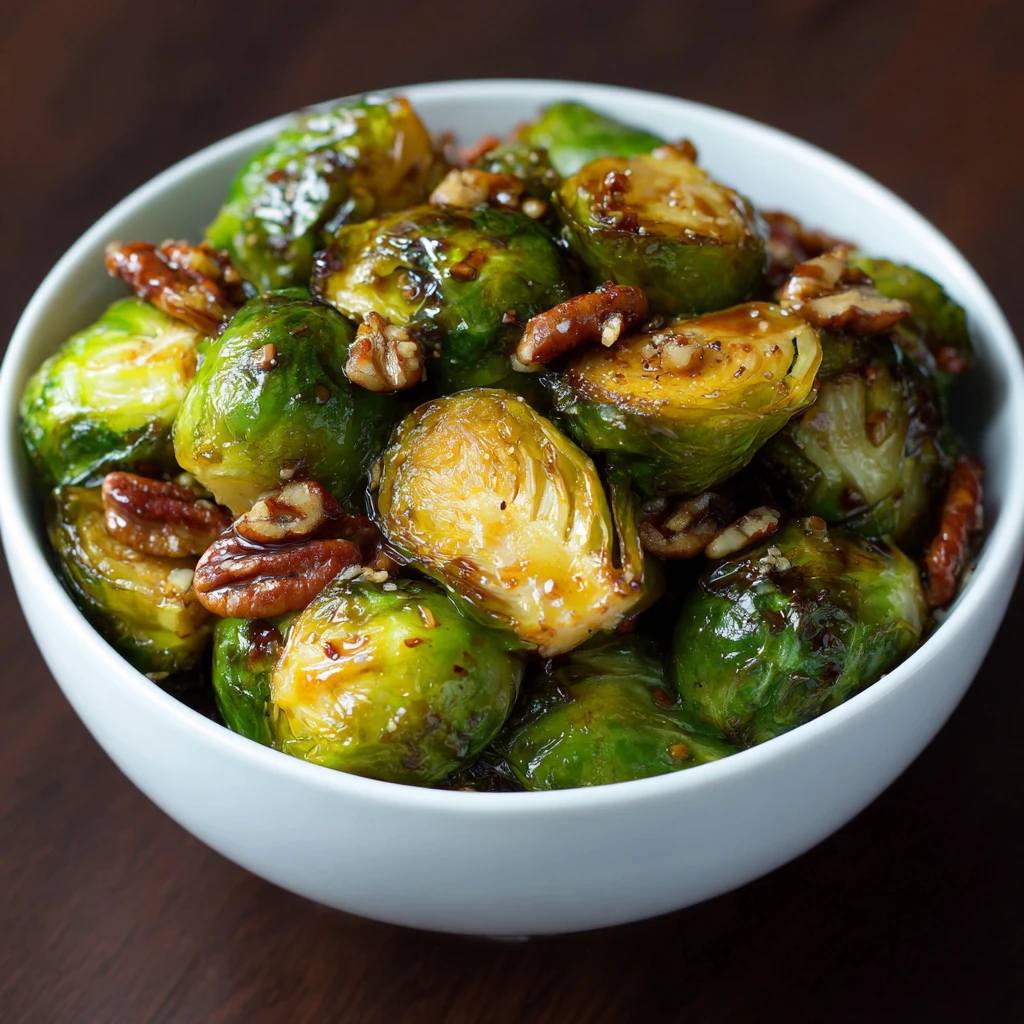
Roasted Brussels Sprouts with Balsamic for Thanksgiving
Ingredients
- 1.5 pounds Brussels sprouts, trimmed and halved (or quartered if large)
- 3 tablespoons olive oil
- 1/2 teaspoon salt
- 1/4 teaspoon black pepper
- 2 tablespoons balsamic vinegar
- 1 tablespoon maple syrup (optional, for extra sweetness)
- 1/4 cup chopped pecans or walnuts (optional, for garnish)
- 2 cloves garlic, minced (optional, for extra flavor)
- Pinch of red pepper flakes (optional, for a little heat)
Step-by-Step
1. Preheat your oven to 400°F (200°C).
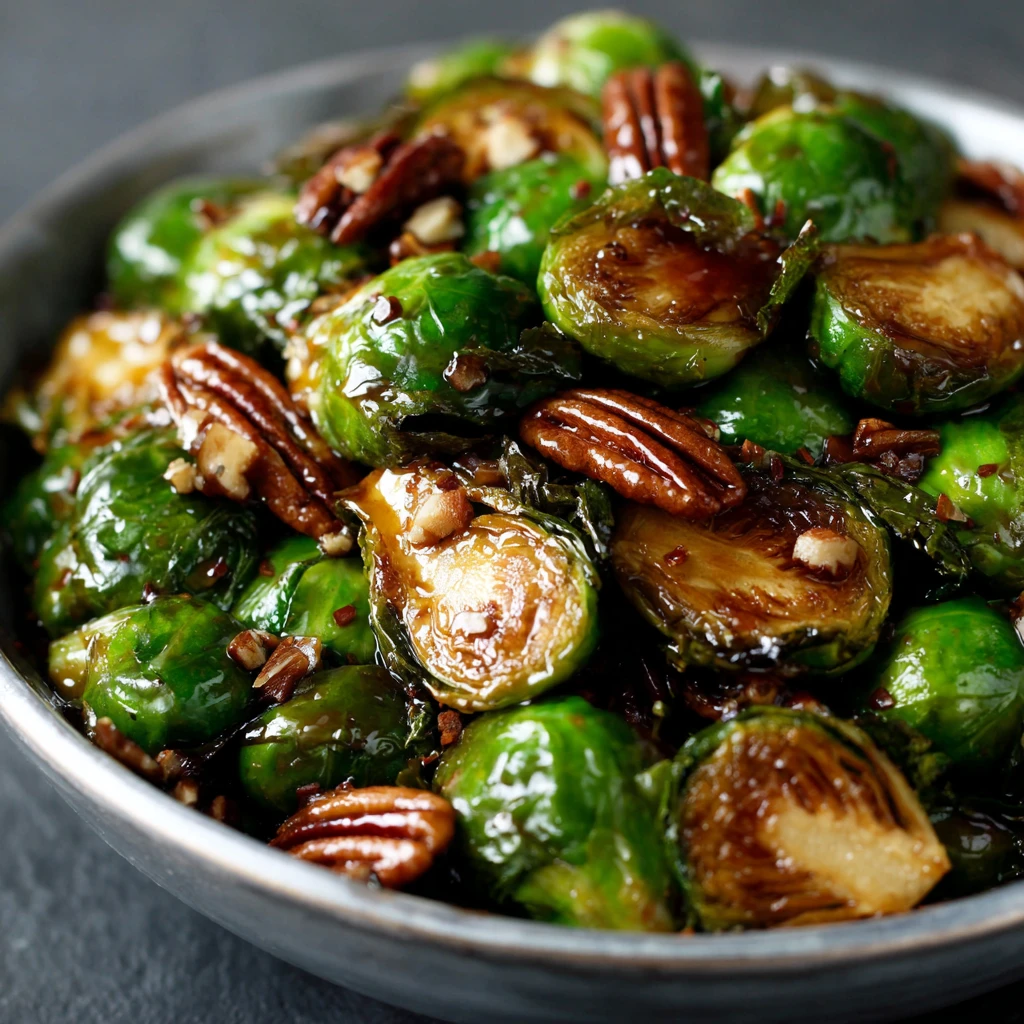
2. Wash and trim the Brussels sprouts. Remove any loose outer leaves.
3. Halve or quarter the Brussels sprouts, depending on their size. Smaller ones can be halved; larger ones should be quartered to ensure even cooking.
4. In a large bowl, toss the Brussels sprouts with olive oil, salt, and pepper. Make sure they are evenly coated. Add the minced garlic and red pepper flakes now if you desire to use them.
5. Spread the Brussels sprouts in a single layer on a baking sheet. Avoid overcrowding, as this will steam them instead of roasting them. If necessary, use two baking sheets.
6. Roast for 20-25 minutes, or until the Brussels sprouts are tender and browned, flipping halfway through. Keep an eye on them to prevent burning.
7. While the Brussels sprouts are roasting, prepare the balsamic glaze. In a small bowl, whisk together the balsamic vinegar and maple syrup (if using).
8. Once the Brussels sprouts are roasted, remove them from the oven and immediately drizzle with the balsamic glaze.
9. Toss to coat evenly.
10. Transfer the Brussels sprouts to a serving dish.
11. Garnish with chopped pecans or walnuts, if desired.
12. Serve immediately and enjoy!
Elevating Your Roasted Brussels Sprouts
### The Importance of Proper Preparation
The key to perfectly roasted Brussels sprouts lies in proper preparation. Washing and trimming them correctly sets the stage for even cooking and delicious flavor. Ensure all outer leaves that are loose or damaged are removed.
Halving or quartering the sprouts based on their size guarantees that they cook at the same rate. This prevents some sprouts from being overcooked while others remain undercooked. Uniformity is the goal.
### Achieving the Ideal Roasting Temperature and Technique
Roasting at 400°F (200°C) is crucial for caramelizing the Brussels sprouts and creating a crispy exterior. A higher temperature can lead to burning, while a lower temperature may result in soggy sprouts. Evenly spreading the sprouts in a single layer on the baking sheet is paramount.
Overcrowding the pan leads to steaming, not roasting. Flipping the sprouts halfway through the cooking process ensures even browning on all sides. This step is often overlooked but makes a significant difference in the final texture.
### Mastering the Balsamic Glaze
The balsamic glaze is what elevates this dish from simple roasted vegetables to a Thanksgiving-worthy side. High-quality balsamic vinegar is essential for a rich and complex flavor.
A touch of maple syrup adds a subtle sweetness that complements the tanginess of the balsamic vinegar. This is especially important if your balsamic vinegar is particularly acidic.
Whisking the balsamic vinegar and maple syrup together before drizzling it over the sprouts ensures even distribution. This prevents some sprouts from being overly saturated while others are left dry. Don’t add the glaze until after roasting. Adding before will lead to a sticky, burned mess.
Variations and Add-Ins
### Exploring Flavor Profiles
Beyond the classic balsamic glaze, there are numerous ways to customize this recipe to suit your preferences. Consider adding a touch of Dijon mustard to the balsamic glaze for a tangy kick.
Experiment with different herbs and spices, such as rosemary, thyme, or garlic powder, to create unique flavor combinations. A sprinkle of parmesan cheese during the last few minutes of roasting adds a savory element.
### Incorporating Complementary Ingredients
Adding other vegetables to the roasting pan can create a more complex and visually appealing dish. Butternut squash, sweet potatoes, or red onions are excellent choices.
Tossing the Brussels sprouts with crispy bacon or pancetta before roasting adds a smoky and savory dimension. Ensure the bacon is cooked through but not overly crispy before adding it to the sprouts.
### Considering Dietary Needs and Preferences
For a vegan option, ensure that the maple syrup is used instead of honey, as some vegans don’t consume honey. Always check the balsamic vinegar label for any hidden animal products (though this is rare).
For a gluten-free version, ensure that all ingredients, including the balsamic vinegar, are certified gluten-free. This is especially important for those with celiac disease or gluten sensitivities.
Timing and Planning for Thanksgiving
### Preparing in Advance
To save time on Thanksgiving Day, you can prep the Brussels sprouts the day before. Wash, trim, and halve or quarter them, then store them in an airtight container in the refrigerator.
You can also prepare the balsamic glaze ahead of time and store it in the refrigerator. Be sure to bring it to room temperature before drizzling it over the roasted sprouts. Do not roast the Brussels sprouts ahead of time, as they will become soggy.
### Optimizing Oven Space
Thanksgiving Day often involves juggling multiple dishes in the oven. Plan your cooking schedule carefully to maximize oven space and prevent delays. Roasting the Brussels sprouts at the same temperature as other dishes, such as sweet potatoes or stuffing, can save time and energy.
Consider using a convection oven, if available, as it can roast the Brussels sprouts more quickly and evenly. Reduce the cooking time by a few minutes if using a convection oven.
### Serving Suggestions
Roasted Brussels sprouts with balsamic vinegar make an excellent side dish for Thanksgiving dinner. They pair well with turkey, ham, or vegetarian entrees. Garnish with fresh herbs, such as parsley or thyme, for an extra touch of elegance.
Serve the Brussels sprouts immediately after roasting for the best flavor and texture. Leftovers can be stored in the refrigerator for up to three days and reheated in the oven or microwave.
Troubleshooting Common Issues
### Avoiding Soggy Brussels Sprouts
The most common issue when roasting Brussels sprouts is ending up with a soggy texture. Overcrowding the pan, using too much oil, or not roasting at a high enough temperature can all contribute to this problem. Make sure to give the Brussels sprouts space to breathe and caramelize.
Ensure that the Brussels sprouts are completely dry before tossing them with oil. Excess moisture will create steam and prevent them from browning properly. Pat them dry with paper towels if necessary.
### Preventing Burning
Burning can occur if the oven temperature is too high or if the Brussels sprouts are left in the oven for too long. Keep a close eye on them during the last few minutes of roasting and adjust the cooking time as needed.
Using a baking sheet with raised edges can help prevent the Brussels sprouts from burning. The edges will deflect heat and prevent the bottoms of the sprouts from getting too dark.
### Adjusting the Balsamic Glaze
If the balsamic glaze is too tart, add a little more maple syrup to balance the flavors. If it’s too sweet, add a squeeze of lemon juice or a splash of balsamic vinegar. Taste and adjust as needed.
For a thicker glaze, simmer the balsamic vinegar and maple syrup in a saucepan over low heat until it reduces to your desired consistency. Be careful not to burn it.

FAQ
Why are my Brussels sprouts bitter?
Bitterness in Brussels sprouts can be due to several factors, including overcooking, variety, and preparation. To minimize bitterness, choose smaller Brussels sprouts, trim them well, and avoid overcooking. Roasting at a high temperature can also help to caramelize the sprouts and reduce bitterness. Some people also find that blanching the sprouts briefly before roasting can help reduce bitterness.
Can I roast Brussels sprouts from frozen?
While it’s best to roast Brussels sprouts from fresh, you can roast them from frozen if necessary. However, they will likely be softer and less crispy than fresh Brussels sprouts. Thaw them slightly before roasting and pat them dry to remove excess moisture. You may also need to increase the roasting time.
How do I store leftover roasted Brussels sprouts?
Store leftover roasted Brussels sprouts in an airtight container in the refrigerator for up to three days. Reheat them in the oven or microwave until heated through. They may not be as crispy as when they were freshly roasted, but they will still be delicious.
Can I add other vegetables to this recipe?
Yes, you can definitely add other vegetables to this recipe. Butternut squash, sweet potatoes, red onions, and carrots are all excellent choices. Adjust the roasting time as needed, depending on the vegetables you choose.
What is the best type of balsamic vinegar to use?
Use a good quality balsamic vinegar, but you don’t need to use the most expensive aged variety for this recipe. A standard balsamic vinegar from Modena will work well. Taste the vinegar before using it to ensure that it has a good balance of sweetness and acidity.