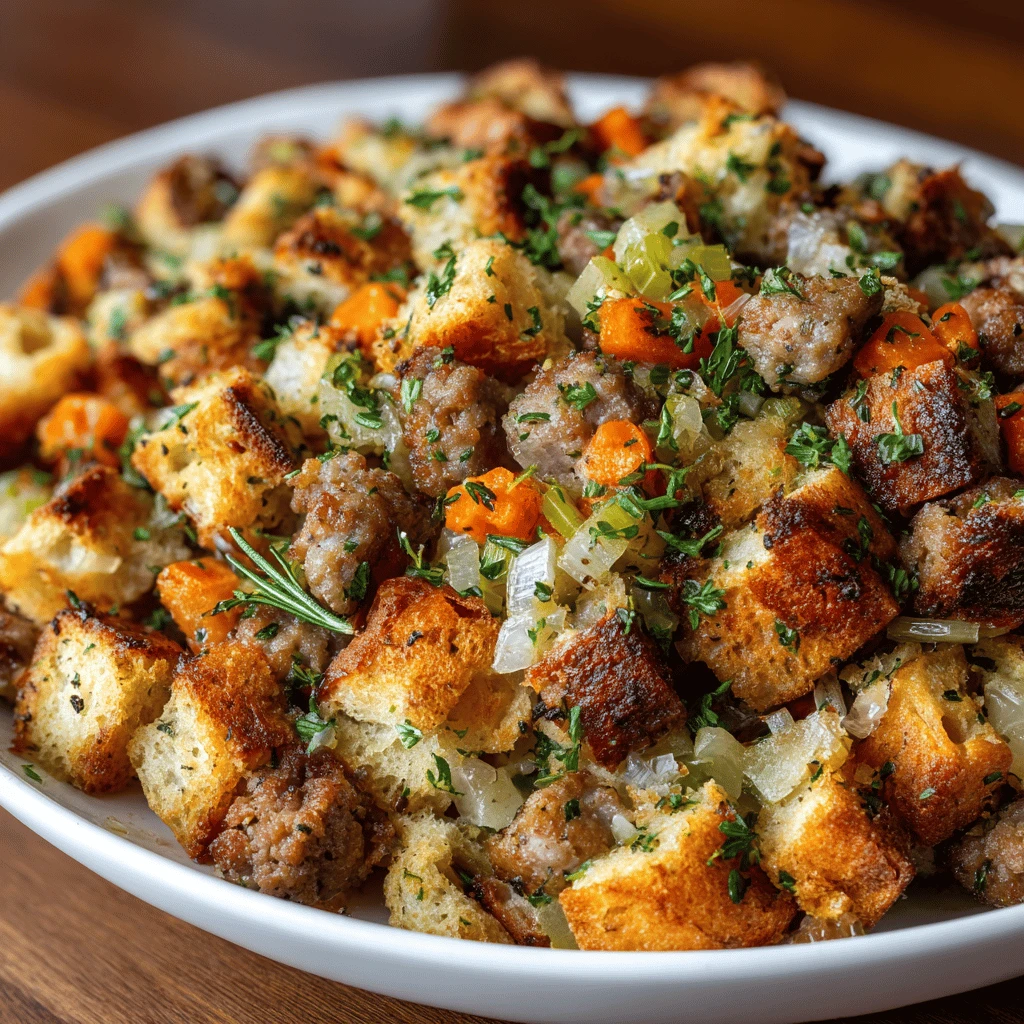
Sausage Herb Stuffing for Thanksgiving
Ingredients
- 1 pound Italian sausage, removed from casings
- 1 large onion, chopped
- 2 celery stalks, chopped
- 1 cup chopped carrots
- 4 cloves garlic, minced
- 1 loaf (1 pound) day-old bread, cubed (such as sourdough, French, or country)
- 1/2 cup fresh parsley, chopped
- 1/4 cup fresh sage, chopped
- 1/4 cup fresh thyme leaves
- 2 large eggs, lightly beaten
- 4 cups chicken broth (low sodium)
- 1/2 cup melted butter
- Salt and freshly ground black pepper to taste
Step-by-Step
1. Preheat oven to 350°F (175°C).
2. In a large skillet, cook the sausage over medium heat, breaking it apart with a spoon, until browned. Drain off any excess grease.
3. Add the onion, celery, and carrots to the skillet with the sausage. Cook until softened, about 5-7 minutes.
4. Stir in the garlic and cook for another minute until fragrant.
5. In a very large bowl, combine the cubed bread, parsley, sage, and thyme.
6. Pour the sausage and vegetable mixture over the bread.
7. In a separate bowl, whisk together the eggs and chicken broth.
8. Pour the egg and broth mixture over the bread and sausage mixture.
9. Drizzle the melted butter over the stuffing.
10. Gently toss everything together until well combined. Be careful not to overmix.
11. Season with salt and pepper to taste.
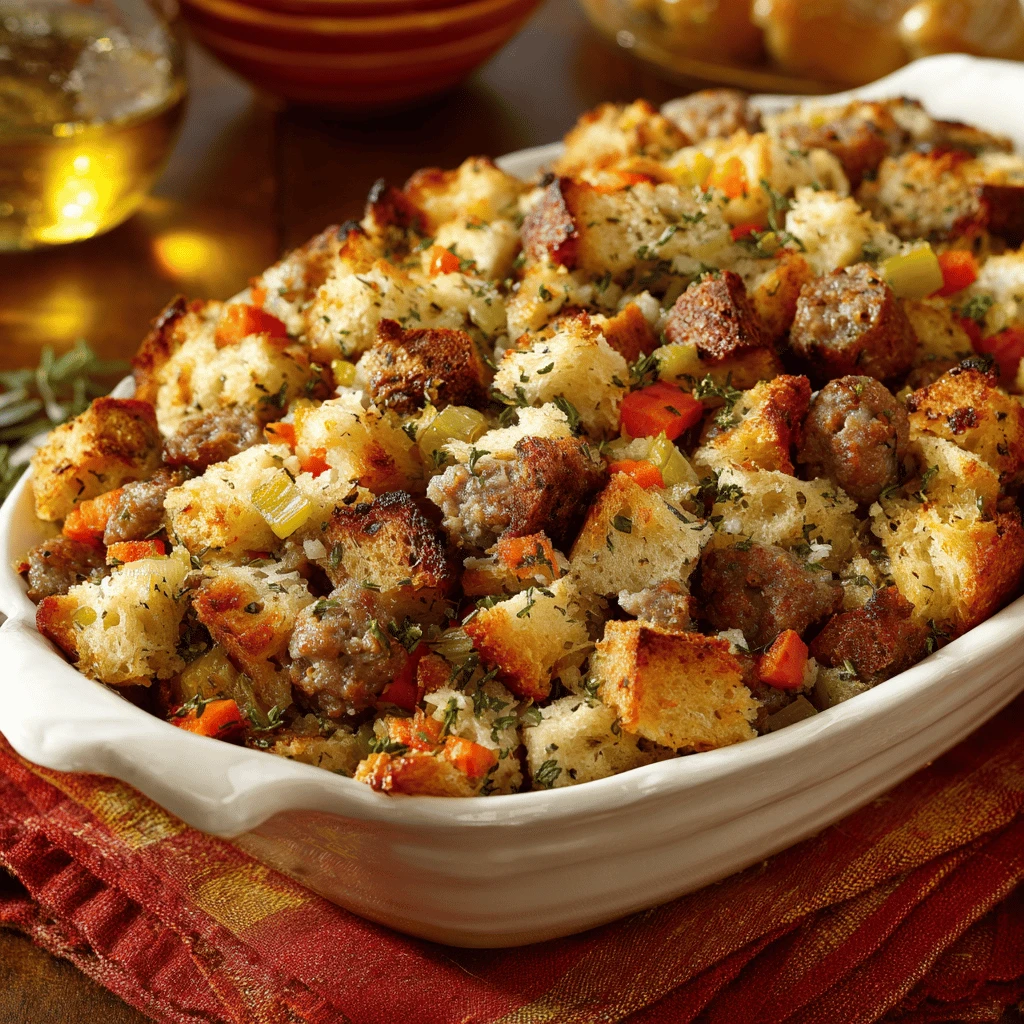
12. Transfer the stuffing to a greased 9×13 inch baking dish.
13. Cover the baking dish with foil and bake for 30 minutes.
14. Remove the foil and bake for another 15-20 minutes, or until golden brown and heated through.
15. Let stand for 10 minutes before serving.
Mastering Your Thanksgiving Stuffing
Sausage herb stuffing is a Thanksgiving staple. This classic side dish is a guaranteed crowd-pleaser. Making perfect stuffing doesn’t have to be intimidating. Let’s explore some tips and tricks for achieving stuffing success.
Choosing the Right Bread
The bread is the foundation of your stuffing. Selecting the appropriate bread is vital. Day-old bread is key.
Slightly stale bread absorbs the liquid without becoming mushy. Sourdough, French, or country bread are excellent choices. Their firm texture and subtle flavors complement the sausage and herbs. Avoid soft, pre-sliced bread. These tend to disintegrate during baking.
To ensure your bread is sufficiently dry, cube it a day or two in advance. Let it sit uncovered. This allows it to dry out naturally. Alternatively, you can lightly toast the cubed bread in the oven at a low temperature.
Selecting the Perfect Sausage
The type of sausage you choose significantly impacts the stuffing’s flavor. Italian sausage is a popular choice. It offers a savory and slightly spicy taste.
You can use sweet, mild, or hot Italian sausage, depending on your preference. Remove the sausage from its casings before cooking. This allows it to crumble evenly.
Consider using a combination of different sausages for a more complex flavor profile. For example, a blend of Italian sausage and chorizo can add a unique kick. Experiment to find your favorite combination.
Herb Selection and Preparation
Fresh herbs elevate the flavor of your stuffing. Parsley, sage, and thyme are classic choices. They contribute a fragrant and earthy aroma.
Use fresh herbs whenever possible. They offer a brighter and more vibrant flavor than dried herbs. Chop the herbs finely before adding them to the stuffing mixture.
This ensures that their flavors are evenly distributed. You can also add other herbs, such as rosemary or oregano. These can add depth and complexity to the flavor profile. Remember to adjust the quantities to your taste.
Variations and Customizations
One of the best things about stuffing is its versatility. You can easily customize it to suit your preferences. This allows you to cater to dietary needs or simply try something new.
Vegetarian or Vegan Options
To make a vegetarian stuffing, simply omit the sausage. You can substitute it with other ingredients. Mushrooms, walnuts, or lentils are excellent choices.
These add texture and a savory flavor. For a vegan stuffing, use vegetable broth instead of chicken broth. Replace the eggs with a flax egg or an egg replacer.
Ensure that your bread is also vegan-friendly. Many commercially available breads contain dairy or eggs.
Adding Fruits and Nuts
Fruits and nuts can add a delightful sweetness and crunch to your stuffing. Dried cranberries, apples, or apricots are popular additions.
They complement the savory flavors of the sausage and herbs. Toasted pecans, walnuts, or almonds add a pleasant textural contrast.
Be careful not to add too many fruits or nuts. This can overwhelm the other flavors. A handful or two is usually sufficient.
Gluten-Free Adaptations
If you need a gluten-free stuffing, simply use gluten-free bread. There are many excellent gluten-free bread options available.
Ensure that your bread is specifically labeled as gluten-free. Some breads may be processed in facilities that also handle gluten.
You may also need to adjust the amount of liquid. Gluten-free bread can sometimes absorb more liquid than regular bread.
Tips for Perfecting Your Stuffing
Achieving the perfect stuffing requires attention to detail. Here are some tips to help you avoid common pitfalls. This will guarantee a delicious result every time.
Preventing Dry Stuffing
Dry stuffing is a common problem. It often results from using too much bread or not enough liquid. To prevent this, ensure that your bread is adequately moistened.
Gradually add the chicken broth until the bread is saturated but not soggy. The stuffing should be moist but not dripping wet. You can also add extra melted butter or olive oil. This will help to keep the stuffing moist during baking.
Consider adding some finely grated vegetables, such as zucchini or carrots. These will release moisture as they cook.
Avoiding Soggy Stuffing
Soggy stuffing is another common issue. This typically occurs when the bread is too fresh or too much liquid is used. To prevent this, use day-old bread that has been allowed to dry out.
Avoid over-saturating the bread with liquid. Add the chicken broth gradually. Stop when the bread is moistened but not drowning.
If your stuffing is already too wet, you can try spreading it out on a baking sheet. Bake it at a low temperature to dry it out slightly before proceeding with the recipe.
Baking to the Right Consistency
The baking time and temperature are crucial for achieving the right consistency. Bake the stuffing covered with foil for the first half of the baking time. This will help to prevent it from drying out.
Remove the foil for the second half of the baking time. This will allow the top to brown and crisp up. The stuffing is done when it is heated through. The top is golden brown.
A toothpick inserted into the center should come out clean. Let the stuffing stand for 10 minutes before serving. This will allow it to set up slightly.
Serving and Storing Your Stuffing
Once your stuffing is perfectly baked, it’s time to serve and enjoy it. Proper serving and storage techniques are essential. This ensures that your stuffing remains delicious and safe to eat.
Pairing with Thanksgiving Dishes
Sausage herb stuffing is a versatile side dish. It pairs well with a variety of Thanksgiving dishes. It is a classic accompaniment to roasted turkey.
The savory flavors of the stuffing complement the richness of the turkey. It also pairs well with mashed potatoes, gravy, and cranberry sauce.
Consider serving it alongside other vegetable dishes, such as green bean casserole or roasted Brussels sprouts. This creates a balanced and flavorful Thanksgiving meal.
Reheating Leftovers
Leftover stuffing can be reheated in the oven or microwave. To reheat in the oven, preheat to 350°F (175°C).
Place the stuffing in a baking dish. Cover it with foil. Bake for 15-20 minutes, or until heated through.
To reheat in the microwave, place the stuffing in a microwave-safe dish. Cover it with plastic wrap. Microwave on high for 1-2 minutes, or until heated through.
Add a tablespoon or two of chicken broth to keep the stuffing moist during reheating.
Storing Stuffing Safely
Store leftover stuffing in an airtight container in the refrigerator. It should be consumed within 3-4 days.
To freeze stuffing, allow it to cool completely. Then, transfer it to a freezer-safe container or bag.
It can be stored in the freezer for up to 2-3 months. Thaw the stuffing in the refrigerator overnight before reheating.
Troubleshooting Common Issues
Even with careful preparation, stuffing can sometimes present challenges. Let’s address some common issues and how to fix them. Knowing how to correct these mistakes can save your Thanksgiving feast.
Stuffing is Too Bland
If your stuffing tastes bland, there are several ways to boost its flavor. Add more herbs, such as sage, thyme, or rosemary.
Increase the amount of sausage or add other flavorful ingredients. Consider adding sautéed mushrooms, caramelized onions, or roasted garlic.
You can also add a splash of Worcestershire sauce or soy sauce. This will enhance the savory flavors. Season with salt and pepper to taste.
Stuffing is Too Salty
If your stuffing is too salty, try adding a squeeze of lemon juice or a splash of vinegar. This can help to balance the flavors.
You can also add some unsalted ingredients, such as cooked rice or plain bread cubes. This will help to dilute the saltiness.
Avoid adding more salt or salty ingredients. This will only exacerbate the problem. Taste the stuffing periodically as you make adjustments.
Stuffing is Burning
If your stuffing is burning on top, cover it with foil. This will help to prevent further browning.
Reduce the oven temperature slightly. Continue baking until the stuffing is heated through.
You can also place a baking sheet on the rack above the stuffing. This will help to deflect some of the heat.
FAQ About Sausage Herb Stuffing
This FAQ section answers common questions. It will help you ensure success with your Sausage Herb Stuffing for Thanksgiving.
Can I make stuffing ahead of time?
Yes, you can prepare the stuffing a day or two in advance. Assemble all the ingredients. But don’t bake it until Thanksgiving Day. Store the unbaked stuffing covered in the refrigerator. Add a little extra broth before baking if it seems dry.
Can I stuff the turkey with this stuffing?
While stuffing the turkey is a traditional practice, it’s not recommended for food safety reasons. Stuffing inside the turkey may not reach a safe temperature. This can lead to bacterial growth. It is best to bake the stuffing separately.
What kind of bread works best for stuffing?
Day-old sourdough, French, or country bread are ideal. Their firm texture holds up well during baking. Avoid using soft, pre-sliced bread.
How do I keep my stuffing moist?
Use day-old bread, but do not allow it to dry too much. Add sufficient chicken broth and melted butter. Bake the stuffing covered with foil for the first part of the baking time.
Can I use dried herbs instead of fresh?
Yes, you can use dried herbs. Use about one-third the amount of fresh herbs. For example, if the recipe calls for 1/4 cup of fresh sage, use about 1 tablespoon of dried sage.