Sautéed Spinach with Garlic and Olive Oil: A Simple, Healthy Delight
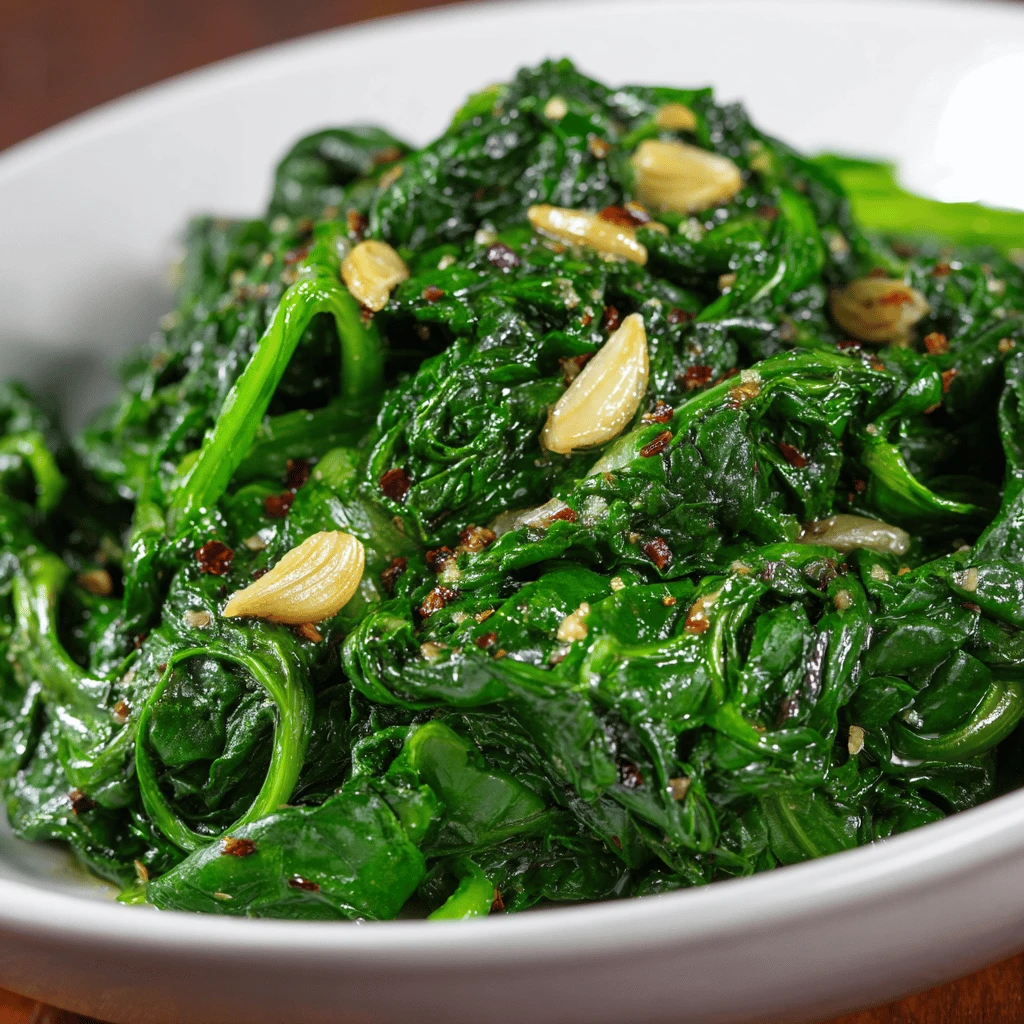
Sautéed spinach with garlic and olive oil is a timeless dish, celebrated for its simplicity, nutritional value, and delicious flavor. This quick and easy recipe transforms fresh spinach into a vibrant and flavorful side dish, perfect for weeknight dinners or elegant gatherings.
Why Sautéed Spinach is a Kitchen Staple
Sautéed spinach has earned its place as a kitchen staple for several compelling reasons:
- Nutrient-Rich: Spinach is a powerhouse of vitamins and minerals, including vitamin A, vitamin C, vitamin K, iron, and folate. Sautéing it in olive oil enhances the absorption of fat-soluble vitamins.
- Quick and Easy: This dish comes together in minutes, making it ideal for busy weeknights. The simple preparation requires minimal ingredients and effort.
- Versatile: Sautéed spinach can be served as a side dish, incorporated into omelets, pasta dishes, or used as a filling for savory pastries.
- Delicious Flavor: The combination of fresh spinach, fragrant garlic, and rich olive oil creates a simple yet satisfying flavor profile that appeals to a wide range of palates.
Mastering the Art of Sautéing Spinach
While seemingly straightforward, achieving perfectly sautéed spinach involves a few key techniques:
Choosing the Right Spinach
- Fresh Spinach: Opt for fresh spinach leaves over frozen whenever possible. Fresh spinach has a brighter flavor and better texture. Look for vibrant green leaves without any signs of wilting or discoloration.
- Baby Spinach vs. Mature Spinach: Baby spinach is more tender and has a milder flavor, making it suitable for quick sautéing. Mature spinach has a slightly stronger flavor and may require a bit more cooking time.
- Washing Spinach: Thoroughly wash the spinach to remove any dirt or grit. Use a salad spinner to remove excess water, ensuring the spinach wilts properly during sautéing.
The Perfect Sautéing Technique
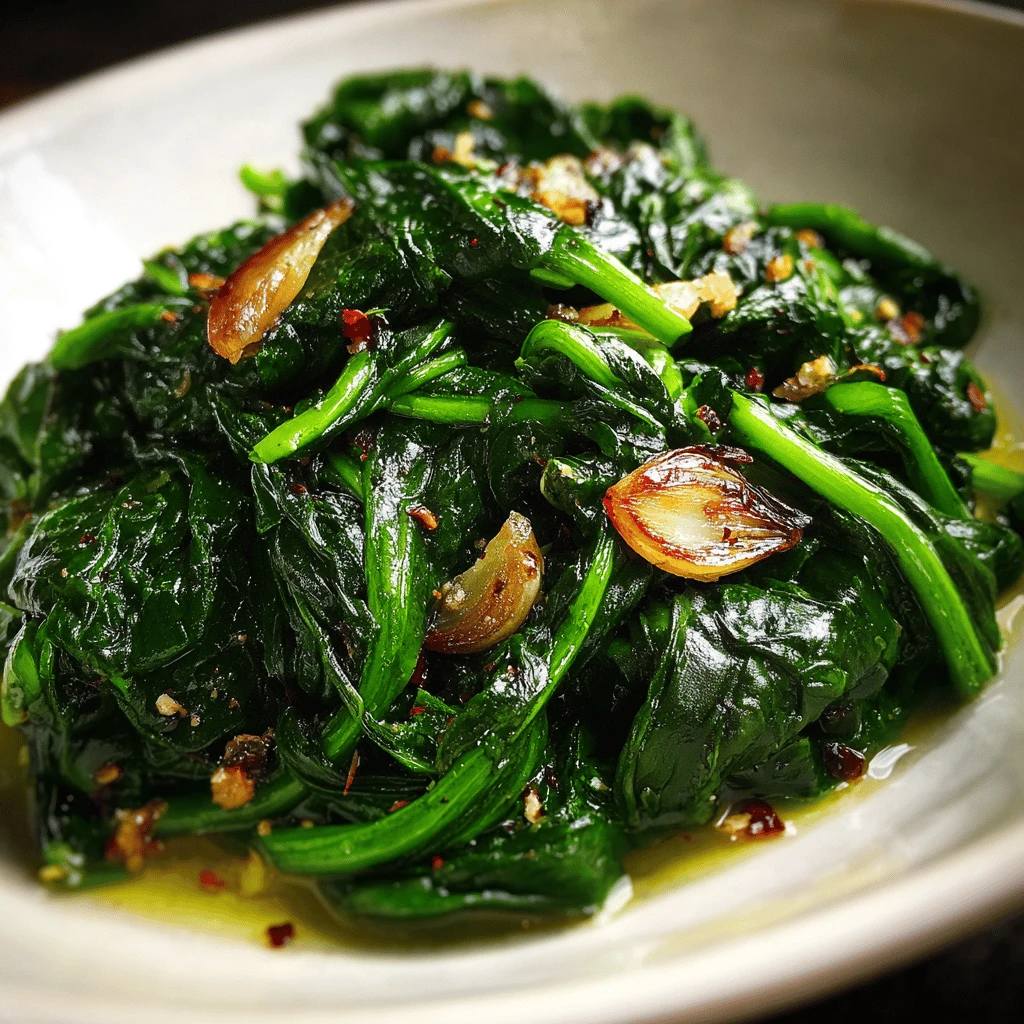
- Garlic Prep: Mince or thinly slice the garlic. Avoid burning the garlic, as it can impart a bitter taste to the dish. Sautéing the garlic gently in olive oil releases its aromatic compounds.
- Olive Oil: Use high-quality extra virgin olive oil for its rich flavor and health benefits. The olive oil coats the spinach leaves, preventing them from sticking to the pan and adding a lusciousness to the dish.
- High Heat: Sauté the spinach over medium-high heat to ensure it wilts quickly and evenly. Avoid overcrowding the pan, as this can lower the temperature and result in soggy spinach. Work in batches if necessary.
- Seasoning: Season generously with salt and pepper to enhance the flavors. Consider adding a pinch of red pepper flakes for a subtle kick.
Variations to Elevate Your Spinach
While the classic recipe is delicious on its own, here are some variations to add a personal touch:
- Lemon Juice: A squeeze of fresh lemon juice at the end brightens the flavors and adds a refreshing tang.
- Red Pepper Flakes: A pinch of red pepper flakes adds a subtle heat and complexity.
- Pine Nuts: Toasted pine nuts provide a delightful crunch and nutty flavor.
- Parmesan Cheese: Grated Parmesan cheese adds a salty and savory element.
- Balsamic Glaze: A drizzle of balsamic glaze adds a touch of sweetness and acidity.
Sautéed Spinach with Garlic and Olive Oil: The Recipe
This recipe provides a detailed guide to creating perfect sautéed spinach.
Yields: 2 servings
Prep Time: 5 minutes
Cook Time: 5 minutes
Ingredients:
- 1 pound fresh spinach
- 2 cloves garlic, minced
- 2 tablespoons extra virgin olive oil
- Salt and freshly ground black pepper to taste
- Optional: Red pepper flakes, lemon juice, pine nuts, Parmesan cheese, balsamic glaze
Equipment:
- Large skillet or sauté pan
- Salad spinner (optional)
Instructions
1. Prepare the Spinach: Wash the spinach thoroughly and remove any tough stems. Use a salad spinner to remove excess water.
2. Sauté the Garlic: Heat the olive oil in a large skillet over medium heat. Add the minced garlic and sauté for 1-2 minutes, or until fragrant, being careful not to burn it.
3. Add the Spinach: Add the spinach to the skillet in batches, if necessary. Cook, stirring frequently, until the spinach wilts and becomes tender, about 2-3 minutes.
4. Season: Season with salt and pepper to taste. Add a pinch of red pepper flakes, if desired.
5. Finish and Serve: Remove from heat and stir in a squeeze of fresh lemon juice, if desired. Transfer to a serving dish and garnish with toasted pine nuts or grated Parmesan cheese, if desired. Serve immediately.
Serving Suggestions and Creative Uses
Sautéed spinach is a versatile dish that can be enjoyed in numerous ways:
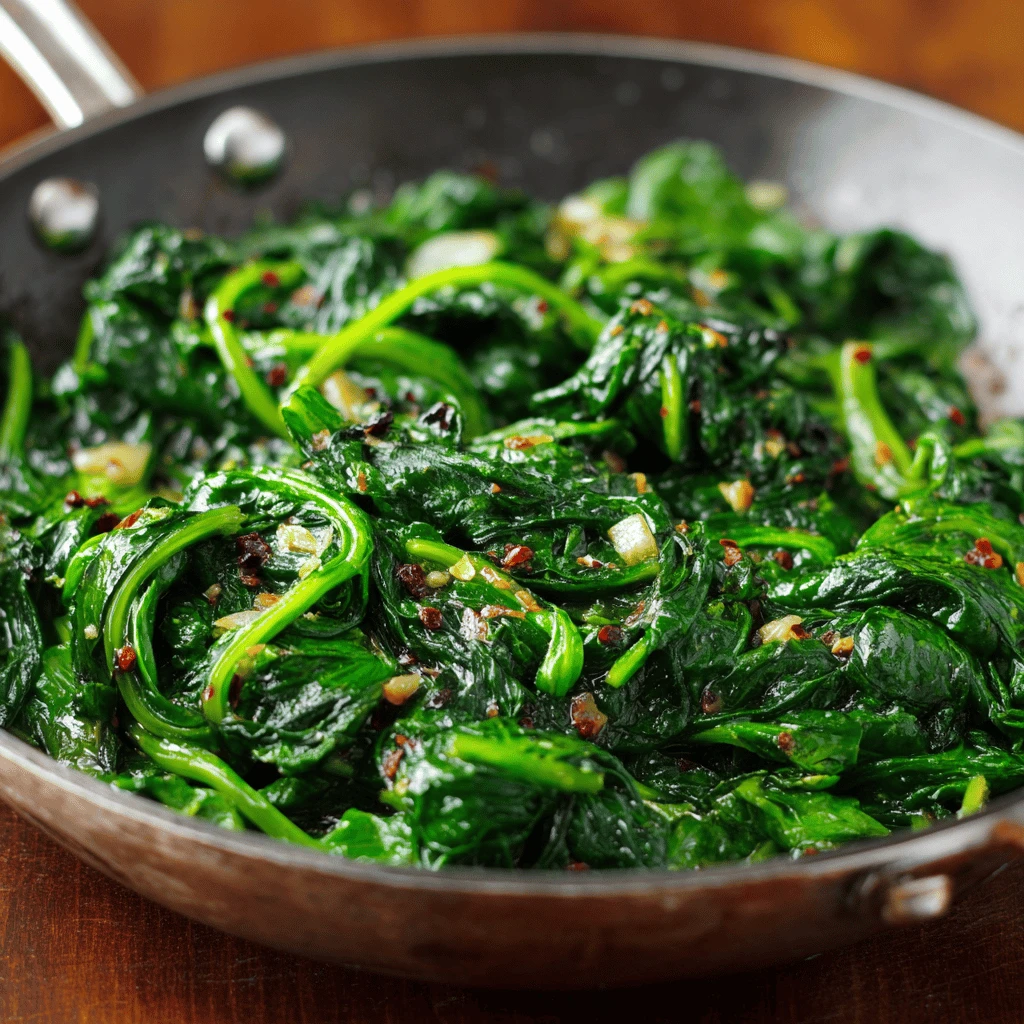
- Side Dish: Serve it alongside grilled chicken, fish, or steak for a healthy and flavorful meal.
- Pasta Dish: Toss it with cooked pasta, olive oil, and Parmesan cheese for a simple and satisfying vegetarian meal.
- Omelet Filling: Add it to omelets or frittatas for a boost of nutrients and flavor.
- Pizza Topping: Use it as a topping for homemade pizza, paired with ricotta cheese and garlic.
- Savory Pastry Filling: Incorporate it into savory pastries, such as spanakopita or quiche.
- With Eggs: Serve under or alongside fried or poached eggs.
- Stuffed Chicken: Incorporate it into stuffed chicken breasts for a flavorful and nutritious meal.
- Salad: Use as a base for a warm salad, topped with toasted nuts, cheese, and a vinaigrette.
Frequently Asked Questions (FAQ)
Q: How do I prevent my sautéed spinach from becoming soggy?
A: Make sure to remove excess water from the spinach after washing it. Cook the spinach over medium-high heat and avoid overcrowding the pan. Working in batches will help the spinach wilt quickly and evenly without becoming soggy.
Q: Can I use frozen spinach instead of fresh spinach?
A: Yes, you can use frozen spinach. Thaw it completely and squeeze out as much excess water as possible before sautéing. Keep in mind that frozen spinach may have a slightly different texture than fresh spinach.
Q: How long does sautéed spinach last in the refrigerator?
A: Sautéed spinach can be stored in the refrigerator for up to 3 days. Reheat it gently in a skillet or microwave before serving.
Q: Can I add other vegetables to my sautéed spinach?
A: Absolutely! Feel free to add other vegetables such as mushrooms, onions, or bell peppers to your sautéed spinach. Simply sauté the additional vegetables before adding the spinach.
Q: What is the best type of pan to use for sautéing spinach?
A: A large skillet or sauté pan with a wide surface area is ideal for sautéing spinach. This allows the spinach to cook evenly and prevents overcrowding. Stainless steel or non-stick pans work well.
Q: Can I use butter instead of olive oil?
A: Yes, you can use butter instead of olive oil. Butter will impart a richer flavor to the dish. Consider using a combination of butter and olive oil for the best of both worlds.
Q: Is there anything else that is good in it besides garlic?
A: Yes, red pepper flakes, lemon juice, a splash of balsamic vinegar, chopped shallots or red onions, sun-dried tomatoes, toasted pine nuts, or a sprinkle of parmesan cheese can all enhance the flavor.
Q: How can I make this vegan?
A: This recipe is naturally vegan, simply use olive oil as directed and don’t add any non-vegan toppings like parmesan cheese.