
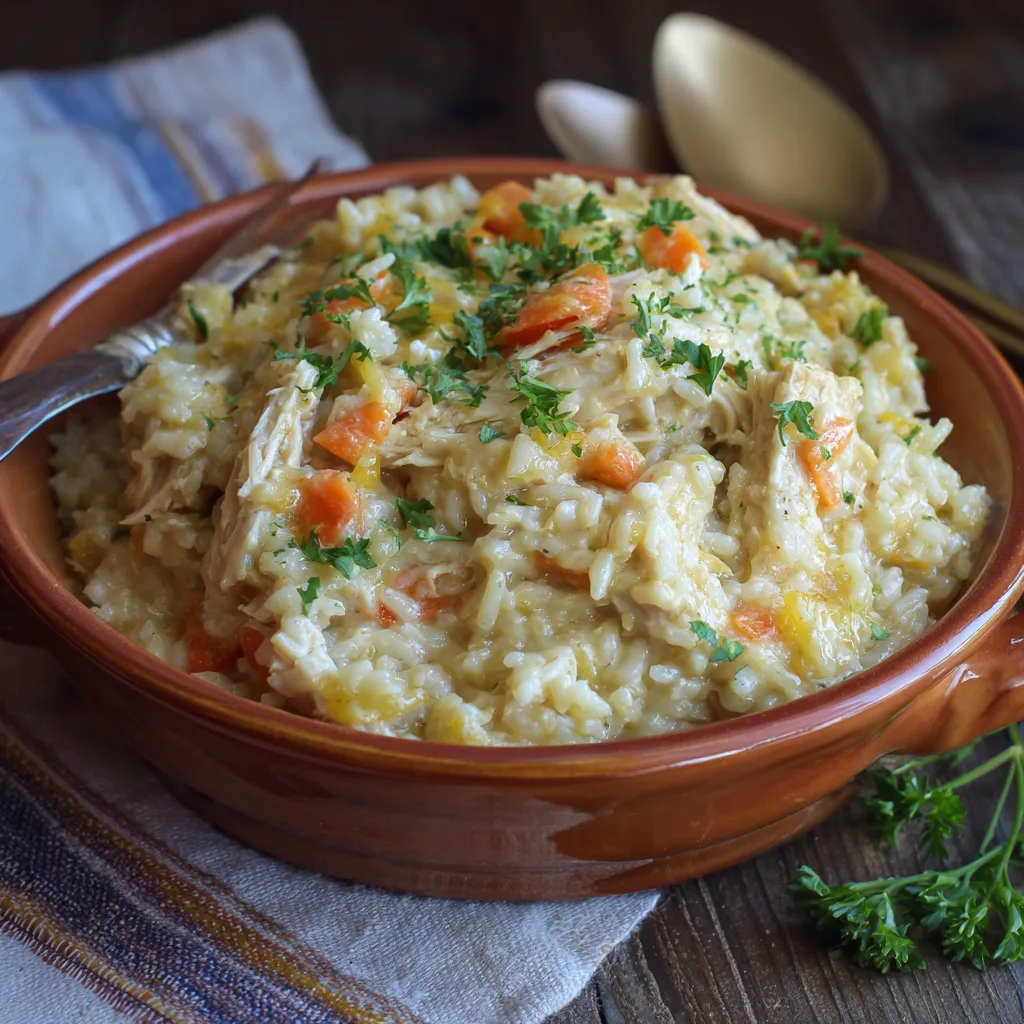
The slow cooker is the ideal appliance for transforming simple ingredients into a rich, deeply satisfying family meal, and no dish exemplifies this better than the Chicken and Rice Casserole. This recipe takes the beloved, nostalgic flavors of a baked casserole—tender chicken, savory creamy sauce, and gooey melted cheese—and delivers it with the set-it-and-forget-it convenience of a crockpot. While some slow cooker recipes struggle with achieving the perfect rice texture, our method focuses on optimizing each component separately before combining them, ensuring every scoop is perfectly creamy, never mushy, and loaded with flavor.
Ingredients
For the Slow Cooker Base (Cooked First):
-
1.5 pounds boneless, skinless chicken breasts (about 3-4 medium breasts)
-
2 (10.5 oz) cans Condensed Cream of Chicken Soup (or Cream of Mushroom/Celery)
-
1 cup low-sodium chicken broth
-
1/2 cup sour cream or plain Greek yogurt
-
1/2 teaspoon onion powder
-
1/2 teaspoon garlic powder
-
1/4 teaspoon black pepper
-
1 teaspoon dried thyme (optional, for flavor depth)
To Add at the End:
-
2 cups uncooked long-grain white rice
-
4 cups water or extra broth (for cooking rice)
-
1.5 cups freshly shredded sharp cheddar cheese, divided (1 cup for mixing, 1/2 cup for topping)
-
1 cup frozen peas or chopped steamed broccoli (optional)
-
Fresh chopped parsley or sliced green onions, for garnish

Step-by-Step Instructions
-
Prepare the Chicken Base: Lightly grease the interior of a 6-quart slow cooker. Place the chicken breasts in the bottom.
-
Mix the Cream Sauce: In a separate bowl, whisk together the condensed soup, chicken broth, sour cream (or yogurt), onion powder, garlic powder, pepper, and dried thyme until smooth.
-
Start the Cook: Pour the cream sauce evenly over the chicken. Cover the slow cooker and cook on LOW for 6–7 hours or on HIGH for 3.5–4 hours, until the chicken is fork-tender and reaches an internal temperature of 165°F (74°C).
-
Cook the Rice: Approximately 30 minutes before the chicken is done, prepare the rice. Cook the 2 cups of long-grain rice according to package directions, typically by combining it with 4 cups of water/broth and bringing to a boil, then simmering covered until tender and the liquid is absorbed.
-
Shred and Combine: Remove the cooked chicken from the slow cooker and place it on a cutting board. Shred the chicken using two forks or chop it into bite-sized pieces. Return the shredded chicken to the slow cooker.
-
Finish the Casserole: Turn the slow cooker off. Stir in the freshly cooked rice, 1 cup of the shredded cheddar cheese, and any optional frozen vegetables (the heat of the mixture will warm the frozen veggies). Mix until everything is well combined and the cheese has begun to melt.
-
Melt the Topping: Sprinkle the remaining 1/2 cup of shredded cheddar cheese evenly over the top of the casserole. Replace the lid for 5–10 minutes to allow the residual heat to melt the topping until it is glossy and bubbly.
-
Serve: Garnish with fresh parsley or green onions and serve warm.
The Rice Conundrum: Ensuring Perfect Casserole Texture
The biggest challenge in crafting a slow cooker chicken and rice dish is managing the rice. Rice needs precise ratios of liquid and consistent heat to cook properly, conditions that can be unpredictable in the low, slow, and variable temperatures of a crockpot. This is why the preferred and safest method for a true “casserole” texture involves cooking the rice separately and adding it at the end.
The Two Main Methods Explained
1. The “Cook Separately” Method (Recommended for Casseroles):
This is the method used in the core recipe above. It guarantees perfectly textured rice and prevents the main failure point of slow cooker rice—turning into a gluey “gruel” or “porridge.” The slow cooker is used solely to create the tender chicken and the rich, concentrated cream sauce, which is then blended with the pre-cooked rice to form the casserole. This approach is highly reliable for a creamy, distinct-grain texture.
2. The “One-Pot” Method (For the Time-Conscious):
Some recipes attempt to cook the rice simultaneously with the chicken and sauce. While appealingly simple, this method requires specific adjustments:
-
Choose the Right Grain: If attempting the one-pot approach, you must use long-grain brown rice or wild rice. These grains are heartier, release starch more slowly, and can withstand the longer cooking time without immediately dissolving into mush like most white rice varieties would.
-
Use High Heat: The rice often cooks better on the HIGH setting (3 to 4 hours) rather than LOW. Low heat for extended periods keeps the rice in the “danger zone” for starch release, leading to mushiness.
-
Rinse Thoroughly: For any method incorporating raw rice, always rinse the rice under cold water until the water runs clear. This essential step removes excess surface starch that, when cooked down slowly, causes the rice grains to stick together and become sticky.
Critical Timing Tip: Even with the one-pot method, it is crucial to check the rice early (around the 2.5-hour mark). If it appears dry, add a small splash of liquid (1/2 cup of broth). If the rice is done but the chicken is not, remove the chicken, shred it, and return it to the pot, allowing the rice to finish cooking in the remaining liquid.
Flavor Building and Strategic Ingredient Swaps
A classic cream of chicken casserole is comforting, but smart ingredient choices and additions can elevate the dish from simple weeknight fare to a truly memorable meal.
Optimizing the Chicken
While boneless, skinless chicken breasts are convenient and cook quickly, they can sometimes dry out in a slow cooker.
-
Swap for Thighs: Substituting boneless, skinless chicken thighs yields a significantly juicier, more flavorful result due to their higher fat content. They are much more forgiving to cook for the long duration of a slow cooker cycle.
-
Sear for Depth (Optional): For a deeper, richer flavor, quickly sear the chicken (thighs or breasts) in a skillet with a tablespoon of oil for 2-3 minutes per side before adding them to the slow cooker. This develops a savory crust that prevents the meat from tasting boiled.
Creamy Base Alternatives
The canned soup is the hallmark of a classic casserole, but modern variations allow for healthier or more complex flavor bases.
-
The Healthy Swap: Replace the condensed soup with a combination of Greek yogurt (or sour cream, as in the core recipe) and low-sodium chicken broth. Greek yogurt provides the necessary creaminess and tang with added protein, eliminating the need for highly processed canned goods. Use a full cup of Greek yogurt and adjust the liquid accordingly.
-
The Roux Thickener: For a homemade, lump-free cream sauce, create a basic roux. Melt 3 tablespoons of butter, whisk in 3 tablespoons of flour, and cook for one minute. Slowly whisk in 1.5 cups of milk or broth until thickened. Add this roux to the slow cooker mixture in place of the canned soup to achieve a rich, velvety texture.
Aromatic Additions and Vegetable Strategy
Layering fresh aromatics under the chicken builds a flavor foundation that permeates the entire dish.
-
Aromatics: Always start by placing finely chopped onion (yellow or shallot) and minced garlic directly on the bottom of the slow cooker insert. This acts as a protective layer for the chicken and releases flavor as it slow cooks.
-
Vegetable Timing: Firmer vegetables like diced carrots and celery can be added at the beginning, cooking down into the sauce. Softer vegetables, such as frozen peas, broccoli florets, or thinly sliced mushrooms, should be added in the last 15 minutes or when the rice is incorporated. This prevents them from turning brown, mushy, and leaching excessive water into the sauce.
Mastering the Slow Cooker: Troubleshooting and Consistency
The slow cooker is a set-it-and-forget-it device, but a few key practices and fixes can ensure your casserole consistency is perfect every time.
Addressing Common Texture Problems
| Problem | Cause | Solution |
| Mushy/Gluey Rice | Rice cooked too long, too much liquid, or high starch content. | Cook rice separately and add at the end. If cooking raw rice, use brown rice on the HIGH setting and always rinse it first. |
| Watery Sauce | Chicken and vegetables releasing too much moisture. | Do not lift the lid during cooking. In the last 30 minutes, remove the lid and switch to HIGH to allow excess moisture to evaporate. Alternatively, stir in 1-2 tablespoons of cornstarch mixed with an equal amount of cold water (a slurry) and cook for another 15 minutes. |
| Dry Chicken | Overcooked boneless, skinless breasts. | Use chicken thighs instead, which remain moist. If using breasts, check the internal temperature early and remove the chicken once it hits 165°F (74°C), returning it to the pot only after it’s shredded. |
| Undercooked Rice | Not enough liquid or lifting the lid too often. | Check the rice near the end. If it is still crunchy, stir in an additional 1/2 cup of hot broth, replace the lid, and cook for another 20 minutes. Never lift the lid unless checking for doneness or adding a final ingredient. |
Low vs. High Cooking Settings
The cooking setting you choose primarily impacts the time, but also the resulting texture and creaminess.
-
LOW (6–7 hours): Ideal for developing deeper, more complex flavors and for tougher cuts of meat. However, it is the setting most likely to result in mushy white rice if the rice is added at the beginning. This is the preferred setting when using the pre-cooked rice method, as it gives the chicken a long time to become incredibly tender.
-
HIGH (3.5–4 hours): Speeds up the process, achieving a temperature closer to boiling. This is the only setting recommended if you attempt to cook raw brown rice directly in the pot, as the quicker cook time limits the risk of the rice breaking down.
Prep, Storage, and Serving the Perfect Casserole
The slow cooker casserole is a powerhouse of meal prep and a versatile centerpiece for any weeknight dinner. Knowing how to prepare, store, and serve it ensures you maximize its convenience.
Making Ahead and Meal Prep
While you shouldn’t assemble the raw chicken, rice, and liquid more than a day in advance (due to food safety and rice texture degradation), you can save significant time with pre-prep:
-
Chop and Store: Chop all onions, garlic, and firm vegetables (carrots/celery) and store them in an airtight container in the refrigerator up to three days in advance.
-
Pre-made Sauce: Whisk together the condensed soup, broth, and seasonings and store the sauce separately.
-
Quick Start: On cooking day, simply dump the chicken, aromatics, and sauce into the slow cooker. The total hands-on prep time will be reduced to under 5 minutes.
Storing and Reheating Leftovers
Chicken and Rice Casserole is one of the best slow cooker dishes for leftovers, maintaining its flavor and texture for days.
-
Refrigeration: Transfer cooled leftovers to an airtight container and refrigerate for up to 4 days.
-
Freezing: This casserole freezes exceptionally well. Portion the cooked and cooled casserole into freezer-safe containers or bags. It can be stored for up to 3 months. Thaw overnight in the refrigerator before reheating.
-
Reheating: The best way to reheat is on the stovetop over medium-low heat, stirring frequently. If the mixture has thickened too much in the fridge, stir in 1/4 to 1/2 cup of chicken broth or milk until the desired creamy consistency is reached. The microwave works well for single portions, but use short intervals to prevent drying out the chicken.
Serving Suggestions
As a complete meal of protein, starch, and vegetables, the casserole requires minimal accompaniment. However, these sides complement the rich, savory flavor perfectly:
-
Fresh Greens: A simple, crisp side salad dressed with a vinaigrette offers a bright, acidic contrast to the rich creaminess.
-
Crusty Bread: Serving with a sliced baguette or garlic bread is essential for soaking up every last bit of the cheesy sauce.
-
Roasted Vegetables: Hearty sides like roasted asparagus, crispy roasted green beans, or glazed carrots pair well and add texture diversity.
-
Lemon Zest: A small sprinkle of fresh lemon zest or a dash of lemon juice over the finished plate adds a surprising lift and prevents the casserole from tasting too heavy.