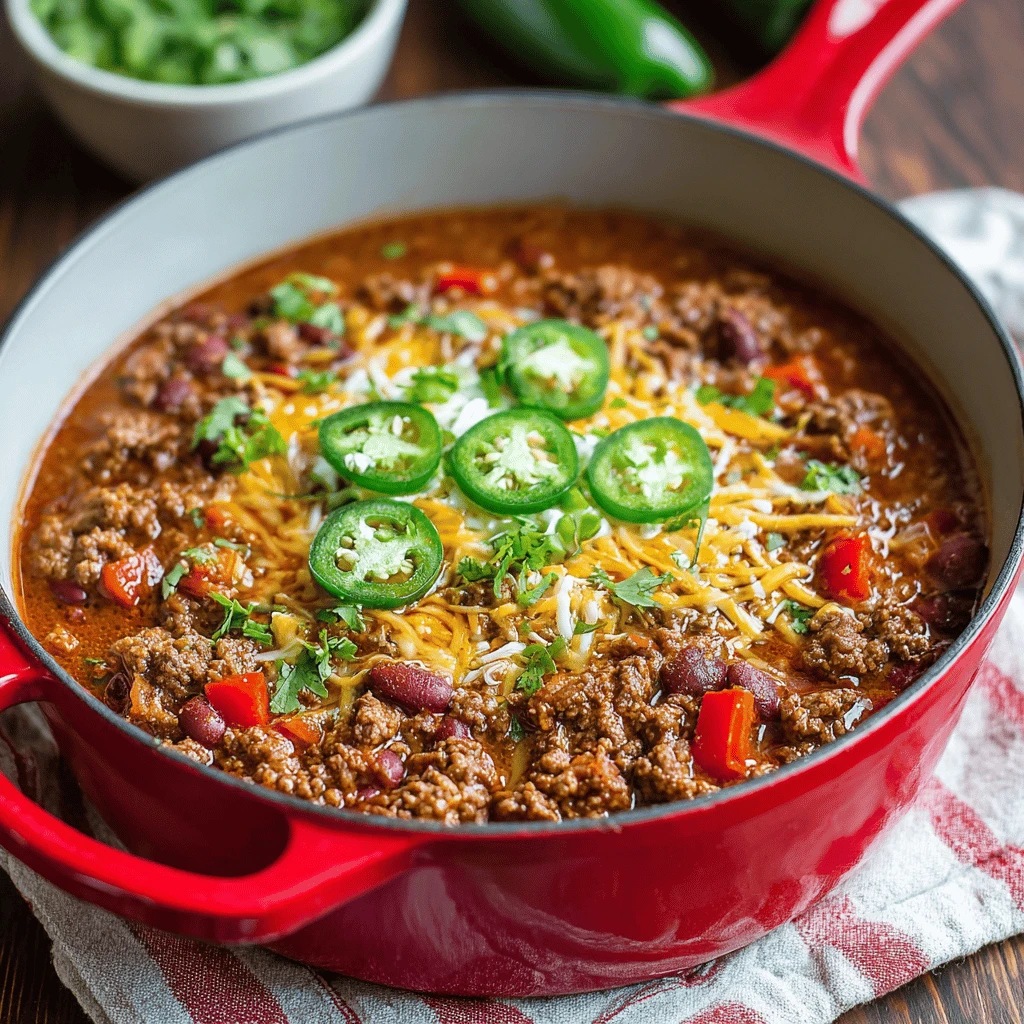
Spicy Ground Beef Chili
Ingredients
- 2 pounds ground beef (80/20 blend recommended)
- 1 large onion, chopped
- 2 bell peppers (1 red, 1 green), chopped
- 2-3 jalapeño peppers, seeded and minced (adjust to your spice preference)
- 4 cloves garlic, minced
- 1 (28 ounce) can crushed tomatoes
- 1 (15 ounce) can tomato sauce
- 1 (15 ounce) can diced tomatoes, undrained
- 1 (15 ounce) can kidney beans, drained and rinsed
- 1 (15 ounce) can black beans, drained and rinsed
- 1 cup beef broth
- 1/4 cup chili powder
- 2 tablespoons cumin
- 1 tablespoon smoked paprika
- 1 teaspoon oregano
- 1/2 teaspoon cayenne pepper (optional, for extra heat)
- 1/4 teaspoon ground cloves
- Salt and black pepper to taste
- 2 tablespoons olive oil
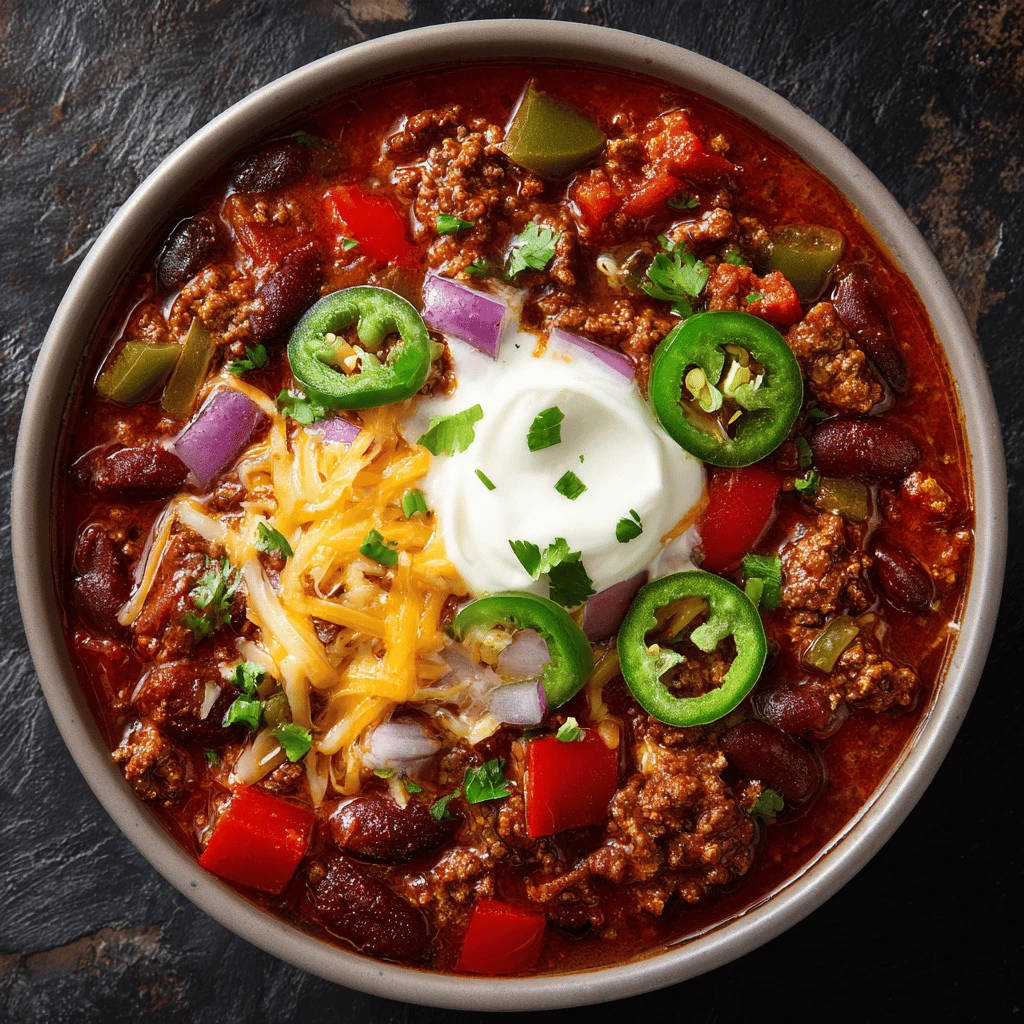
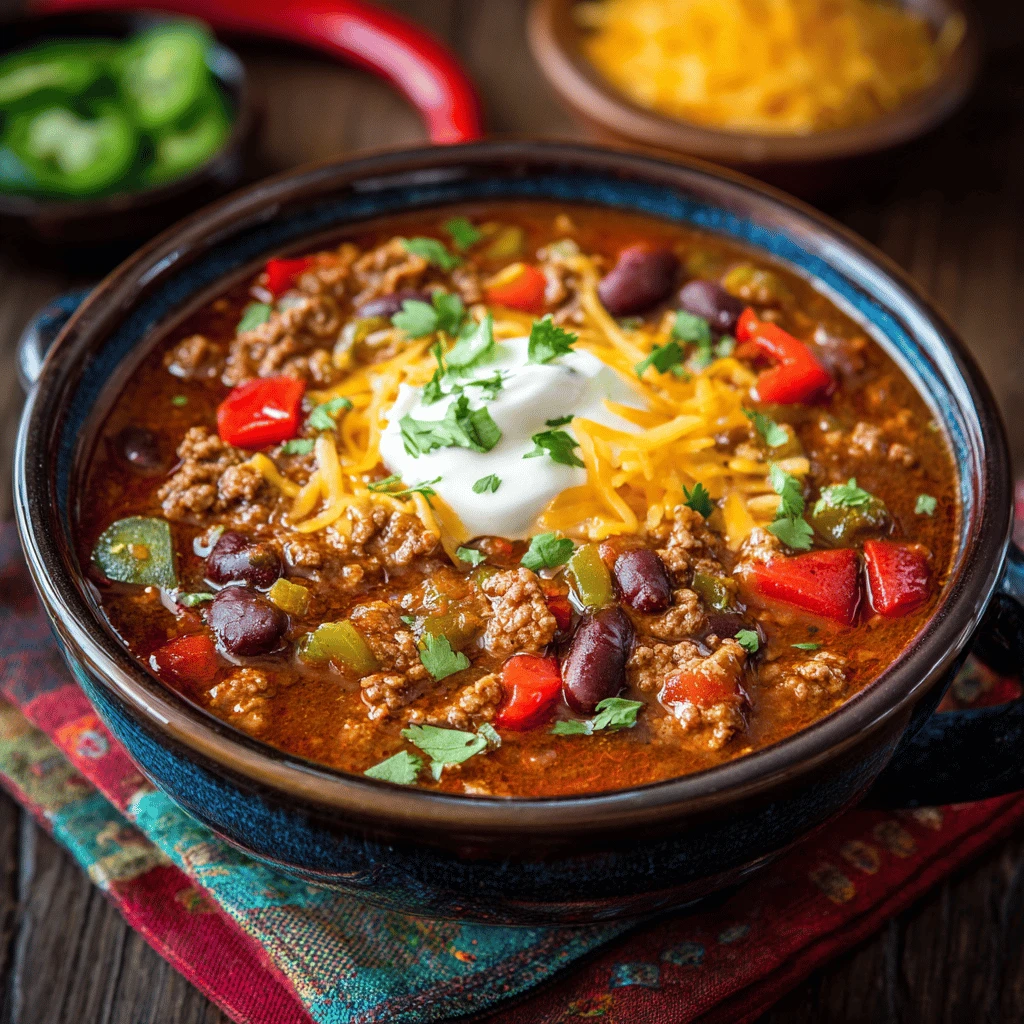
- Optional toppings: shredded cheese, sour cream, chopped green onions, cilantro, avocado slices
Step-by-Step
1. Heat the olive oil in a large pot or Dutch oven over medium-high heat. Add the ground beef and cook, breaking it up with a spoon, until browned. Drain off any excess grease.
2. Add the chopped onion and bell peppers to the pot. Cook until softened, about 5-7 minutes.
3. Stir in the minced jalapeños and garlic. Cook for another minute until fragrant.
4. Add the crushed tomatoes, tomato sauce, and diced tomatoes to the pot. Stir well to combine.
5. Stir in the kidney beans, black beans, beef broth, chili powder, cumin, smoked paprika, oregano, cayenne pepper (if using), and ground cloves.
6. Season with salt and black pepper to taste. Bring the chili to a simmer.
7. Reduce the heat to low, cover, and simmer for at least 1 hour, or up to 3 hours, stirring occasionally. The longer it simmers, the more the flavors will meld together.
8. Taste and adjust seasonings as needed. Add more chili powder for deeper flavor, cayenne pepper for more heat, or salt and pepper to taste.
9. Serve hot, topped with your favorite toppings like shredded cheese, sour cream, chopped green onions, cilantro, or avocado slices. Enjoy!
Understanding the Spice Level
Chili is a dish that is enjoyed in many ways. The spice level is one of the most variable factors.
Some people like a mild, comforting chili, while others crave intense heat. Controlling the spice is key to making a perfect batch.
H3: Measuring Chili Heat: The Scoville Scale
The Scoville scale is used to measure the pungency (spiciness or “heat”) of chili peppers. It’s based on the concentration of capsaicinoids, the chemical compounds that stimulate heat receptors in the mouth.
Pure capsaicin has a Scoville Heat Unit (SHU) rating of 16,000,000. Bell peppers have a rating of 0 SHU, meaning no heat. Jalapeños typically range from 2,500 to 8,000 SHU, while habaneros can reach 100,000–350,000 SHU.
H3: Controlling the Heat in Your Chili
Start with mild peppers and taste as you go. It’s easier to add more heat than to remove it. Jalapeños are a good starting point because their heat level is manageable for most people.
The seeds and membranes of chili peppers contain the highest concentration of capsaicin. Remove these before adding the peppers to the chili to reduce the heat.
Cayenne pepper is a potent spice. A little goes a long way. Add it gradually and taste frequently.
Sour cream or yogurt can help cool down a chili that is too spicy. The dairy fats bind to the capsaicinoids, reducing their effect.
H3: Building Layers of Flavor
Beyond just the heat, focus on building complexity. Spices like cumin, smoked paprika, and oregano add depth.
Browning the ground beef properly is crucial for developing a rich, savory base. Don’t rush this step!
Simmering the chili for a longer period allows the flavors to meld together and deepen. This is where the magic happens.
Selecting the Right Ground Beef
The type of ground beef you choose significantly impacts the chili’s flavor and texture. Understanding the fat content and origin can help you make the best choice.
H3: Understanding Fat Content
Ground beef is typically labeled with a lean-to-fat ratio, such as 80/20, 85/15, or 90/10. This indicates the percentage of lean meat versus fat.
80/20 ground beef (80% lean, 20% fat) is a good choice for chili. The fat adds flavor and moisture, preventing the chili from becoming dry.
85/15 ground beef is a slightly leaner option. You may need to add a bit more olive oil to the pot to prevent sticking.
90/10 ground beef is the leanest option. While it’s healthier, it can result in a drier chili. Consider adding extra beef broth or tomato sauce to compensate.
H3: Choosing Ground Beef from Different Cuts
Ground beef can be made from various cuts of beef, such as chuck, round, sirloin, or a combination.
Ground chuck is a popular choice because it has a good balance of flavor and fat. It’s typically made from the shoulder of the cow.
Ground round is leaner than ground chuck. It’s often made from the hindquarters of the cow.
Ground sirloin is the leanest and most expensive option. It’s made from the sirloin cut, which is located near the hip.
H3: Freshness and Storage
Always check the expiration date on the package before purchasing ground beef. Fresh ground beef should have a bright red color and a firm texture.
Store ground beef in the refrigerator at 40°F (4°C) or below. Use it within 1-2 days for optimal quality.
Ground beef can also be frozen for longer storage. Wrap it tightly in plastic wrap and then place it in a freezer bag. It can be stored in the freezer for up to 3-4 months.
Enhancing the Flavor Profile
While the standard chili recipe is delicious, small adjustments can dramatically enhance the flavor. Consider these tips to elevate your chili to the next level.
H3: The Power of Aromatics
Sautéing aromatics like onions, garlic, and peppers in olive oil before adding the ground beef creates a flavorful base. Allow them to soften and release their aromas fully.
Adding a pinch of sugar can balance the acidity of the tomatoes. Start with a teaspoon and adjust to taste.
A splash of vinegar (apple cider vinegar or red wine vinegar) adds brightness and complexity. Add it towards the end of the cooking process.
H3: Umami Boosters
Umami is the fifth basic taste, often described as savory or meaty. Adding umami-rich ingredients can enhance the chili’s overall flavor.
Soy sauce is a great umami booster. Add a tablespoon or two to the chili during the simmering process.
Worcestershire sauce also contains umami. It adds depth and complexity to the flavor profile.
Mushroom powder is another excellent source of umami. A teaspoon or two can make a noticeable difference.
H3: Creative Ingredient Additions
Experiment with different ingredients to customize your chili.
Adding a can of corn adds sweetness and texture.
Chopped sweet potatoes or butternut squash add a subtle sweetness and creaminess.
A few squares of dark chocolate (70% cacao or higher) add richness and depth.
Serving and Storing Your Chili
Proper serving and storage are important for maintaining the quality and safety of your chili.
H3: Serving Suggestions
Serve chili hot in bowls or mugs.
Offer a variety of toppings so people can customize their chili.
Good topping options include: shredded cheese, sour cream, plain yogurt, chopped green onions, cilantro, avocado slices, tortilla chips, and hot sauce.
Serve chili with cornbread or crackers. These complement the chili’s flavor and provide a satisfying accompaniment.
H3: Storing Leftovers
Allow the chili to cool completely before storing it.
Store leftover chili in an airtight container in the refrigerator. It can be stored for up to 3-4 days.
Chili can also be frozen for longer storage. Freeze it in individual portions for easy reheating. It can be stored in the freezer for up to 2-3 months.
H3: Reheating Chili
Reheat chili gently over medium heat on the stovetop. Stir frequently to prevent sticking.
You can also reheat chili in the microwave. Cover the bowl with a microwave-safe lid or plastic wrap.
Add a splash of beef broth or water if the chili becomes too thick during reheating.
Health Considerations and Modifications
Chili can be a healthy and nutritious meal, but it’s important to be mindful of the ingredients and portion sizes. You can also make modifications to suit specific dietary needs.
H3: Nutritional Benefits
Chili is a good source of protein, fiber, and vitamins.
The beans provide protein and fiber, which can help you feel full and satisfied.
The tomatoes and peppers are rich in vitamins and antioxidants.
Ground beef provides iron and zinc.
H3: Reducing Fat and Sodium
Use leaner ground beef (85/15 or 90/10) to reduce the fat content.
Drain off any excess grease after browning the ground beef.
Use low-sodium beef broth and canned tomatoes.
Reduce the amount of salt you add to the chili. Taste and adjust as needed.
H3: Vegetarian and Vegan Modifications
Substitute the ground beef with plant-based ground meat alternatives.
Use vegetable broth instead of beef broth.
Ensure that all other ingredients are vegetarian or vegan-friendly.
FAQ
Why is my chili bland?
Bland chili often lacks sufficient seasoning or depth of flavor. Ensure you’re using enough chili powder, cumin, and other spices. Also, browning the ground beef well and simmering the chili for a longer period will help develop the flavors. Consider adding umami-rich ingredients like soy sauce or Worcestershire sauce.
How do I thicken my chili?
If your chili is too watery, there are several ways to thicken it. You can simmer it uncovered for a longer period to allow some of the liquid to evaporate. Alternatively, you can mix a tablespoon of cornstarch or flour with a small amount of cold water to form a slurry, then stir it into the chili. Crushing some of the beans in the chili can also help thicken it.
Can I make chili in a slow cooker?
Yes, chili is excellent for slow cooking. Brown the ground beef and sauté the vegetables as directed in the recipe. Then, transfer all the ingredients to a slow cooker and cook on low for 6-8 hours or on high for 3-4 hours.
What are good toppings for chili?
Popular chili toppings include shredded cheese (cheddar, Monterey Jack), sour cream or plain yogurt, chopped green onions, cilantro, avocado slices, tortilla chips, and hot sauce.
How long does chili last in the refrigerator?
Chili can be stored in the refrigerator for up to 3-4 days. Make sure to store it in an airtight container.