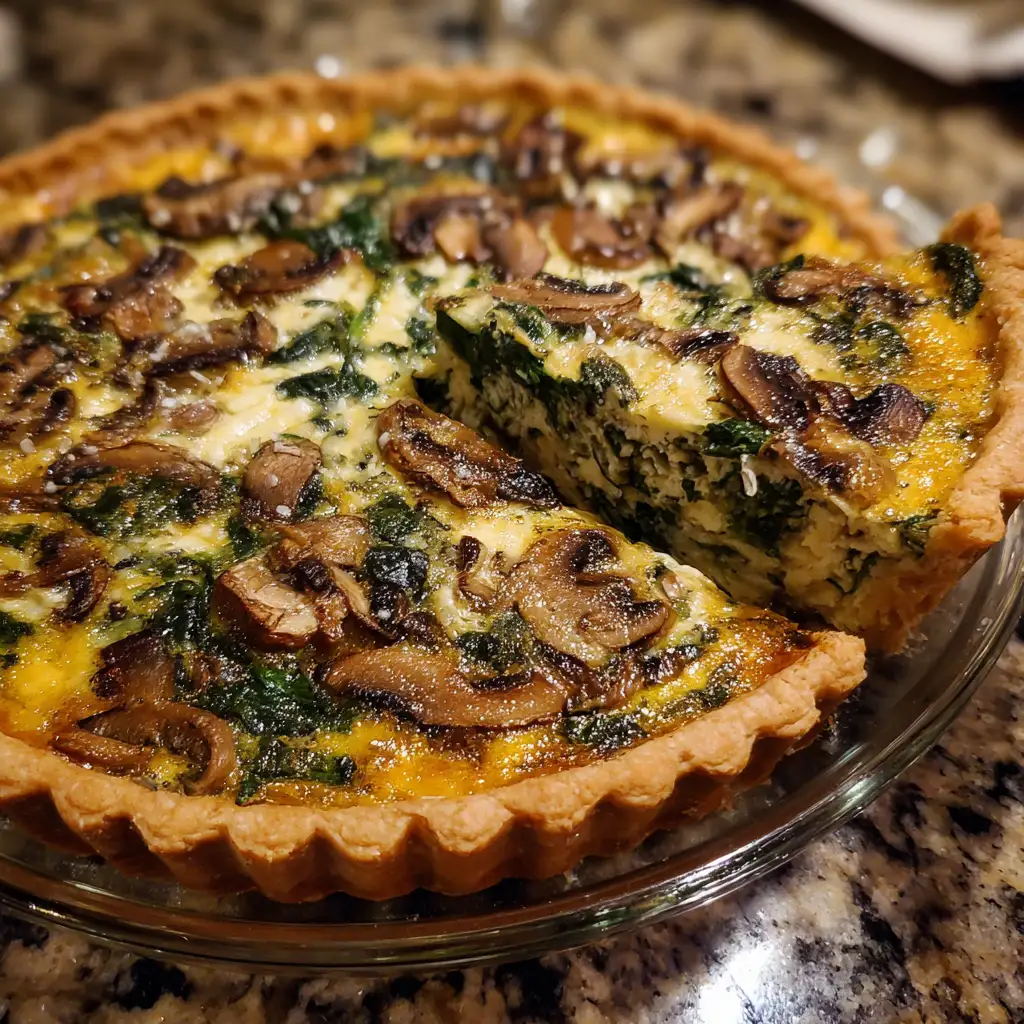
Quiche, the French savory tart, stands as a testament to culinary elegance and versatility, offering a perfect canvas for countless fillings. Among them, the combination of earthy mushrooms and tender spinach remains a perennial favorite. This pairing creates a deeply satisfying, nutrient-rich dish suitable for any meal, from a leisurely Sunday brunch to a sophisticated weeknight dinner. Achieving the ultimate quiche depends on mastering two key elements: creating a crisp, structurally sound crust and ensuring a velvety, unweepy custard that perfectly binds the flavorful vegetables. When executed correctly, this quiche is not just a meal, but an experience—a harmonious blend of creamy cheese, fresh herbs, and perfectly cooked greens, all encased in a flaky, golden shell.
Ingredients
For the Pastry Crust (or use 1 store-bought 9-inch pie crust):
-
1 ¼ cups (150g) all-purpose flour, plus more for dusting
-
½ teaspoon salt
-
½ cup (1 stick / 113g) cold unsalted butter, cut into small cubes
-
3–4 tablespoons ice water
For the Filling:
-
1 tablespoon olive oil
-
1 tablespoon unsalted butter
-
8 ounces (225g) mixed mushrooms (Cremini, button, or shiitake), thinly sliced
-
½ medium yellow onion or 1 small leek, thinly sliced
-
2 cloves garlic, minced
-
6 ounces (about 8 cups lightly packed) fresh baby spinach, or 1 (10 oz) package frozen chopped spinach, thawed and thoroughly squeezed dry
-
½ teaspoon dried thyme leaves
-
¼ teaspoon freshly ground black pepper
-
½ teaspoon kosher salt (divided)
-
1 ½ cups (170g) shredded cheese (a mix of Gruyère and Sharp Cheddar is ideal)
-
2 tablespoons grated Parmesan cheese
For the Custard:
-
4 large eggs, at room temperature
-
1 cup heavy cream or half-and-half
-
½ cup whole milk
-
A pinch of freshly grated nutmeg
-
½ teaspoon salt
-
¼ teaspoon black pepper
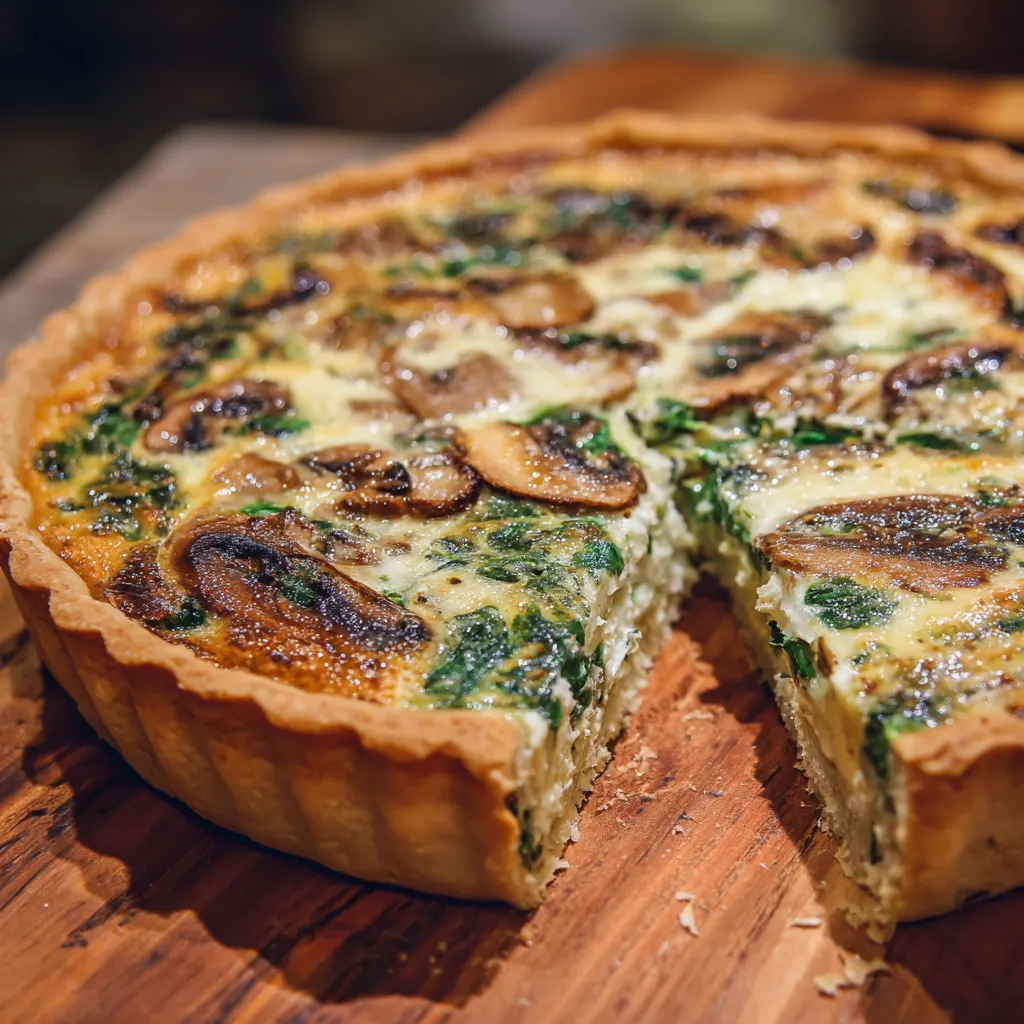
Step-by-Step Instructions
Part 1: Prepare and Blind-Bake the Crust
-
Make the Dough (Skip if using store-bought): In a large bowl or food processor, pulse together the flour and ½ teaspoon of salt. Cut in the cold butter until the mixture resembles coarse sand with some pea-sized pieces remaining. Slowly add the ice water, 1 tablespoon at a time, until the dough just comes together. Form into a disk, wrap tightly, and chill for at least 30 minutes.
-
Line the Pan: Preheat the oven to 375°F (190°C). Roll the chilled dough on a lightly floured surface into a 12-inch circle. Gently transfer the dough to a 9-inch pie dish, trimming and crimping the edges. Prick the bottom all over with a fork (docking).
-
Blind-Bake: Line the crust with parchment paper and fill with pie weights or dried beans. Bake for 15 minutes. Carefully remove the weights and parchment, and return the crust to the oven for another 5–7 minutes, or until the bottom is lightly golden. This critical step prevents a soggy crust. Reduce the oven temperature to 350°F (175°C).
Part 2: Prepare the Filling
-
Sauté Aromatics: Heat the olive oil and butter in a large skillet over medium-high heat. Add the sliced onions or leeks and cook until softened, about 5 minutes. Add the sliced mushrooms and cook, stirring occasionally, until all the moisture released by the mushrooms has evaporated and they are lightly browned (8-10 minutes).
-
Add Greens and Seasoning: Stir in the minced garlic and thyme, cooking for 1 minute until fragrant. If using fresh spinach, add it to the skillet and cook, stirring constantly, until it is completely wilted and any residual moisture has evaporated (about 2-3 minutes). If using frozen, squeezed spinach, stir it in just to combine and heat through. Season the vegetable mixture with ¼ teaspoon of salt and pepper. Remove from heat and let cool slightly.
Part 3: Assemble and Bake the Quiche
-
Mix the Custard: In a medium bowl, whisk together the eggs, heavy cream, milk, nutmeg, remaining salt, and pepper until just combined and slightly frothy. Do not over-whisk, as this can lead to air bubbles and cracking.
-
Layer the Quiche: Evenly sprinkle half of the shredded cheese mixture onto the bottom of the pre-baked crust. Spread the cooked and cooled vegetable filling over the cheese. Pour the prepared liquid custard carefully over the filling. Sprinkle the remaining shredded cheese and the grated Parmesan on top.
-
Bake: Place the quiche dish on a rimmed baking sheet (to catch any spills) and bake in the preheated 350°F (175°C) oven for 40 to 50 minutes. The quiche is done when the edges are set and lightly golden, and the center is mostly firm, with only a slight jiggle.
-
Cool and Serve: Let the quiche cool on a wire rack for at least 10–15 minutes before slicing. This allows the custard to finish setting, resulting in clean, beautiful slices. Serve warm or at room temperature.
Achieving the Perfect Custard and Crust
The structural integrity and luxurious texture of a perfect quiche rely entirely on the interaction between a stable crust and a creamy, delicate custard. Mastering these foundations is the difference between a passable egg pie and a restaurant-quality savory tart.
The Science of the Flawless Crust
The primary challenge for any quiche maker is avoiding a “soggy bottom.” This unfortunate texture occurs when the wet custard filling seeps into the raw dough before it has a chance to set and crisp up in the oven. The traditional and most effective solution is blind baking, also known as par-baking.
-
Chilling is Key: Always chill your pastry dough, both after mixing and after fitting it into the pie dish. Cold butter creates steam pockets during baking, which results in a flakier texture. A chilled crust is also less likely to shrink dramatically when introduced to the heat of the oven.
-
Docking and Weights: Before the first bake, prick the bottom of the dough liberally with a fork—a process called docking. This allows steam to escape, preventing the crust from puffing up. Using ceramic pie weights, dried beans, or rice spread over parchment paper during the initial bake holds the crust shape and prevents the sides from collapsing.
-
Two-Stage Bake: The initial weight-filled bake (15 minutes) sets the structure. Removing the weights and baking for an additional 5–7 minutes fully dries and crisps the base, creating a waterproof seal against the custard.
The Chemistry of Creamy Custard
The ideal quiche custard is rich, savory, and silky smooth, not scrambled or rubbery. This texture is achieved by carefully controlling the ratio of eggs to dairy and the baking temperature.
-
The Golden Ratio: While recipes vary, a classic rich custard aims for approximately one-part egg to two-parts cream or a blend of cream and milk. Using heavy cream (as opposed to just milk) increases the fat content, which yields a richer, creamier texture and helps stabilize the egg proteins, preventing a tough, chewy result.
-
Preventing Over-Whisking: Whisk the custard ingredients until just combined. Introducing too much air can cause the quiche to puff up excessively in the oven and then deflate dramatically, often resulting in large cracks across the surface.
-
The Nutmeg Factor: A small pinch of nutmeg is a secret ingredient in French savory custards. It subtly enhances the flavor of the eggs and dairy, providing a warm, foundational note without dominating the dish.
The Art of Flavor Pairing and Preparation
A spinach and mushroom quiche is defined by the depth of flavor drawn from its vegetable components. Because both spinach and mushrooms are notorious for containing high levels of water, proper preparation is non-negotiable for a concentrated flavor and a stable quiche.
Mastering the Moisture Challenge
The single greatest enemy of a silky quiche is moisture introduced by the fillings. Excess water dilutes the custard, slows the baking process, and results in a wet, spongy layer at the bottom of the quiche.
-
Sauté Until Dry: Mushrooms must be cooked over medium-high heat until they release their substantial water content, and that water has completely evaporated. They should be golden-brown and shrunken. This caramelization process not only removes moisture but also intensifies their savory, umami flavor.
-
Spinach Drainage: Whether using fresh or frozen spinach, the process is the same: cook it down until wilted, and then use a clean kitchen towel or cheesecloth to squeeze out every drop of liquid. Frozen spinach requires thorough thawing before squeezing, often yielding surprisingly large amounts of water that would otherwise ruin the quiche.
-
Cooling the Filling: Ensure the vegetable mixture is cooled before adding it to the crust and pouring the custard over it. Adding hot ingredients can prematurely cook the eggs in the custard, leading to a lumpy or uneven texture.
The Aromatic Base
While spinach and mushroom are the stars, the supporting aromatics provide the complexity and depth necessary to elevate the quiche from simple to spectacular.
-
Onion or Leek: Sautéing finely sliced onions or leeks until translucent creates a mild, sweet base. Leeks, in particular, offer a more delicate, slightly sweeter onion flavor that pairs beautifully with the earthiness of the mushrooms.
-
Garlic and Herbs: Garlic should be added towards the end of the vegetable sauté process—just long enough to become fragrant (about 60 seconds)—to prevent burning, which turns the flavor bitter. Thyme is the classic herbal pairing, providing a subtle woodsy note. For a brighter flavor, consider stirring in chives or parsley just before pouring in the custard.
-
Boost with Umami: For a truly decadent quiche, add a quick dash of balsamic vinegar to the sautéed mushrooms right before removing them from the heat. This step, mentioned in several top recipes, enhances the savory, meaty depth of the fungi.
Customization for Every Occasion
The spinach and mushroom base is highly adaptable, allowing for simple swaps to cater to dietary needs, desired flavor profiles, or ingredients on hand.
Cheese and Flavor Profile Swaps
The choice of cheese significantly dictates the final flavor of the quiche. For the best result, use a high-quality, freshly grated cheese, as pre-shredded varieties often contain anti-caking agents that hinder smooth melting.
-
For Nutty and Complex: Gruyère is the gold standard for quiche. Its sweet, salty, and earthy notes melt beautifully and add sophistication. Swiss (Emmental) is a great, slightly milder alternative.
-
For Sharp and Bold: A high-quality Sharp Cheddar provides a tangy bite that cuts through the richness of the cream and the earthiness of the vegetables.
-
For Salty and Tangy: Crumbling Feta or soft Goat Cheese into the filling provides pockets of salty brine or tangy creaminess. These work especially well in a crustless quiche where the cheese itself provides structure and flavor punch.
-
For the Custard: A small amount of Dijon Mustard (about 1 teaspoon per quiche) whisked into the custard mixture adds a subtle, pleasant tang that balances the richness of the eggs and cream.
Going Crustless: A Low-Carb Alternative
The crustless quiche variation is an increasingly popular, effortless, and low-carb option that shifts the focus entirely onto the creamy filling.
-
Preparation: The process for the filling and custard remains identical. The key difference lies in preparing the baking dish. Heavily grease a standard 9-inch pie plate (or use a springform pan for easy removal) with butter or cooking spray, and consider dusting it with a light layer of Parmesan cheese or fine breadcrumbs before adding the filling. This creates a non-stick barrier and a flavorful outer layer.
-
Structure: Crustless quiches typically use a slightly higher proportion of eggs to dairy than their crust-filled counterparts to ensure they set firmly enough to slice cleanly. Baking time is often similar, though it should be checked for doneness at the 35–40 minute mark.
Adding Protein
While vegetarian by nature, the spinach and mushroom quiche readily welcomes additions for a heartier meal:
-
Bacon or Ham: Quiche Lorraine is the most famous variation, and pre-cooked, crispy bacon crumbles or diced ham can be easily incorporated. Sauté the bacon first and reserve the fat to cook the mushrooms for added flavor.
-
Sausage: Cooked, crumbled Italian or breakfast sausage adds spice and richness. Ensure the meat is thoroughly drained of fat before adding it to the quiche filling.
Baking, Serving, and Storage
Understanding the final stages of the quiche-making process—baking for doneness, cooling for structure, and proper storage—is essential for achieving clean slices and maximizing its lifespan.
The Perfect Bake Temperature and Doneness
Optimal baking requires a heat level that is high enough to set the crust and filling relatively quickly, but low enough to prevent the custard from curdling or turning rubbery.
-
Temperature Adjustments: A good strategy is to begin the bake at a slightly higher temperature (e.g., 400°F/200°C for 10-15 minutes) to quickly set the crust and the outer edges of the custard, then reduce the heat to 325-350°F (160-175°C) for the remainder of the cooking time. This ensures a beautifully browned crust and a tender center.
-
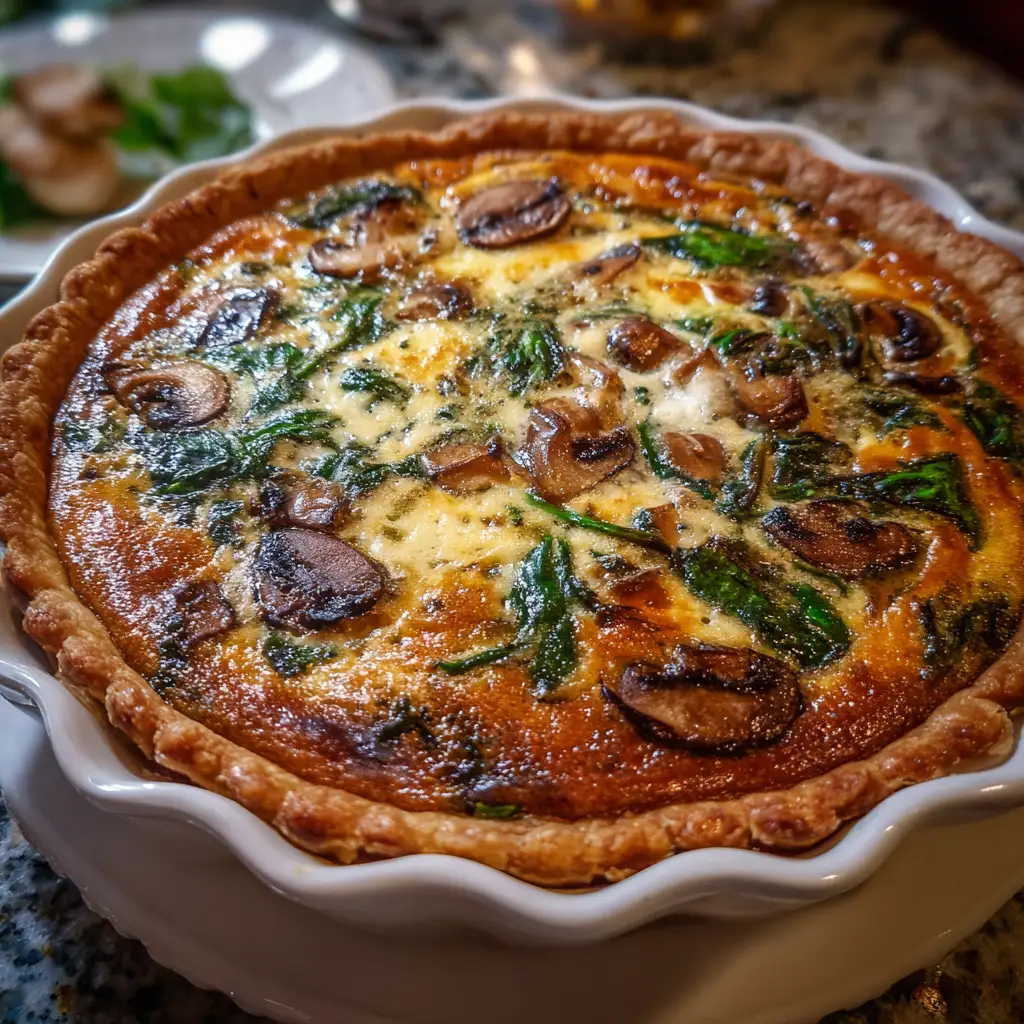
Checking for Doneness: The quiche is finished when the edges are puffed and golden, and a slight shake of the pan only produces a gentle, centralized jiggle. The classic test is to insert a thin knife into the center; it should come out clean. An internal temperature between 165°F and 185°F guarantees a set custard. Remove the quiche if the knife comes out clean; any further baking will lead to overcooked, rubbery eggs. If the crust edges begin to darken too quickly, loosely tent them with aluminum foil.
Cooling and Serving
Patience after baking is critical. The quiche should not be sliced immediately.
-
Setting Time: Allow the quiche to rest on a wire rack for at least 15–20 minutes after it comes out of the oven. During this time, residual heat continues to cook the center, and the proteins in the custard firm up. Slicing too early will result in a messy, runny slice.
-
Serving Temperature: Quiche is traditionally served warm or at room temperature, making it ideal for buffet-style entertaining. Pair it with a simple, bright side salad dressed with a sharp vinaigrette to cut through the richness of the custard.
Make-Ahead and Storage Tips
Quiche is an exceptional make-ahead dish, often tasting even better the day after baking once the flavors have fully melded.
-
Make-Ahead (Unbaked): The vegetable filling can be sautéed and the crust can be blind-baked up to two days in advance. Store the cooled filling and crust separately. Assemble the quiche just before baking.
-
Make-Ahead (Baked): The entire quiche can be baked, cooled completely, and stored in the refrigerator for up to four days. Wrap it tightly in plastic wrap or foil.
-
Reheating: Avoid the microwave, which can make the crust soggy and the custard tough. The best method for reheating is in a preheated oven at 300°F (150°C) for 15–20 minutes, or until warmed through.
-
Freezing: Whole or sliced quiches freeze beautifully. Cool completely, wrap in plastic wrap, then foil, and freeze for up to three months. To reheat from frozen, bake (still wrapped in foil) at 350°F (175°C) for about 30–45 minutes, then unwrap and bake for a final 5 minutes to crisp the top.