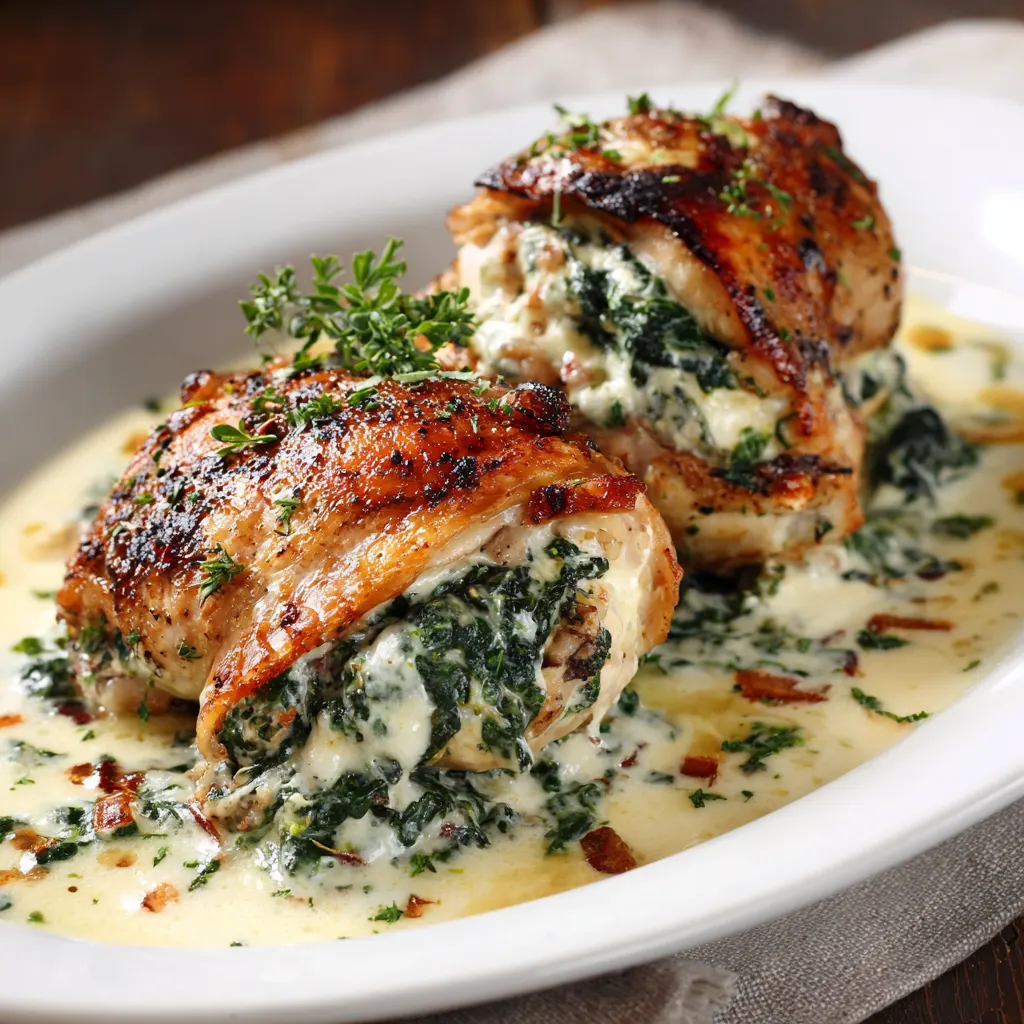
Spinach and ricotta stuffed chicken thighs are a culinary staple, marrying the rich, dark meat of the chicken thigh with a creamy, savory filling to create a dish that feels both luxurious and comforting. Unlike leaner chicken breasts, boneless, skinless thighs remain exceptionally juicy and tender throughout the cooking process, making them the perfect vessel for holding a generous portion of the classic Italian-inspired filling. This recipe is beloved for its balanced flavor profile—the mild tang of ricotta, the salty punch of Parmesan, and the earthy notes of spinach and garlic—all contained within a perfectly seasoned, golden-brown chicken roll. Whether baked, pan-seared, or simmered in sauce, this dish is versatile, simple to prepare, and guarantees rave reviews from family and guests alike.
Ingredients
For the Stuffed Chicken Thighs:
-
8 boneless, skinless chicken thighs (about 2 lbs total)
-
2 tablespoons olive oil, divided
-
1 teaspoon paprika
-
1 teaspoon dried oregano
-
1 teaspoon salt, divided
-
½ teaspoon black pepper, divided
-
6–8 wooden toothpicks or kitchen twine
For the Spinach and Ricotta Filling:
-
10 oz frozen chopped spinach, thawed and thoroughly squeezed dry
-
1 cup (250g) whole milk ricotta cheese
-
½ cup (50g) grated Parmesan cheese
-
2 cloves garlic, minced (or 1 teaspoon garlic powder)
-
1 teaspoon Italian seasoning
-
¼ teaspoon freshly grated nutmeg (optional, for depth of flavor)
-
Salt and black pepper to taste
Instructions
-
Prepare the Spinach: If using frozen spinach, thaw completely and place it in a cheesecloth or thick paper towels. Squeeze out as much liquid as possible—this step is crucial for a creamy, non-soggy filling. If using fresh spinach, quickly wilt 2 cups in a dry skillet, allow to cool, chop, and squeeze dry.
-
Make the Filling: In a medium bowl, combine the thoroughly drained spinach, ricotta cheese, Parmesan cheese, minced garlic, Italian seasoning, nutmeg (if using), and a pinch of salt and pepper. Mix until all ingredients are uniformly combined. Taste and adjust seasoning as necessary.
-
Prepare the Chicken: Lay the chicken thighs flat on a cutting board. If they are unevenly thick, cover them with plastic wrap and use a meat mallet or rolling pin to gently pound them into a uniform thickness of about ¼ to ½ inch. This ensures even cooking and easier rolling.
-
Season the Chicken: In a small bowl, mix the paprika, oregano, and the remaining salt and pepper. Pat the chicken thighs dry with a paper towel, then brush one side of each thigh with a light layer of olive oil and sprinkle with the seasoning mix.
-
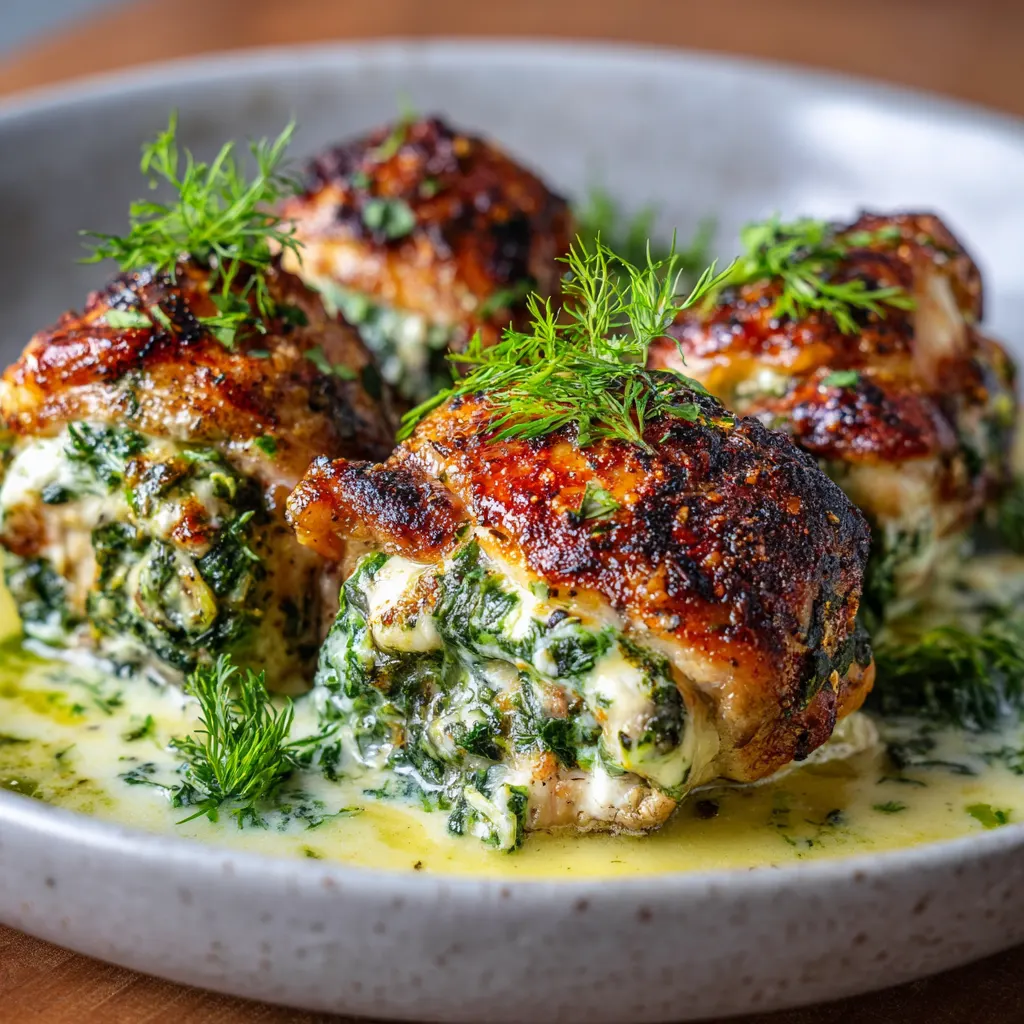
Stuff and Roll: Spoon about 2-3 tablespoons of the ricotta mixture onto the center of the widest end of each chicken thigh. Roll the thigh tightly around the filling, working toward the tapered end. Secure the roll by inserting 2-3 wooden toothpicks across the seam, or tie it snugly with kitchen twine.
-
Bake: Preheat your oven to 375°F (190°C). Place the stuffed chicken thighs seam-side down in a lightly greased baking dish or oven-safe skillet. Drizzle the tops of the chicken rolls with the remaining olive oil.
-
Cook and Rest: Bake for 25 to 30 minutes, or until the chicken is cooked through and reaches an internal temperature of 165°F (74°C) in the thickest part. The exterior should be golden brown. Allow the chicken to rest for 5-10 minutes before removing the toothpicks or twine and serving.
I. The Foundation of Flavor: Mastering the Ricotta-Spinach Filling
The success of this dish hinges entirely on the quality and texture of the filling. While the ingredients are simple, careful preparation ensures the mixture remains rich, creamy, and flavorful rather than watery or bland.
The most critical step is moisture management. Both ricotta cheese and spinach contain high levels of water. If this excess moisture is not removed, it will leach out during baking, resulting in a soggy filling, and a diluted flavor profile.
The Art of Draining the Spinach
Whether you opt for fresh or frozen spinach, the technique for moisture removal is paramount. Frozen spinach is often recommended for convenience, but it must be meticulously drained. Thaw the spinach completely, then transfer it to a piece of cheesecloth, a fine-mesh sieve, or even a few layers of paper towels. Squeeze with force until no more liquid drips out. A great trick to boost flavor is to slightly sauté the thawed, squeezed spinach along with the minced garlic for a few minutes before mixing. This process caramelizes the garlic, evaporates any lingering moisture, and intensifies the spinach’s earthy sweetness.
Achieving the Perfect Creamy Consistency
For the ricotta, whole milk varieties are superior as they offer a richer flavor and a thicker consistency compared to skim or low-fat options. The inclusion of Parmesan cheese provides a necessary salty and umami depth that ricotta alone lacks. For added richness and stability, a single egg yolk can be mixed into the filling. The yolk acts as a binding agent, helping the mixture hold its structure within the chicken thigh as it cooks, minimizing leakage and ensuring the filling is perfectly set when sliced. Finally, do not overlook the power of seasoning—a pinch of nutmeg is a subtle, traditional Italian secret that beautifully enhances the flavor of spinach and ricotta.
II. Choosing and Preparing the Perfect Chicken Thighs
While chicken breasts are a common alternative, boneless, skinless chicken thighs are the ideal choice for stuffing. The higher fat content of the thigh meat guarantees moisture retention, making them much more forgiving to cook and virtually impossible to dry out.
Flattening for Uniformity and Rollability
Unlike chicken breasts, which are often cut open to create a pocket, chicken thighs are typically pounded and rolled. The raw thigh is usually irregular in shape and thickness. To create a uniform surface that rolls neatly, place the thigh between two sheets of parchment paper or plastic wrap and gently pound it with the flat side of a meat mallet or a rolling pin until it is about ¼ to ½ inch thick. This simple step not only ensures even cooking but also prevents the thinner edges from overcooking before the center is done.
The Stuffing Technique
There are two primary ways to stuff the thigh:
-
The Pocket Method (Less Common for Thighs): Best for thicker pieces, cutting a small, deep slit into the side of the thigh without slicing all the way through, forming a small cavity.
-
The Rolling Method (Recommended for Thighs): Lay the flattened thigh meat flat. Place the filling in an elongated line down the widest end of the thigh, leaving about a half-inch border on the sides. Tightly roll the chicken over the filling, starting from the widest end. This creates a neat, compact roll that is easy to secure.
Whether you use wooden toothpicks or kitchen twine, the key is to ensure the seam is held shut. Placing the stuffed chicken seam-side down in the baking dish also leverages gravity to help seal the roll during the initial cooking phase.
III. Essential Cooking Methods for Juicy Results
The final texture and flavor profile of your stuffed chicken depend heavily on the cooking method chosen. Both baking and the sear-then-bake method are popular, but they yield distinctly different results.
Method 1: The Simple Bake
Baking is the simplest and most common approach. By cooking the chicken at a moderate temperature, such as 375°F (190°C), you ensure the meat cooks through evenly without drying out, and the filling melts perfectly.
-
Temperature and Time: A temperature range of 375°F (190°C) to 400°F (200°C) is ideal, baking for approximately 25–35 minutes, depending on the thickness of the rolls.
-
Juiciness Tip: Arranging the chicken in a lightly greased baking dish and perhaps adding a small amount of liquid, like chicken broth or white wine, to the bottom of the pan can help keep the environment moist.
Method 2: Sear and Finish
For a truly gourmet result that boasts a crispy, golden-brown crust and a deeper flavor, the sear-then-bake method is superior.
-
Searing: Start by searing the stuffed chicken rolls in a hot, oven-safe skillet (like cast iron) with a tablespoon of olive oil for 3-5 minutes per side until a beautiful, deep golden crust forms. This develops the rich, savory “Maillard reaction” flavors.
-
Finishing: Transfer the skillet directly to a preheated oven (usually 400°F/200°C) to finish cooking. The total oven time will be shorter, typically 12–15 minutes.
Safety and Resting
Regardless of the method, always verify doneness with an instant-read thermometer. The internal temperature of the chicken must reach 165°F (74°C). Finally, the resting period is non-negotiable. Allowing the chicken to rest for 5 to 10 minutes after removing it from the oven allows the muscle fibers to relax and reabsorb the flavorful juices, guaranteeing maximum tenderness and moisture.
IV. Creative Twists and Stuffing Variations
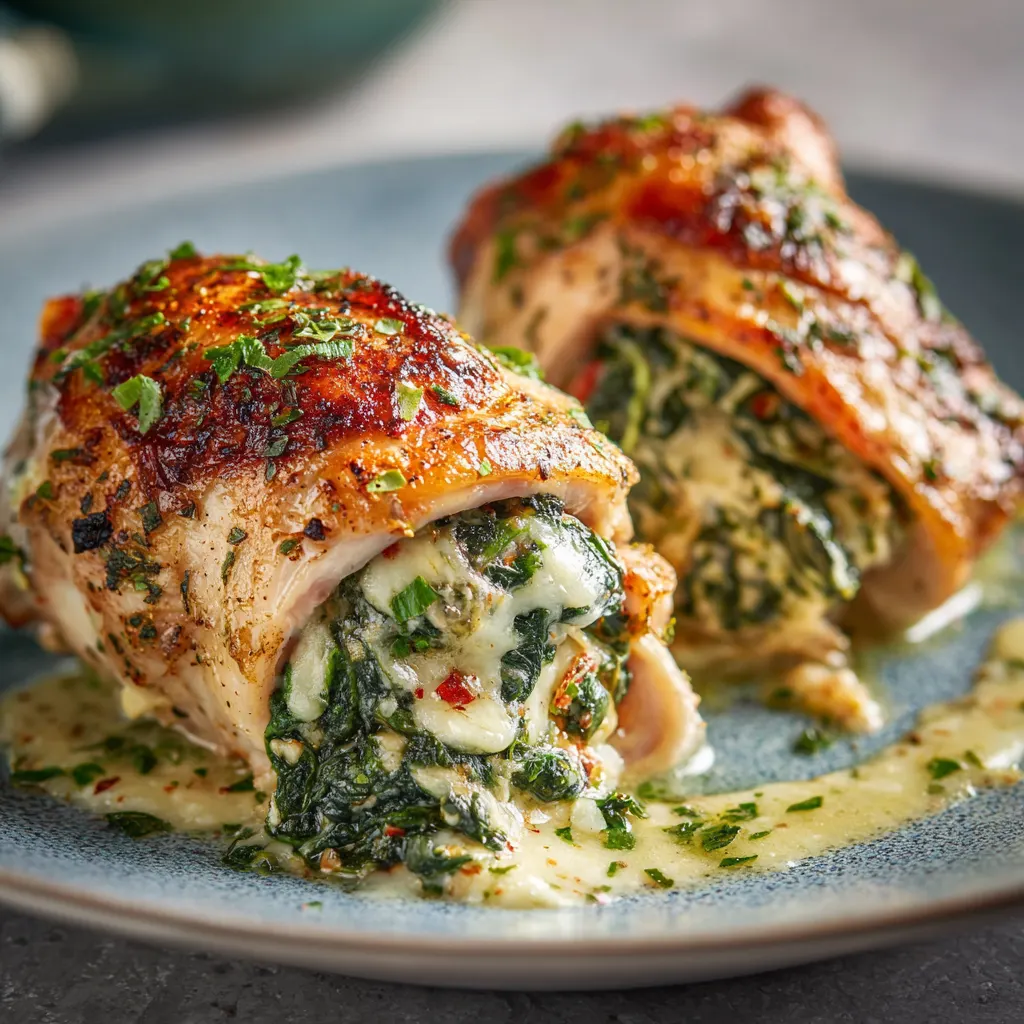
While the classic ricotta and spinach combination is fantastic, the versatility of this dish allows for numerous creative additions that can customize the flavor profile to match any palate or occasion. Optimizing the recipe often means layering different textures and tastes into the filling.
Cheese Swaps for Different Textures
-
Tangy and Salty: Introduce Feta cheese alongside or in place of Parmesan. Feta provides a pleasant brininess that pairs wonderfully with spinach.
-
Melty and Gooey: Replace some of the ricotta with low-moisture, shredded Mozzarella. This guarantees a dramatically melted, stringy texture when the chicken is sliced open.
-
Rich and Creamy: Use cream cheese or Boursin cheese instead of ricotta for a richer, denser, and tangier filling.
Spice and Herb Enhancements
Seasoning the filling beyond just salt and pepper can elevate the dish significantly:
-
Pungency: Mix in onion powder, finely chopped sun-dried tomatoes, or finely diced sautéed shallots.
-
Aromatic Notes: Use fresh herbs such as basil, chives, or flat-leaf parsley instead of or in addition to dried Italian seasoning.
-
Heat: A pinch of crushed red pepper flakes stirred into the filling adds a subtle, welcome warmth that cuts through the richness of the cheese.
Serving Ideas and Pairings
This stuffed chicken dish transitions easily from a casual weeknight dinner to an elegant meal. Choosing the right accompanying sauce and sides is key to a complete experience.
Sauce Options
A simple stuffed chicken roll is excellent on its own, but a quick sauce adds moisture and depth:
-
Marinara Bake: For a Mediterranean flair, pour a high-quality marinara sauce into the bottom of the baking dish before adding the stuffed chicken. The chicken bakes directly in the sauce, infusing it with flavor and resulting in a moist, Italian-inspired dish that pairs perfectly with pasta.
-
Pan Reduction Sauce: After searing or baking the chicken, deglaze the pan drippings with a splash of dry white wine and chicken stock. Scrape up the savory brown bits (known as fonds) from the bottom, reduce the liquid slightly, and finish with a small pat of butter. This creates an immediate, restaurant-quality sauce that utilizes the flavorful chicken and stuffing residue.
-
Lemon-Garlic Butter: A quick drizzle of a melted butter, minced garlic, and fresh lemon juice mixture over the baked chicken brightens the entire dish, creating a vibrant finish.
Perfect Side Dish Pairings
The richness of the chicken and cheese filling is best balanced by sides that offer contrast in flavor or texture.
-
Starch: Creamy polenta or risotto provides a complementary soft base, soaking up any pan juices. For a lighter approach, serve over brown rice or farro.
-
Vegetables: Crispy, roasted vegetables are an excellent textural contrast. Try oven-roasted asparagus, broccoli florets, or a sheet pan of mixed root vegetables like carrots, potatoes, and red onions. A simple, lightly dressed side salad with a sharp vinaigrette also helps cut through the richness of the cheese.
By paying close attention to the details—from thoroughly draining the spinach to selecting the optimal cooking method—Spinach and Ricotta Stuffed Chicken Thighs move beyond a basic recipe and become a perfectly executed, satisfying, and memorable meal.