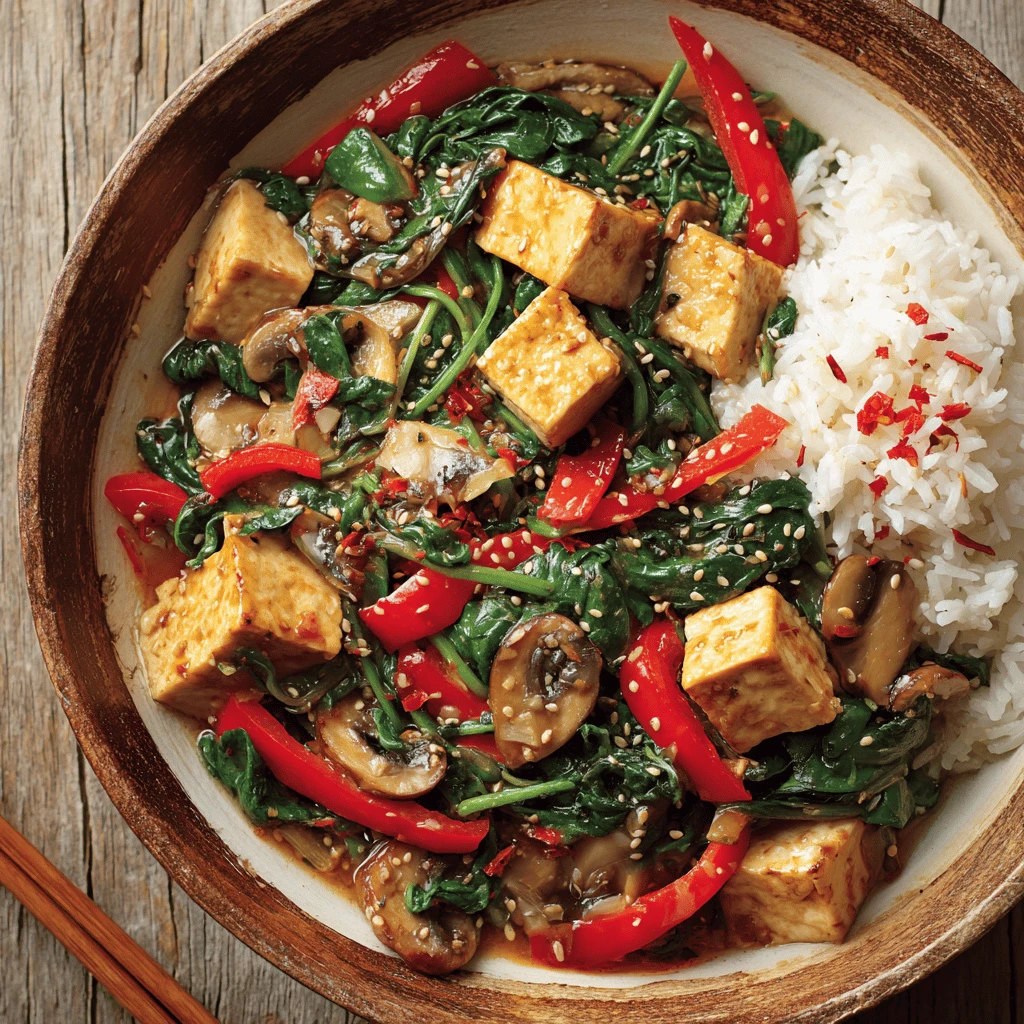
Spinach and Tofu Stir-Fry
Ingredients
- 1 block (14-16 oz) firm or extra-firm tofu, pressed
- 1 tablespoon sesame oil
- 1 tablespoon vegetable oil
- 2 cloves garlic, minced
- 1 inch ginger, grated
- 1 red bell pepper, thinly sliced
- 1/2 cup sliced mushrooms
- 5 oz fresh spinach, washed and roughly chopped
- 2 tablespoons soy sauce (or tamari for gluten-free)
- 1 tablespoon rice vinegar
- 1 teaspoon sesame seeds (for garnish)
- 1/2 teaspoon red pepper flakes (optional)
- Cooked rice or noodles, for serving
Step-by-Step
1. Press the tofu: Wrap the tofu in paper towels and place a heavy object on top for at least 30 minutes to remove excess water. This helps it crisp up better during cooking.
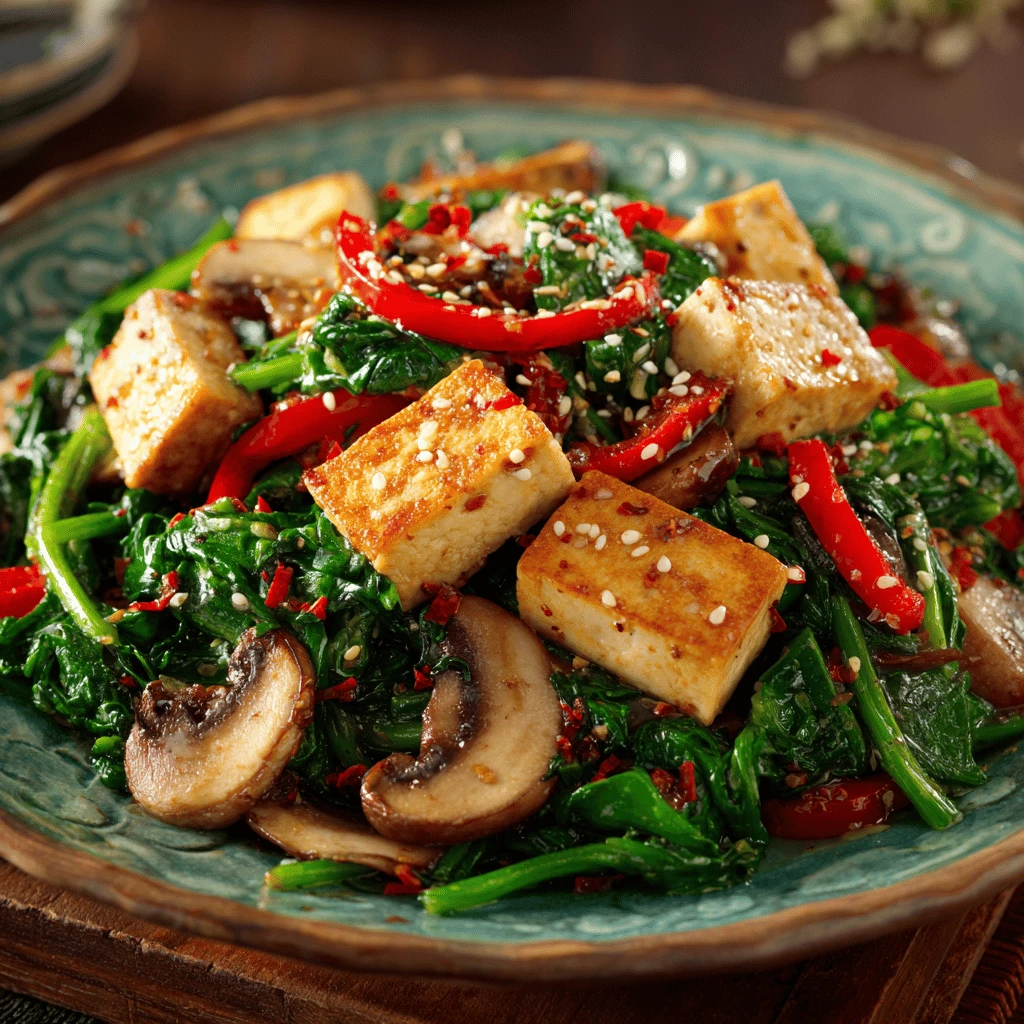
2. Prepare the tofu: Cut the pressed tofu into 1/2-inch cubes.
3. Heat the oils: In a large skillet or wok, heat sesame oil and vegetable oil over medium-high heat.
4. Sauté the tofu: Add the tofu cubes to the skillet and cook until golden brown and crispy on all sides, about 8-10 minutes. Remove the tofu from the skillet and set aside.
5. Sauté aromatics: Add the minced garlic and grated ginger to the skillet and cook for about 30 seconds, until fragrant. Be careful not to burn them.
6. Add vegetables: Add the sliced bell pepper and mushrooms to the skillet. Stir-fry for 3-5 minutes, until the vegetables are slightly softened.
7. Add spinach: Add the chopped spinach to the skillet. Stir-fry until the spinach wilts, about 1-2 minutes.
8. Make the sauce: In a small bowl, whisk together the soy sauce and rice vinegar.
9. Combine and simmer: Return the cooked tofu to the skillet. Pour the sauce over the tofu and vegetables. Add red pepper flakes if desired.
10. Stir-fry everything together: Stir-fry for another 1-2 minutes, allowing the sauce to coat all the ingredients.
11. Garnish and serve: Remove from heat. Garnish with sesame seeds. Serve hot over cooked rice or noodles.
Tofu Preparation: Pressing for Perfection
H3: Why Pressing Tofu Matters
Pressing tofu is a crucial step for achieving the best texture in your stir-fry. Tofu naturally contains a lot of water. Removing this excess moisture allows the tofu to become crispier when cooked.
Without pressing, the tofu will steam instead of fry. This results in a softer, less desirable texture. Nobody likes soggy tofu!
H3: Different Pressing Methods
There are several ways to press tofu. The most common method involves wrapping the tofu block in paper towels and placing a heavy object on top, like a stack of books or a cast iron pan. This should be done for at least 30 minutes.
Alternatively, you can purchase a dedicated tofu press. These presses are designed to efficiently remove water from the tofu without damaging it. They often speed up the pressing process.
Regardless of the method, ensure the tofu is adequately pressed. Aim for a firm texture before cooking.
H3: Choosing the Right Tofu
For stir-fries, firm or extra-firm tofu are ideal. These varieties hold their shape well during cooking. They also provide a satisfying chewiness.
Silken tofu is not recommended for stir-fries. It is too soft and will crumble easily. Save silken tofu for smoothies or creamy sauces.
The Art of Stir-Frying: Heat and Technique
H3: The Importance of High Heat
Stir-frying is all about high heat and quick cooking. Using high heat ensures the vegetables remain crisp-tender. It also prevents them from becoming soggy.
A wok is traditionally used for stir-frying because of its sloping sides and ability to distribute heat evenly. A large skillet can also be used.
Make sure the skillet or wok is thoroughly heated before adding any ingredients. This will help create that characteristic stir-fry texture.
H3: Proper Stir-Frying Technique
Stir-frying involves constantly moving the ingredients around in the skillet or wok. This prevents them from burning and ensures even cooking. Use a spatula or wooden spoon to keep the ingredients moving.
Add the ingredients in the order of their cooking time. Start with vegetables that take longer to cook, such as bell peppers and mushrooms. Then add the spinach towards the end, as it wilts quickly.
H3: Avoiding Overcrowding
Overcrowding the skillet can lower the temperature and cause the ingredients to steam instead of fry. If necessary, cook the ingredients in batches to avoid overcrowding. This ensures optimal cooking and texture.
Spinach Selection and Preparation
H3: Choosing the Freshest Spinach
When selecting spinach for your stir-fry, look for vibrant green leaves. Avoid spinach with yellowing or wilting leaves. These are signs of aging.
Fresh spinach should have a clean, earthy smell. Avoid spinach with a musty or sour odor.
Organic spinach is a good option, as it is grown without pesticides.
H3: Washing and Preparing Spinach
Thoroughly wash the spinach before using it. This removes any dirt or sand that may be present. Place the spinach in a large bowl of cold water and swish it around. Drain the water and repeat until the water is clear.
Remove any thick stems from the spinach. You can also roughly chop the spinach into smaller pieces. This makes it easier to stir-fry.
H3: Cooking Spinach Properly
Spinach wilts quickly when cooked. Add it to the skillet towards the end of the stir-frying process. Stir-fry it for just a minute or two, until it is wilted but still bright green.
Overcooking spinach can make it bitter and mushy. Be careful not to overcook it.
Flavor Enhancements and Variations
H3: Sauces and Seasonings
The sauce is a key component of a delicious stir-fry. Soy sauce is a classic ingredient. It adds a savory, umami flavor. Rice vinegar adds a touch of acidity. Sesame oil provides a nutty aroma.
Experiment with other sauces and seasonings. Oyster sauce, hoisin sauce, and chili garlic sauce can add depth and complexity to the flavor.
Adjust the amount of sauce to your liking. Start with a small amount and add more as needed.
H3: Adding Protein
While this recipe focuses on tofu, you can easily add other sources of protein. Chicken, shrimp, or beef are all great options.
Cook the protein separately before adding it to the stir-fry. This ensures it is cooked through and prevents it from overcooking the vegetables.
H3: Vegetable Variations
Feel free to customize the vegetables in this stir-fry. Broccoli, carrots, snap peas, and snow peas are all great additions.
Consider using seasonal vegetables for the freshest flavors.
Serving Suggestions and Nutritional Benefits
H3: Serving Suggestions
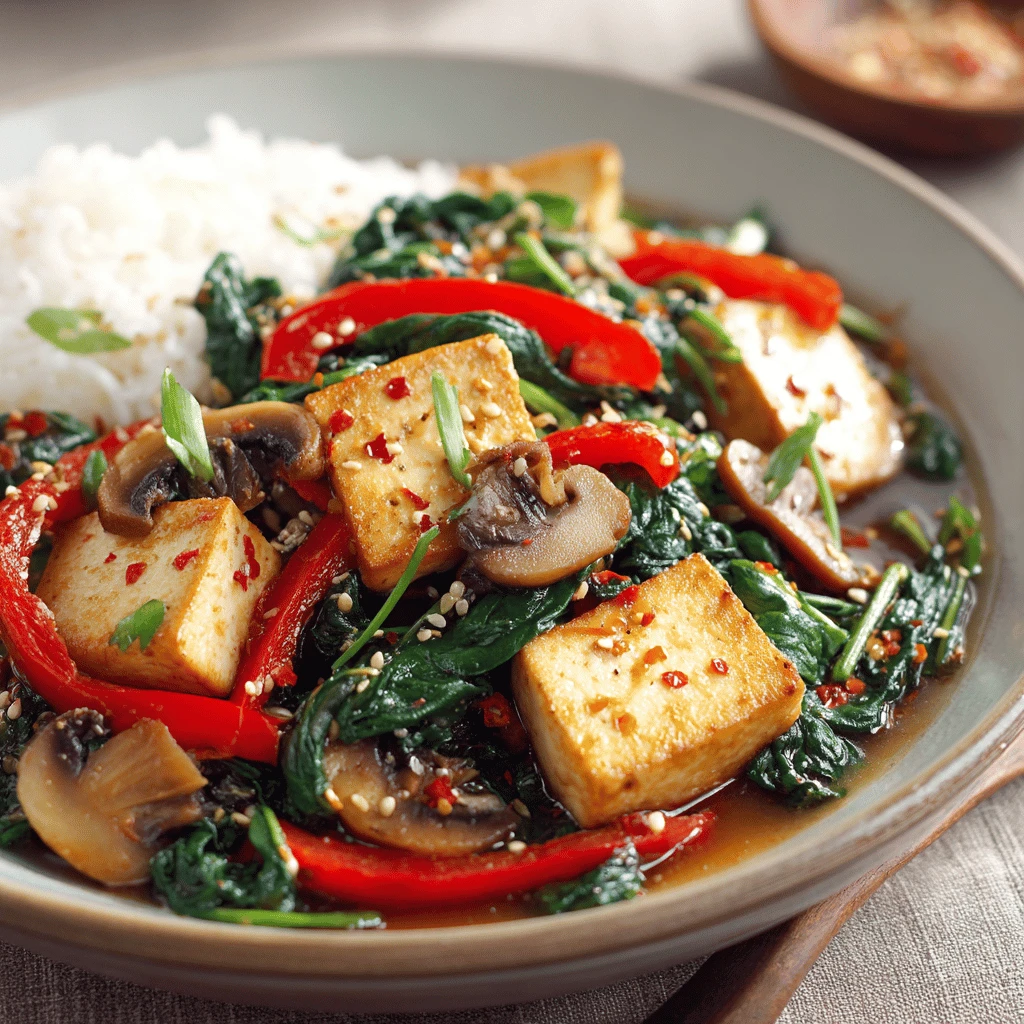
Serve the spinach and tofu stir-fry hot over cooked rice or noodles. Brown rice, white rice, or quinoa are all good options.
Garnish with sesame seeds and chopped green onions. These add visual appeal and enhance the flavor.
Serve with a side of steamed vegetables or a fresh salad.
H3: Nutritional Benefits
Spinach is a nutritional powerhouse. It is packed with vitamins, minerals, and antioxidants. It is a good source of vitamin A, vitamin C, and iron.
Tofu is a great source of protein. It is also low in calories and fat.
This stir-fry is a healthy and delicious meal. It is a good source of plant-based protein, fiber, and nutrients.
H3: Storage and Reheating
Leftover stir-fry can be stored in the refrigerator for up to 3 days. Reheat it in a skillet or microwave. Add a little water or broth to prevent it from drying out.
FAQ: Answering Your Questions
What is the best way to press tofu?
Wrap the tofu in several layers of paper towels and place a heavy object on top, like a stack of books or a cast iron pan. Press for at least 30 minutes, or longer for firmer tofu. A tofu press is also a great option.
Can I use frozen spinach instead of fresh?
Yes, you can use frozen spinach. Thaw it completely and squeeze out any excess water before adding it to the stir-fry.
How can I make this stir-fry spicier?
Add more red pepper flakes, chili garlic sauce, or a dash of hot sauce to the stir-fry. You can also use a spicy variety of soy sauce.
Can I add noodles to this stir-fry?
Yes, you can add cooked noodles to the stir-fry. Udon noodles, rice noodles, or egg noodles are all good options. Add the noodles towards the end of the cooking process and stir-fry until they are heated through.
Is this recipe gluten-free?
Use tamari instead of soy sauce to make this recipe gluten-free. Tamari is a gluten-free soy sauce alternative.