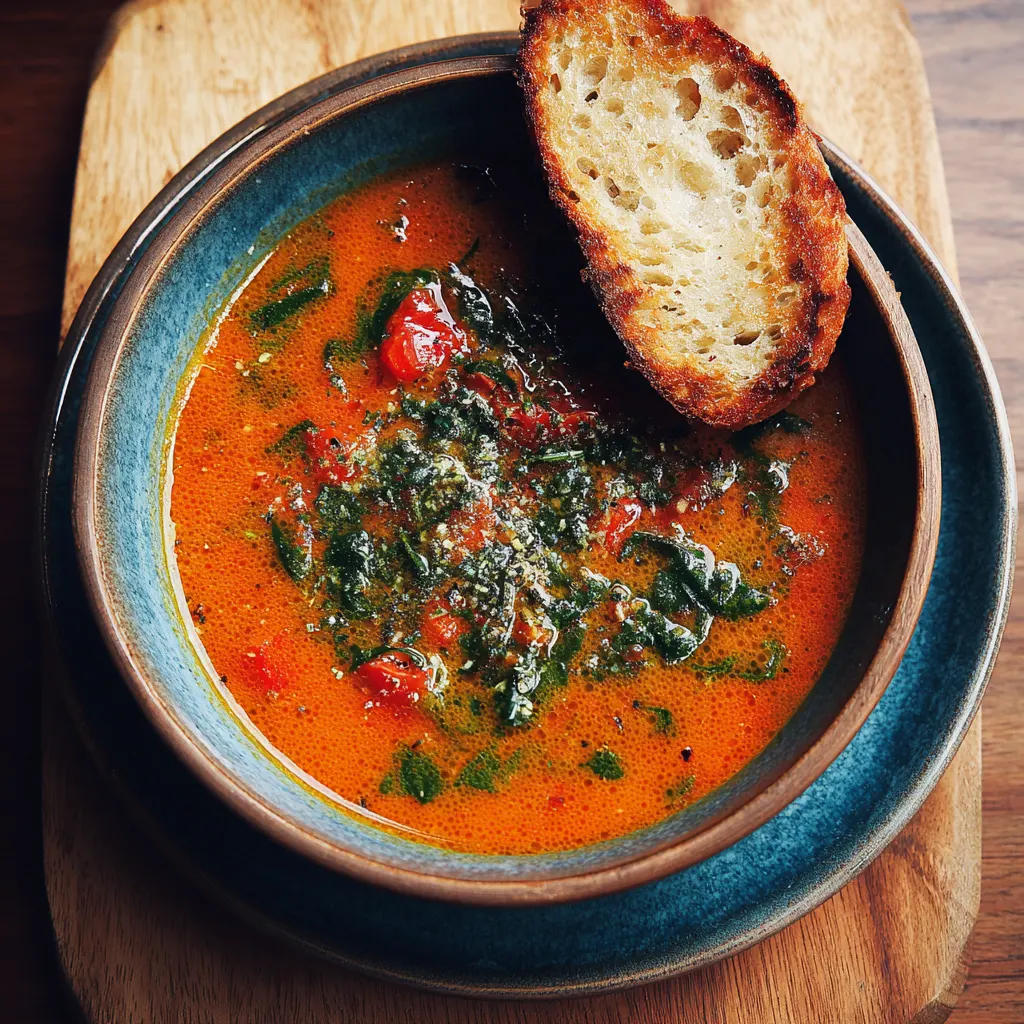
The Ultimate Guide to Savory Spinach and Tomato Soup
Spinach and Tomato Soup is a timeless culinary staple, offering a perfect blend of rich, tangy comfort and unparalleled nutrition. This soup provides a warm, soul-soothing experience that is incredibly versatile, adapting effortlessly from a quick weekday lunch to an elegant first course. Its rapid preparation and reliance on pantry-friendly ingredients make it a favorite for home cooks seeking a healthy, flavor-packed dish that can be customized to any diet, whether you prefer a creamy, velvety texture or a light, chunky, garden-fresh experience.
Essential Spinach and Tomato Soup Recipe
This foundational recipe yields a deeply flavored soup, balanced in both acidity and richness, forming the perfect base for any variation.
Ingredients
-
2 tablespoons olive oil or butter
-
1 large yellow onion, finely chopped
-
4 cloves garlic, minced
-
2 (14.5 oz) cans fire-roasted diced tomatoes
-
1 (15 oz) can tomato puree (or crushed tomatoes)
-
4 cups vegetable or chicken broth/stock
-
1 teaspoon dried oregano
-
1 teaspoon dried basil (or 1 tablespoon fresh basil, added at the end)
-
1 teaspoon granulated sugar (or a splash of balsamic vinegar)
-
4 cups fresh baby spinach (about 5 ounces)
-
½ cup heavy cream, half-and-half, or unsweetened plant-based milk (optional, for creaminess)
-
Kosher salt and freshly ground black pepper to taste
-
Optional garnish: Parmesan cheese, fresh basil leaves, croutons
Step-by-Step Instructions
-
Sauté Aromatics: In a large soup pot or Dutch oven, heat the olive oil or butter over medium heat. Add the chopped onion and sauté for 5 to 7 minutes until softened and translucent. Add the minced garlic and cook for 1 minute more, until fragrant. Do not allow the garlic to burn.
-
Build the Base: Add the fire-roasted diced tomatoes, tomato puree, vegetable broth, dried oregano, dried basil, and sugar (or balsamic vinegar) to the pot. Stir well to combine all ingredients, scraping up any browned bits from the bottom of the pot.
-
Simmer for Flavor: Bring the mixture to a slow boil, then immediately reduce the heat to a low simmer. Cover partially and let the soup simmer for 20 to 30 minutes, allowing the flavors to meld and deepen.
-
Blend to Desired Consistency: Remove the pot from the heat. Use an immersion blender to blend the soup until smooth and velvety. Alternatively, transfer the soup in batches to a standard blender (taking caution with hot liquids) and blend until smooth before returning it to the pot.
-
Incorporate Spinach and Cream: Return the pot to low heat. Stir in the fresh baby spinach, incorporating it a handful at a time. Cook just until the spinach has wilted, which should take 2 to 3 minutes. If using cream or milk, turn off the heat and stir in the liquid now to prevent curdling.
-
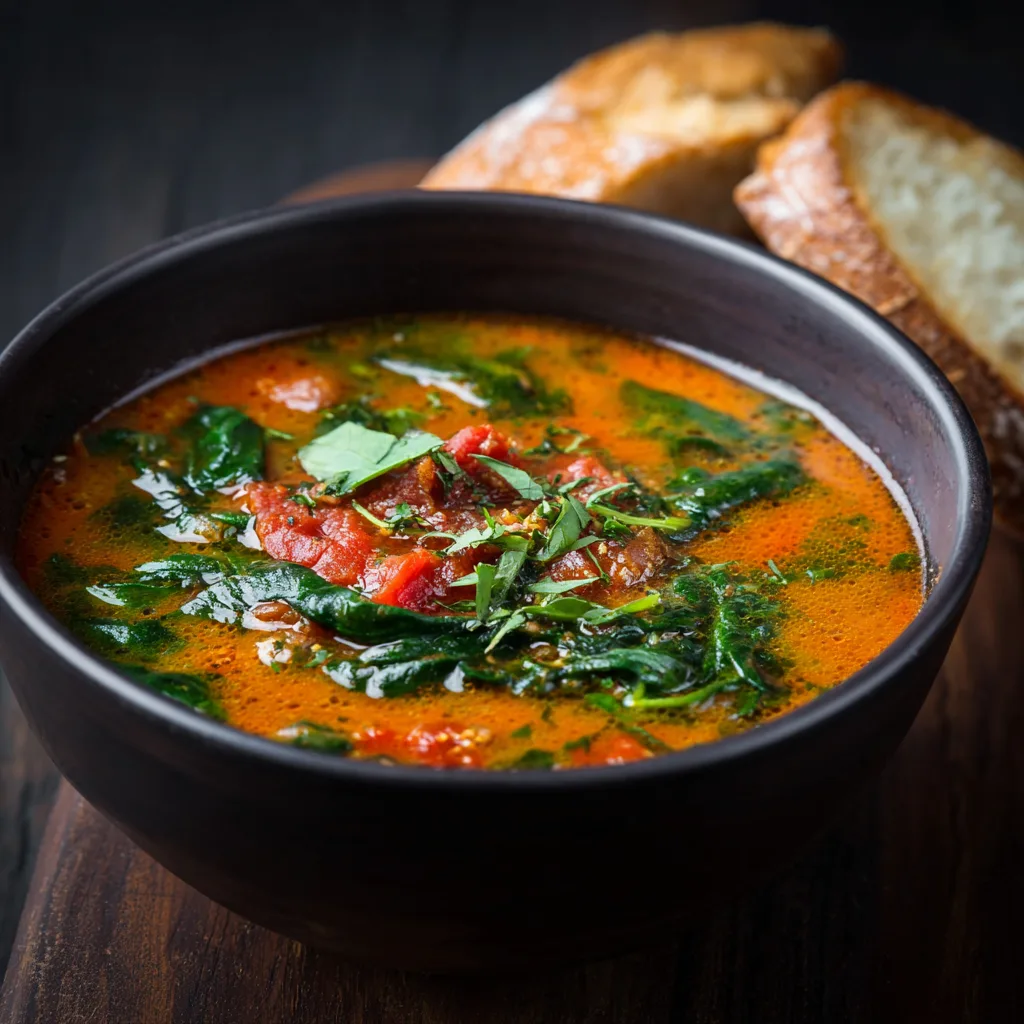
Season and Serve: Taste the soup and adjust the seasoning generously with salt and fresh black pepper. Serve hot, garnished with a sprinkle of Parmesan cheese and a few fresh basil leaves.
The Nutritional Synergy of a Classic Pairing
The combination of spinach and tomato is not only a delight for the palate but a powerhouse of nutrition, offering significant health advantages that go far beyond simple comfort food. The key lies in the complementary nutritional profiles of the two main ingredients, which, when cooked together, enhance the bioavailability of key nutrients.
Tomatoes are famous for their high concentration of lycopene, a potent antioxidant associated with heart health and protection against certain cancers. Crucially, lycopene is fat-soluble and its concentration is amplified through the cooking process. Simmering the tomatoes, as detailed in the recipe, and incorporating a healthy fat like olive oil, dramatically increases the body’s ability to absorb this vital compound. Tomatoes also provide an excellent source of Vitamin C and potassium, contributing to immune function and fluid balance.
Spinach, the other star, is renowned for its exceptional mineral content, including iron, which is essential for transporting oxygen in the blood. While plant-based iron (non-heme iron) can be challenging for the body to absorb, the high Vitamin C content naturally found in the tomatoes acts as a crucial cofactor, converting the non-heme iron into a more readily available form. Additionally, spinach delivers massive doses of Vitamin K, Vitamin A, and folate. This soup’s richness in fiber, derived from both vegetables, aids in digestive health and promotes prolonged feelings of fullness, making this a satisfying and restorative meal. By consuming this soup, you are leveraging food synergy, ensuring that the ingredients work together to boost the overall nutritional value.
Mastering Flavor and Texture: Tips for the Perfect Bowl
Achieving the perfect bowl of Spinach and Tomato Soup requires attention to a few critical techniques, primarily concerning balancing acidity, developing flavor depth, and managing texture. Small adjustments in method and ingredient choice can transform a simple soup into a gourmet experience.
Acidity Control: The Secret to Balance
Tomato-based soups often suffer from excessive acidity, which can leave the palate feeling sharp. The simplest solution, employed in the core recipe, is adding a touch of sweetness. The small amount of granulated sugar (usually 1 teaspoon) counteracts the tartness without making the soup sweet. For a deeper, more savory balance, a dash of high-quality balsamic vinegar or a few drops of maple syrup works wonders. Alternatively, using crushed or pureed tomatoes instead of diced tomatoes tends to result in a milder flavor profile overall.
Developing Flavor Depth
The key to a rich soup is developing the umami flavor early on. This is achieved by properly sautéing the aromatics. Take the time to caramelize the onions until they are deeply translucent, and allow the garlic to toast briefly. The choice of tomato is equally vital; fire-roasted diced tomatoes are highly recommended as they impart a smoky depth that cannot be replicated by standard canned varieties. For an even richer flavor, simmer the soup for a full hour, rather than just 20 minutes, allowing the liquid to slightly reduce and concentrate the tomato essence. Using a strong vegetable or chicken stock over plain water will also build complexity.
Achieving Optimal Texture
The texture determines whether the soup feels rustic or refined.
-
Velvety Smooth: For a restaurant-quality, creamy texture, always use an immersion or standard blender before adding the spinach. Blend until perfectly smooth. This allows the tomatoes and onions to fully break down.
-
Smooth with Greens: If you prefer a creamy base with visible, tender pieces of spinach, blend the soup base (broth and tomatoes) first, then stir in the fresh spinach and cook until wilted.
-
Chunky and Rustic: For a hearty consistency, omit the blending step entirely. Simply let the soup simmer, and the diced tomatoes will soften naturally.
Adding Creaminess Without Curdling
If opting for a creamy soup, adding the dairy or non-dairy milk incorrectly can lead to unsightly curdling. The primary rule is never boil the soup after adding the cream. Turn the heat off completely, let the soup cool for a minute, and then stir in the heavy cream, half-and-half, or milk (almond, oat, or soy work well for a vegan option). The residual heat will be enough to warm the liquid through without causing separation.
Global Variations: Taking Your Soup Beyond the Basic
While the classic recipe is satisfying, Spinach and Tomato Soup is a magnificent culinary canvas, lending itself easily to global influences and ingredient additions. By incorporating new aromatics, herbs, and textures, you can transform this soup into an entirely new dish.
The Mediterranean Touch
To lean into a savory, heartier European profile, consider these additions:
-
Beans and Legumes: Stir in one can of rinsed and drained cannellini beans or small white beans during the last 10 minutes of simmering. This adds a boost of protein and fiber, making the soup substantial enough for a main course.
-
Pesto and Parmesan: Stir a tablespoon of basil pesto into the finished soup for an intense, herbaceous flavor. Garnish with plenty of high-quality grated Parmesan or Pecorino Romano cheese.
-
Sun-Dried Tomatoes: Sautéing a few slivered, oil-packed sun-dried tomatoes along with the onions adds a rich, concentrated, almost umami depth to the soup base.
Indian-Inspired Spiced Soup
For a vibrant, warming experience, swap out the Italian herbs for spices common in Indian cuisine:
-
Aromatics: Replace dried basil and oregano with 1 teaspoon of cumin seeds, ½ teaspoon of turmeric powder, and a finely chopped piece of fresh ginger (1 inch).
-
Technique: Heat the oil, then add the cumin seeds and allow them to splatter before adding the onion and ginger. Follow the recipe as normal, adding a dash of red chili powder or a few whole dried red chilies for heat. This version is often served with a squeeze of fresh lemon juice at the end.
Building a Hearty Meal
If the goal is to make a truly filling one-pot meal, texture is key:
-
Tortellini or Small Pasta: Add half a cup of small pasta shapes (like tubettini or orzo) or a package of cheese tortellini during the last 10-15 minutes of simmering. The pasta will cook directly in the broth, absorbing the tomato flavor.
-
Grains and Low-Carb Options: Stir in cooked grains like rice or quinoa. For a low-carb alternative, add frozen cauliflower rice, allowing it to simmer for 30 minutes to soften and integrate into the broth.
Vegan and Plant-Based Adaptations
Making the soup plant-based is effortless. Ensure you use vegetable broth instead of chicken stock, and swap the butter for olive oil. For creaminess, opt for full-fat, unsweetened coconut milk, cashew cream, or high-quality oat milk. These alternatives provide a satisfying richness without relying on dairy.
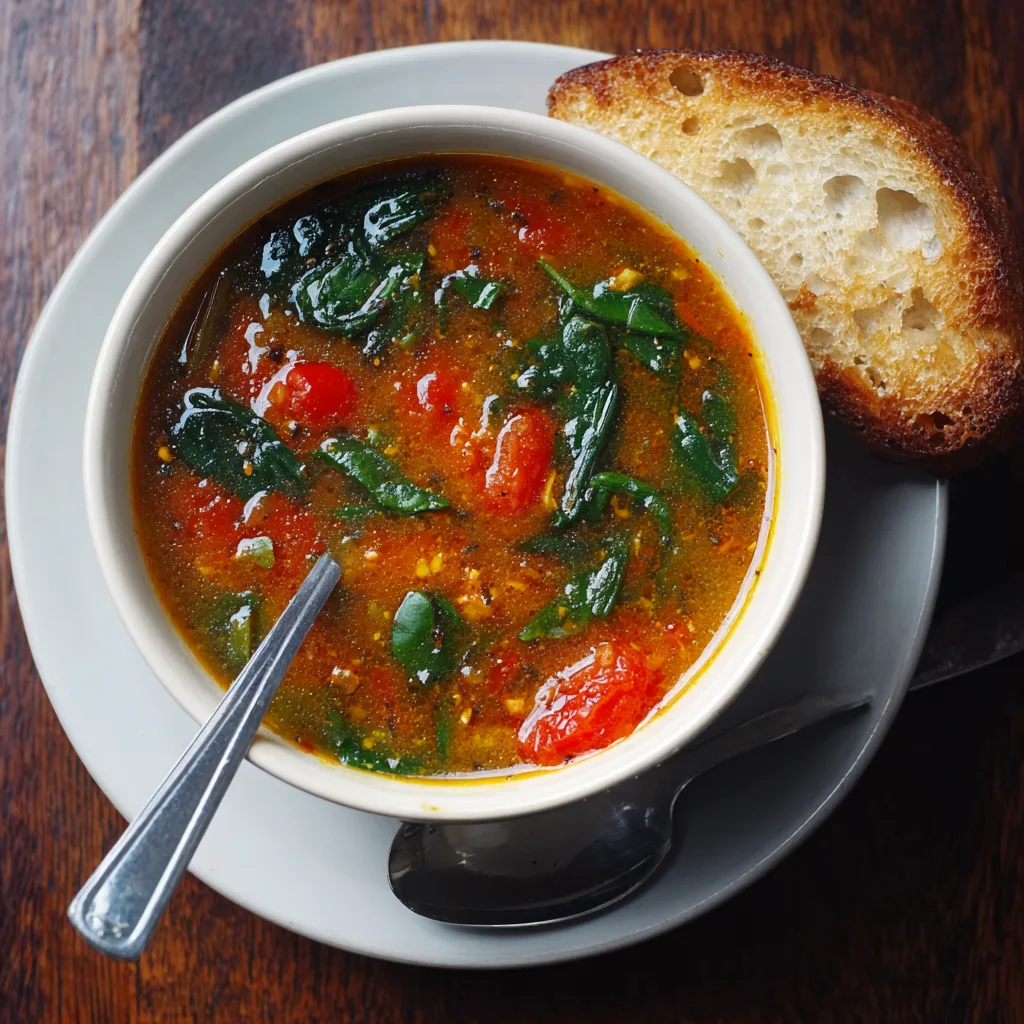
Serving, Storing, and Maximizing Freshness
Soup is often as good the next day, if not better, as the flavors continue to marry in the refrigerator. Understanding how to properly pair, garnish, and store your Spinach and Tomato Soup ensures maximum enjoyment and minimizes waste.
Perfect Pairings
The classic pairing for tomato soup is the grilled cheese sandwich—the sharpness of the cheddar provides an excellent counterpoint to the soup’s acidity and richness. Other great companions include:
-
Crusty Bread: A French baguette or ciabatta, perfect for soaking up the broth.
-
Savory Panini: A cheese and prosciutto or turkey pesto panini.
-
Light Salad: A simple side salad dressed with a vinaigrette.
-
Savory Toasts: Bruschetta or garlic bread.
High-Impact Garnishes
Garnishing elevates the soup from simple to sensational. Beyond the standard Parmesan, try:
-
Oils and Creams: A swirl of extra virgin olive oil or a drizzle of basil pesto. A dollop of crème fraîche or plain Greek yogurt adds tanginess and texture.
-
Fresh Herbs: Chopped fresh basil is indispensable, but fresh thyme or chives also add brightness.
-
Crunch: Homemade or store-bought croutons, toasted pumpkin seeds, or finely chopped toasted almonds provide a welcome textural contrast.
-
Heat: A few pinches of red pepper flakes or a light dusting of smoked paprika.
Storage and Freezing
Spinach and Tomato Soup is an ideal dish for meal prep.
-
Refrigeration: Store cooled soup in an airtight container for up to 4 to 5 days.
-
Freezing: This soup freezes exceptionally well, but with one critical caveat: always freeze the soup before adding the cream/dairy. Dairy-based liquids tend to separate and take on a grainy texture when thawed. Freeze the tomato and spinach base in individual portions for up to 3 months. When reheating, simmer the base and then stir in the cream off the heat right before serving.
Troubleshooting Common Issues
-
The soup tastes acidic: Stir in another half teaspoon of sugar or a few drops of balsamic vinegar. A small pat of butter added at the end can also cut acidity.
-
The soup tastes bland: Blandness usually means more seasoning is needed. Add salt until the flavor truly “pops,” and grind in fresh black pepper. If still lacking, a splash of soy sauce or a cube of bouillon concentrate (like Better than Bouillon) can add instant savory depth.
-
The soup curdled: If you added the cream and it separated, the soup was likely too hot. While difficult to fully fix, sometimes transferring the soup to a blender and blitzing it again (with a splash of cold cream or milk) can emulsify the mixture and partially salvage the texture. Next time, ensure the heat is turned off before adding the dairy.