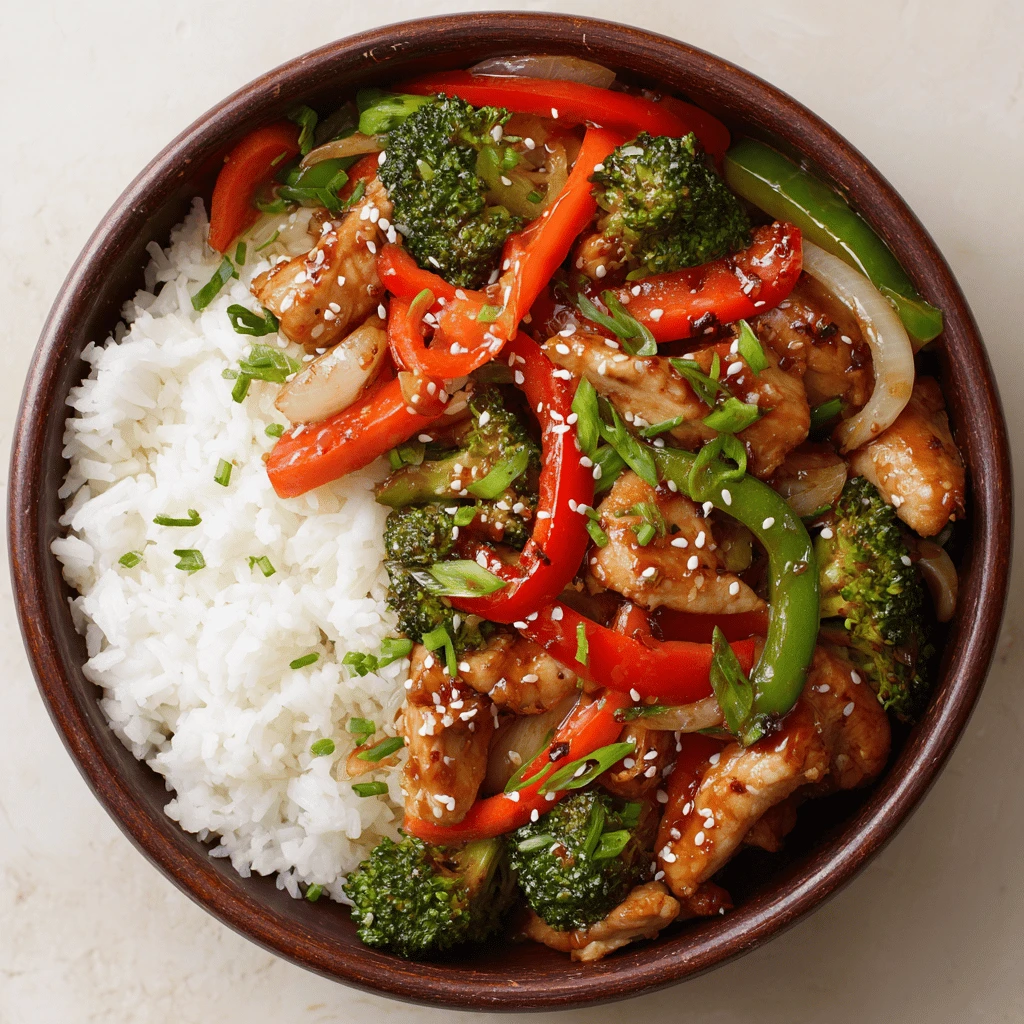
Teriyaki Chicken and Vegetables
Ingredients
- 1.5 lbs boneless, skinless chicken thighs, cut into bite-sized pieces
- 1 tbsp olive oil
- 1 red bell pepper, sliced
- 1 green bell pepper, sliced
- 1 onion, sliced
- 2 cups broccoli florets
- 1 cup sliced carrots
- 1/2 cup teriyaki sauce (store-bought or homemade)
- 1 tbsp sesame oil
- 1 tsp ginger, grated
- 2 cloves garlic, minced
- 1/4 tsp red pepper flakes (optional)
- Sesame seeds, for garnish
- Chopped green onions, for garnish
- Cooked rice, for serving
Step-by-Step
1. In a large bowl, combine the chicken pieces with sesame oil, ginger, garlic, and red pepper flakes (if using). Toss to coat evenly and let it marinate for at least 15 minutes, or up to 30 minutes in the refrigerator.
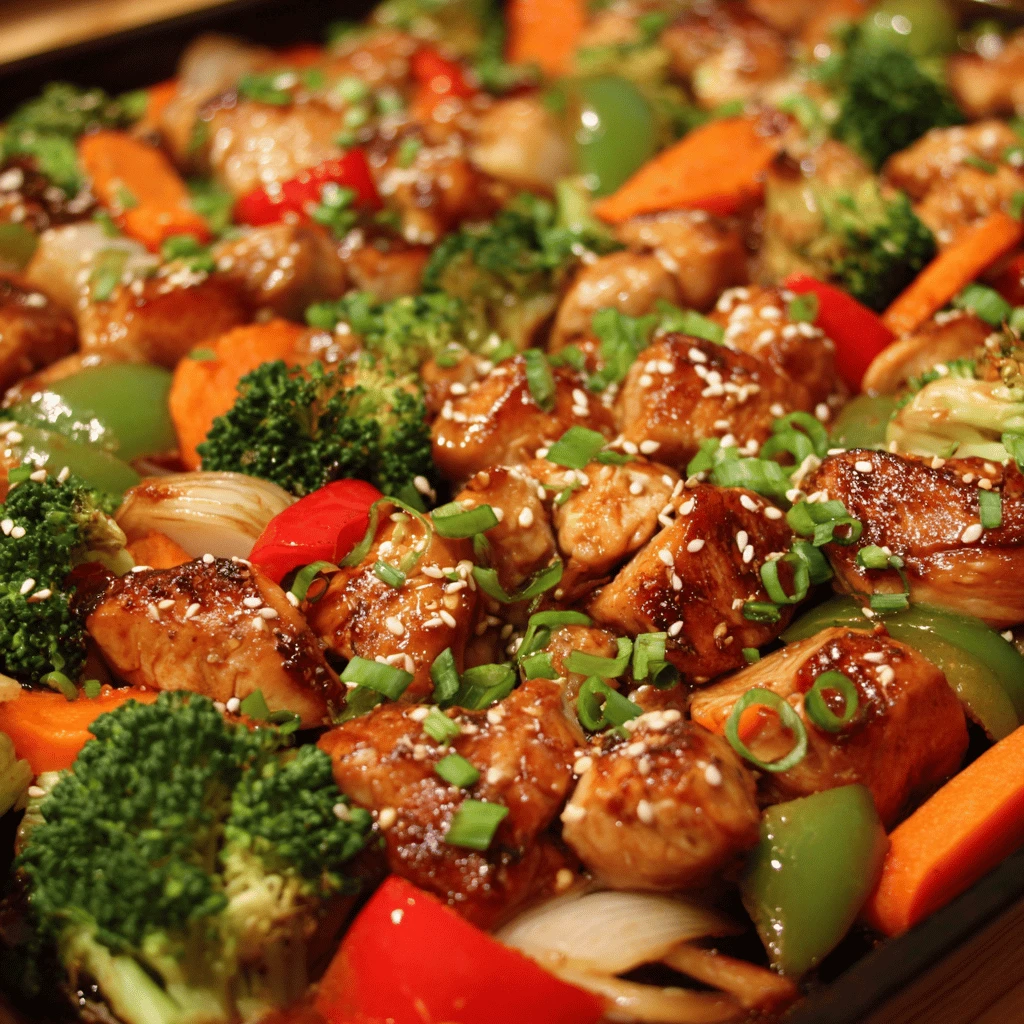
2. Heat olive oil in a large skillet or wok over medium-high heat.
3. Add the marinated chicken to the skillet and cook until browned and cooked through, about 5-7 minutes. Make sure not to overcrowd the pan; cook in batches if necessary.
4. Remove the chicken from the skillet and set aside.
5. Add the sliced bell peppers, onion, broccoli florets, and carrots to the skillet. Stir-fry for 5-7 minutes, or until the vegetables are tender-crisp.
6. Return the cooked chicken to the skillet with the vegetables.
7. Pour the teriyaki sauce over the chicken and vegetables. Stir well to coat everything evenly.
8. Bring the sauce to a simmer and cook for another 2-3 minutes, or until the sauce has thickened slightly.
9. Remove from heat and garnish with sesame seeds and chopped green onions.
10. Serve immediately over cooked rice.
The Allure of Teriyaki Chicken and Vegetables
Teriyaki chicken and vegetables is a globally loved dish. It blends savory, sweet, and umami flavors. It’s a complete meal, offering protein, vitamins, and fiber. Its quick preparation makes it perfect for busy weeknights.
Understanding the Teriyaki Flavor Profile
The defining characteristic of teriyaki is its glossy sauce. This sauce is traditionally made from soy sauce, mirin (sweet rice wine), sugar, and ginger. The sauce gets its unique sheen from the sugars caramelizing during cooking. It’s a harmonious blend of salty, sweet, and savory.
Nutritional Benefits of Key Ingredients
Chicken provides a great source of lean protein. This is essential for muscle building and overall health. Vegetables offer a wealth of vitamins, minerals, and fiber. Bell peppers are rich in vitamin C, while broccoli is a good source of vitamin K. Carrots are packed with beta-carotene, a precursor to vitamin A.
Adapting the Recipe to Dietary Needs
This recipe is highly adaptable. For a lower-sodium version, use low-sodium soy sauce. To reduce the sugar content, use a sugar substitute. To make it gluten-free, use gluten-free soy sauce or tamari. You can also easily add or substitute vegetables based on your preferences and dietary needs. Cauliflower, zucchini, and snow peas work well.
Mastering the Cooking Techniques
The success of this dish relies on proper cooking techniques. Achieving the perfect balance of cooked chicken and crisp-tender vegetables is key. Careful attention to heat control and timing is crucial.
Searing the Chicken for Maximum Flavor
Searing the chicken before adding the vegetables is important. This step creates a beautiful brown crust on the chicken. The browning process, known as the Maillard reaction, enhances the flavor. Make sure the skillet is hot before adding the chicken. Avoid overcrowding the pan. This will ensure that the chicken sears properly.
Stir-Frying Vegetables for Texture
Stir-frying is the ideal cooking method for the vegetables. It allows them to cook quickly while retaining their crispness. Keep the heat high and stir constantly. This prevents the vegetables from becoming soggy. Cook the vegetables until they are tender-crisp.
Achieving the Perfect Teriyaki Glaze
The teriyaki glaze should be thick and glossy. It needs to coat the chicken and vegetables evenly. Simmer the sauce until it reduces and thickens slightly. This concentrates the flavors. Be careful not to overcook the sauce. It can become too thick and sticky.
Variations and Creative Twists
The basic teriyaki chicken and vegetables recipe can be enhanced with various additions. Experimenting with different ingredients and techniques can create exciting new flavors. Consider incorporating pineapple, cashews, or different types of sauces.
Adding Fruit for a Tropical Touch
Adding pineapple chunks brings a tropical sweetness to the dish. The acidity of the pineapple also tenderizes the chicken. Add the pineapple along with the vegetables. Make sure to stir-fry them until they are lightly caramelized.
Incorporating Nuts for Added Crunch
Cashews or peanuts add a satisfying crunch to the dish. They also provide healthy fats and protein. Add the nuts towards the end of the cooking process. This will prevent them from burning. Toasting the nuts beforehand can enhance their flavor.
Exploring Different Sauce Variations
While traditional teriyaki sauce is delicious, other Asian-inspired sauces can be used. Hoisin sauce, black bean sauce, or even a spicy gochujang sauce can add a unique twist. Experiment with different combinations to find your favorite.
Serving and Presentation Tips
Presenting teriyaki chicken and vegetables in an appealing way enhances the dining experience. Garnishes, plating techniques, and complementary side dishes all contribute to a memorable meal. Attention to detail can elevate this simple dish.
Garnishing for Visual Appeal
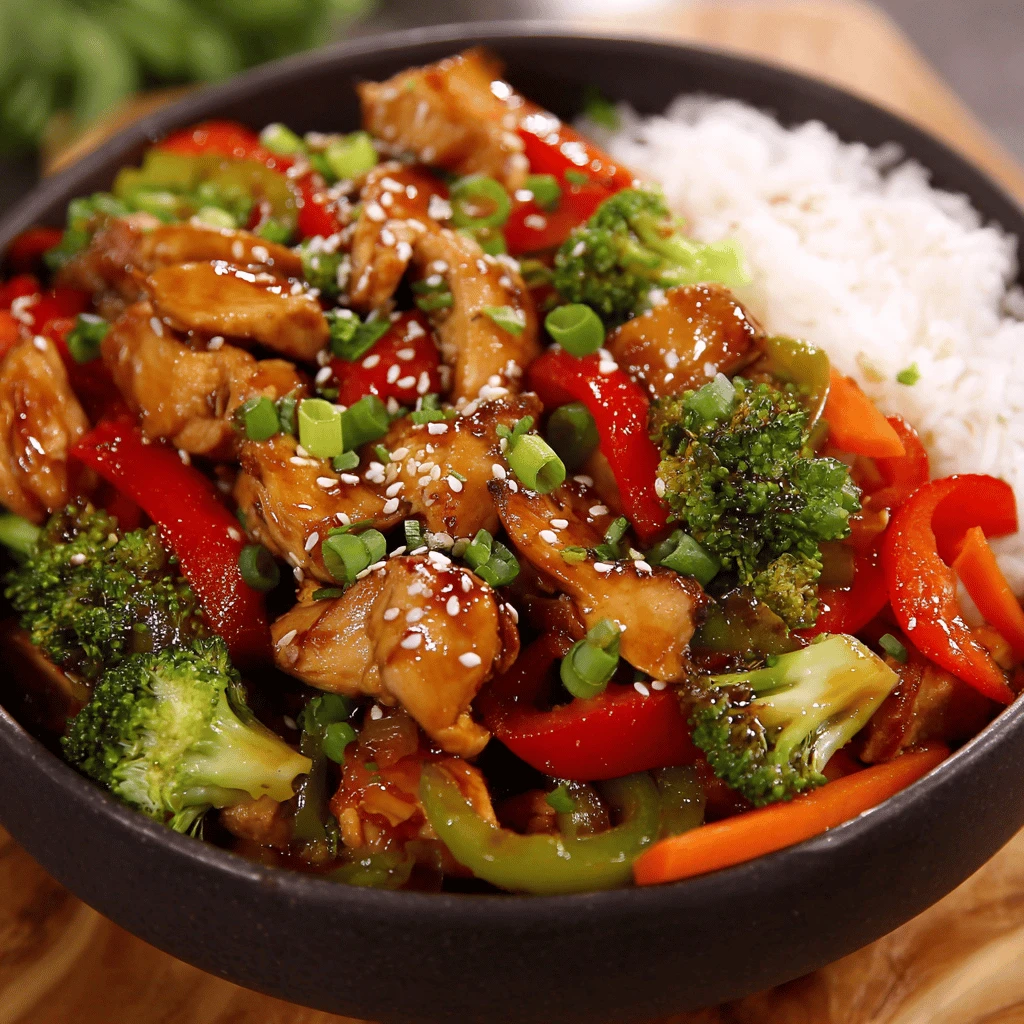
Garnishes add a pop of color and texture. Sesame seeds provide a nutty flavor and visual contrast. Chopped green onions offer a fresh, herbaceous note. A sprinkle of red pepper flakes adds a touch of heat. Arrange the garnishes artfully.
Plating Techniques for Restaurant-Quality Presentation
Serve the teriyaki chicken and vegetables over a bed of fluffy rice. Use a round mold to shape the rice for a professional look. Arrange the chicken and vegetables around the rice. Drizzle extra teriyaki sauce over the top. Garnish with sesame seeds and green onions.
Complementary Side Dishes
Besides rice, other side dishes can complement the dish. A simple cucumber salad offers a refreshing contrast. Miso soup adds a savory and umami element. Edamame provides a healthy and satisfying snack. Choose side dishes that complement the flavors and textures of the main course.
Storing and Reheating Instructions
Proper storage and reheating ensure that leftovers taste as good as the original dish. Follow these guidelines to maintain the quality and safety of your teriyaki chicken and vegetables.
Safe Storage Practices
Allow the teriyaki chicken and vegetables to cool completely before storing. Transfer it to an airtight container. Store it in the refrigerator for up to 3-4 days. This prevents bacterial growth.
Reheating Methods for Optimal Results
The best way to reheat teriyaki chicken and vegetables is in a skillet. Add a splash of water or broth to prevent it from drying out. Heat it over medium heat until it is warmed through. You can also reheat it in the microwave. Cover the dish with a microwave-safe lid. Heat it in 1-minute intervals. Stir it in between. Avoid over-reheating, as this can make the chicken tough.
Freezing for Longer Storage
For longer storage, you can freeze the teriyaki chicken and vegetables. Allow it to cool completely. Divide it into freezer-safe containers or bags. Freeze for up to 2-3 months. Thaw it in the refrigerator overnight before reheating.
FAQ
Can I make this recipe ahead of time?
Yes, you can prepare the teriyaki sauce and marinate the chicken ahead of time. You can also chop the vegetables in advance. Store them separately in the refrigerator. When you are ready to cook, simply follow the instructions.
What kind of rice is best to serve with this dish?
Jasmine rice or basmati rice are excellent choices. They are fragrant and fluffy. Brown rice is a healthier option. It has a nutty flavor and chewier texture.
Can I use different vegetables?
Absolutely! Feel free to use any vegetables you enjoy. Broccoli, carrots, bell peppers, and onions are common choices. You can also add zucchini, snap peas, mushrooms, or asparagus.
How do I make homemade teriyaki sauce?
To make homemade teriyaki sauce, combine soy sauce, mirin (or sake), sugar, and ginger in a saucepan. Simmer until the sauce thickens slightly. You can adjust the sweetness and saltiness to your liking.
Is this recipe gluten-free?
Not as written, because most store-bought teriyaki sauces contain gluten. To make it gluten-free, use gluten-free soy sauce (tamari) and ensure your teriyaki sauce is gluten-free.