
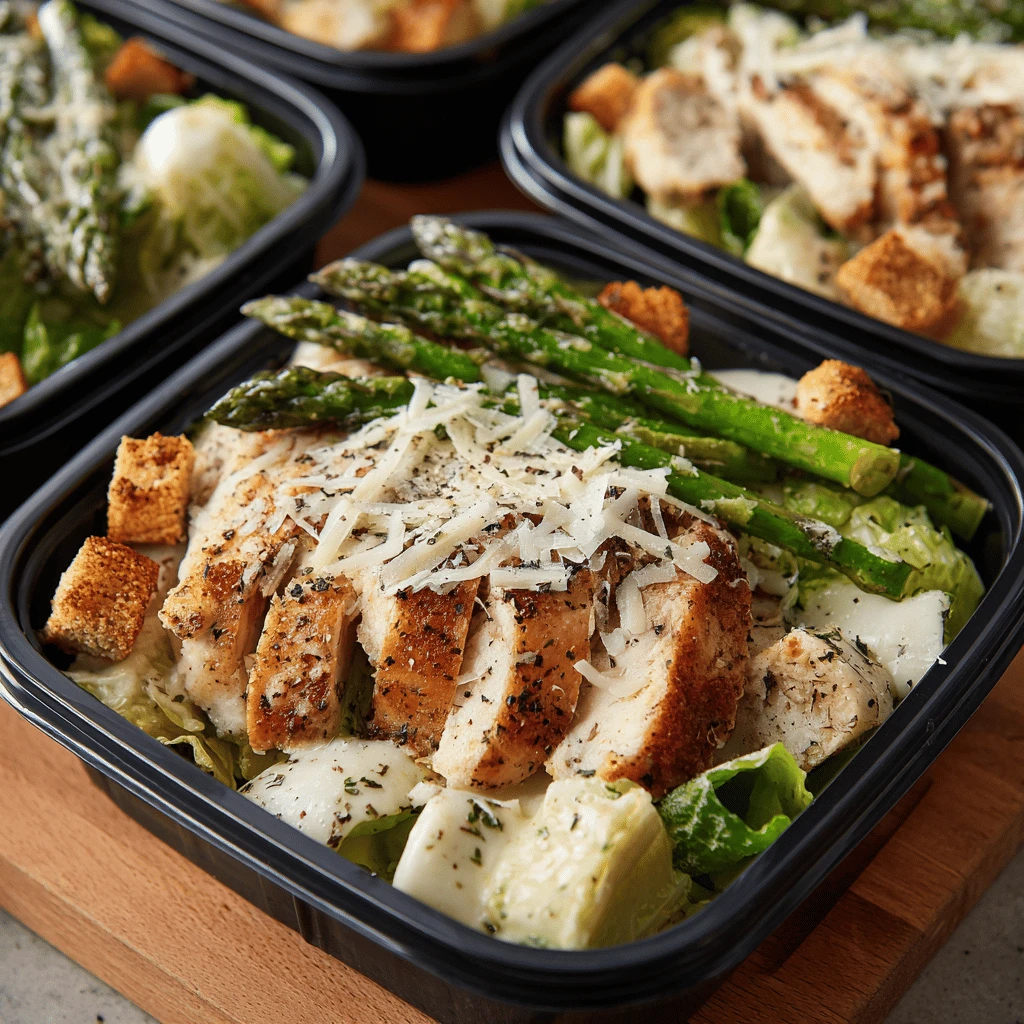
torso Caesar Salad Meal Prep Bowls
Ingredients
- 4 boneless, skinless chicken breasts (about 6 oz each)
- 1 tablespoon olive oil
- 1 teaspoon garlic powder
- 1/2 teaspoon paprika
- Salt and pepper to taste
- 1 large head of romaine lettuce, chopped
- 1 cup whole wheat croutons
- 1 cup grated Parmesan cheese
- 1/2 cup Caesar dressing (store-bought or homemade)
- Optional: Cherry tomatoes, hard-boiled eggs, avocado
Step-by-Step
1. Preheat your oven to 400°F (200°C).
2. Prepare the chicken: In a small bowl, combine olive oil, garlic powder, paprika, salt, and pepper. Rub the mixture evenly over the chicken breasts.
3. Bake the chicken: Place the chicken breasts on a baking sheet and bake for 20-25 minutes, or until the internal temperature reaches 165°F (74°C).
4. Let the chicken cool slightly, then slice or dice it into bite-sized pieces.
5. Prepare the romaine lettuce: Wash and chop the romaine lettuce into bite-sized pieces.
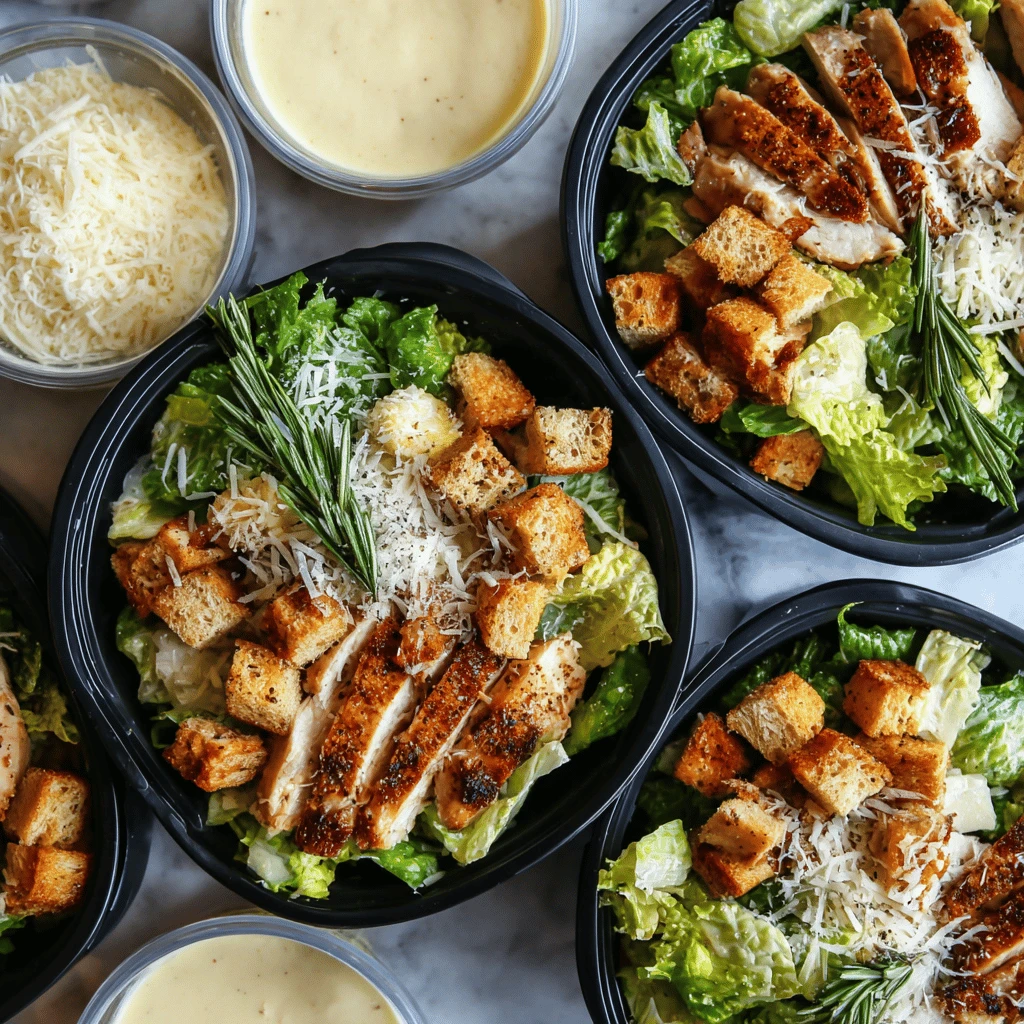
6. Assemble the meal prep bowls: Divide the romaine lettuce evenly among four meal prep containers.
7. Add the toppings: Top the lettuce with the sliced chicken, croutons, and Parmesan cheese. If using, add cherry tomatoes, hard-boiled eggs, or avocado.
8. Store the dressing separately: Place the Caesar dressing in small, individual containers to prevent the salad from becoming soggy.
9. Seal and refrigerate: Seal the meal prep containers tightly and refrigerate for up to 4 days.
10. When ready to eat, add the dressing and toss well. Enjoy!
Making the Perfect Caesar Salad Meal Prep Bowl
Meal prepping Caesar salads can be a game-changer for your weekday lunches. It is a simple way to ensure that you have a healthful and satisfying meal readily available. However, keeping the salad fresh and flavorful throughout the week requires a few key strategies.
Choosing the Right Ingredients
Selecting the right ingredients is essential for preventing a sad, soggy salad. Opt for crisp, sturdy romaine lettuce. Romaine holds its shape much better than softer greens.
Whole wheat croutons offer a healthier alternative to traditional croutons and maintain their crunch well. Freshly grated Parmesan cheese adds a burst of flavor and doesn’t dry out as easily as pre-shredded varieties.
Finally, choose chicken breasts that are not too thick, so that they are easier to cut into bite-sized pieces and bake evenly.
Preventing Soggy Salads
Sogginess is the enemy of any good meal prep salad. The key is to keep the wet ingredients separate from the dry ingredients until you are ready to eat. This means storing the Caesar dressing in a separate container.
Also, consider adding a layer of paper towels at the bottom of the bowl to absorb excess moisture from the lettuce. This can help keep your salad fresh and crisp for longer.
Meal Prep Container Considerations
The type of container you use can also affect the freshness of your salad. Look for containers that are airtight and leak-proof. This will help prevent the lettuce from wilting and the dressing from spilling.
Glass containers are a great option because they are non-reactive and easy to clean. Plastic containers are also a good choice, but be sure to choose BPA-free options.
Maximizing Flavor
To maximize the flavor of your Caesar salad, consider adding a few extra ingredients. Cherry tomatoes add a pop of sweetness and acidity. Hard-boiled eggs provide protein and richness. Avocado adds healthy fats and creaminess.
Experiment with different herbs and spices to customize your salad to your liking. A sprinkle of red pepper flakes can add a touch of heat, while a dash of garlic powder can enhance the savory flavor.
Storing and Reheating (If Applicable)
Caesar salad meal prep bowls are best enjoyed cold. If you are adding warm chicken, allow it to cool completely before assembling the salad. This will help prevent the lettuce from wilting.
Store the salad in the refrigerator for up to 4 days. When ready to eat, add the dressing and toss well. Avoid storing the salad at room temperature for extended periods of time, as this can increase the risk of bacterial growth.
Caesar Salad Dressing: Store-Bought vs. Homemade
The choice between store-bought and homemade Caesar dressing is a matter of personal preference, time constraints, and dietary needs. Both options have their advantages and disadvantages. Understanding these differences can help you make the best choice for your meal prep Caesar salad.
Store-Bought Caesar Dressing
Store-bought Caesar dressing offers convenience and consistency. It’s readily available at most grocery stores and comes in a variety of brands and flavors.
Pros:
- Convenience: Simply grab a bottle off the shelf and you’re ready to go.
- Consistency: Store-bought dressings are formulated to have a consistent flavor and texture.
- Shelf Life: They typically have a longer shelf life than homemade dressings.
Cons:
- Additives: Many store-bought dressings contain preservatives, artificial flavors, and other additives.
- Sodium Content: They can be high in sodium.
- Calorie Count: Some varieties are high in calories and unhealthy fats.
Homemade Caesar Dressing
Making your own Caesar dressing allows you to control the ingredients and customize the flavor to your liking.
Pros:
- Fresh Ingredients: You can use fresh, high-quality ingredients.
- Customization: You can adjust the flavors to your preference.
- No Additives: You avoid artificial flavors, preservatives, and excessive sodium.
Cons:
- Time Commitment: It takes more time to make homemade dressing.
- Shorter Shelf Life: Homemade dressings typically have a shorter shelf life than store-bought varieties.
- Ingredient Sourcing: You need to source the ingredients, including anchovies, which some people may find off-putting.
Healthy Homemade Caesar Dressing Options
If you’re looking for a healthier alternative to traditional Caesar dressing, there are several options you can try.
- Greek Yogurt-Based Dressing: Substitute Greek yogurt for some or all of the mayonnaise to reduce the fat and calorie content.
- Avocado-Based Dressing: Blend avocado with lemon juice, garlic, and Parmesan cheese for a creamy and healthful dressing.
- Olive Oil-Based Dressing: Use olive oil instead of vegetable oil for a healthier fat source.
Making the Right Choice
Ultimately, the choice between store-bought and homemade Caesar dressing depends on your individual needs and preferences. If you’re short on time and prioritize convenience, store-bought dressing is a good option.
If you’re concerned about additives and sodium content, or if you want to customize the flavor, homemade dressing is the way to go.
Tips for Storing Homemade Caesar Dressing
Homemade Caesar dressing should be stored in an airtight container in the refrigerator. It will typically last for 3-5 days. Be sure to label the container with the date it was made.
Chicken Preparation for Caesar Salad
Chicken is a staple protein in Caesar salads. Preparing it correctly ensures that it is both flavorful and safe to eat. There are several methods you can use to cook chicken for your meal prep Caesar salad.
Baking Chicken Breasts
Baking chicken breasts is a simple and healthful way to prepare them for your salad. Preheat your oven to 400°F (200°C). Season the chicken breasts with salt, pepper, garlic powder, and paprika.
Bake for 20-25 minutes, or until the internal temperature reaches 165°F (74°C). Let the chicken cool slightly before slicing or dicing it.
Grilling Chicken Breasts
Grilling chicken breasts adds a smoky flavor that complements the Caesar salad perfectly. Preheat your grill to medium-high heat.
Season the chicken breasts with salt, pepper, garlic powder, and your favorite herbs. Grill for 5-7 minutes per side, or until the internal temperature reaches 165°F (74°C). Let the chicken cool slightly before slicing or dicing it.
Pan-Seared Chicken Breasts
Pan-searing chicken breasts is a quick and easy way to prepare them on the stovetop. Heat a tablespoon of olive oil in a skillet over medium-high heat.
Season the chicken breasts with salt, pepper, and your favorite spices. Sear for 5-7 minutes per side, or until the internal temperature reaches 165°F (74°C). Let the chicken cool slightly before slicing or dicing it.
Shredded Chicken
Shredded chicken can also be a great addition to a Caesar salad. It can be made by poaching chicken breasts in water or broth until cooked through and then shredding with two forks. It can also be cooked in a pressure cooker for a quicker method.
Tips for Juicy Chicken
To ensure that your chicken is juicy and flavorful, follow these tips:
- Brine the chicken: Soaking the chicken in a saltwater solution before cooking can help it retain moisture.
- Don’t overcook the chicken: Overcooked chicken can be dry and tough. Use a meat thermometer to ensure that the chicken reaches an internal temperature of 165°F (74°C).
- Let the chicken rest: Allow the chicken to rest for 5-10 minutes before slicing or dicing it. This will allow the juices to redistribute, resulting in a more tender and flavorful chicken.
Customizing Your Caesar Salad
Caesar salad is a classic dish, but that doesn’t mean you can’t customize it to your liking. There are endless ways to add your own personal touch to this salad.
Adding Vegetables
Adding vegetables is a great way to boost the nutritional value of your Caesar salad. Consider adding cherry tomatoes, cucumbers, bell peppers, or carrots. Roasted vegetables, such as broccoli or Brussels sprouts, can also add a warm and savory element.
Adding Protein
While chicken is a popular choice, there are other protein options you can try. Grilled shrimp, salmon, or tofu can be delicious additions. Hard-boiled eggs are another great source of protein.
Adding Healthy Fats
Adding healthy fats can make your Caesar salad more satisfying and nutritious. Avocado is a great choice, as it adds creaminess and healthy fats. Nuts and seeds, such as almonds, walnuts, or sunflower seeds, can also add a boost of nutrients and crunch.
Adding Flavor Boosters
Adding flavor boosters can take your Caesar salad to the next level. A sprinkle of red pepper flakes can add a touch of heat. A squeeze of lemon juice can brighten the flavors. Fresh herbs, such as parsley or dill, can add a burst of freshness.
Dietary Considerations
For those with dietary restrictions, there are several ways to adapt the Caesar salad.
- Gluten-Free: Use gluten-free croutons or omit them altogether.
- Dairy-Free: Use a dairy-free Caesar dressing and omit the Parmesan cheese.
- Vegetarian/Vegan: Substitute tofu or tempeh for the chicken. Use a vegan Caesar dressing and omit the Parmesan cheese, or use a vegan Parmesan substitute.
Storage and Safety Tips
Proper storage and safety practices are crucial when preparing meal prep bowls to prevent foodborne illnesses. Following these guidelines will ensure your Caesar salad meal prep bowls are both delicious and safe to consume.
Cooling Food Properly
After cooking the chicken, allow it to cool completely before adding it to the salad. Hot food can raise the temperature of the salad and promote bacterial growth. The USDA recommends cooling hot food to below 40°F (4°C) within 2 hours.
Using Clean Utensils and Containers
Always use clean utensils and containers when preparing and storing your Caesar salad. Wash your hands thoroughly with soap and water before handling food. Use separate cutting boards for raw chicken and vegetables to prevent cross-contamination.
Storing at the Correct Temperature
Store your Caesar salad meal prep bowls in the refrigerator at a temperature of 40°F (4°C) or below. This will help slow the growth of bacteria and keep your salad fresh for longer.
Best-by Dates
Pay attention to the best-by dates on the ingredients you are using. Do not use ingredients that have expired.
Knowing When to Throw It Out
Even if your Caesar salad looks and smells fine, it’s important to know when to throw it out. If the lettuce is wilted, the chicken is slimy, or the dressing has an off odor, discard the salad immediately.
When in doubt, throw it out. It’s better to be safe than sorry.
FAQ Section
How long do Caesar salad meal prep bowls last in the fridge?
Caesar salad meal prep bowls will typically last for 3-4 days in the refrigerator.
How do you keep Caesar salad from getting soggy when meal prepping?
Store the dressing separately from the salad. Add a layer of paper towels to absorb excess moisture.
What are some healthy variations of Caesar salad dressing?
Greek yogurt-based, avocado-based, and olive oil-based dressings are all healthy alternatives.
Can I freeze Caesar salad?
Freezing Caesar salad is not recommended, as the lettuce will wilt and the dressing will separate.
What other proteins can I use besides chicken?
Grilled shrimp, salmon, tofu, or hard-boiled eggs are all great options.