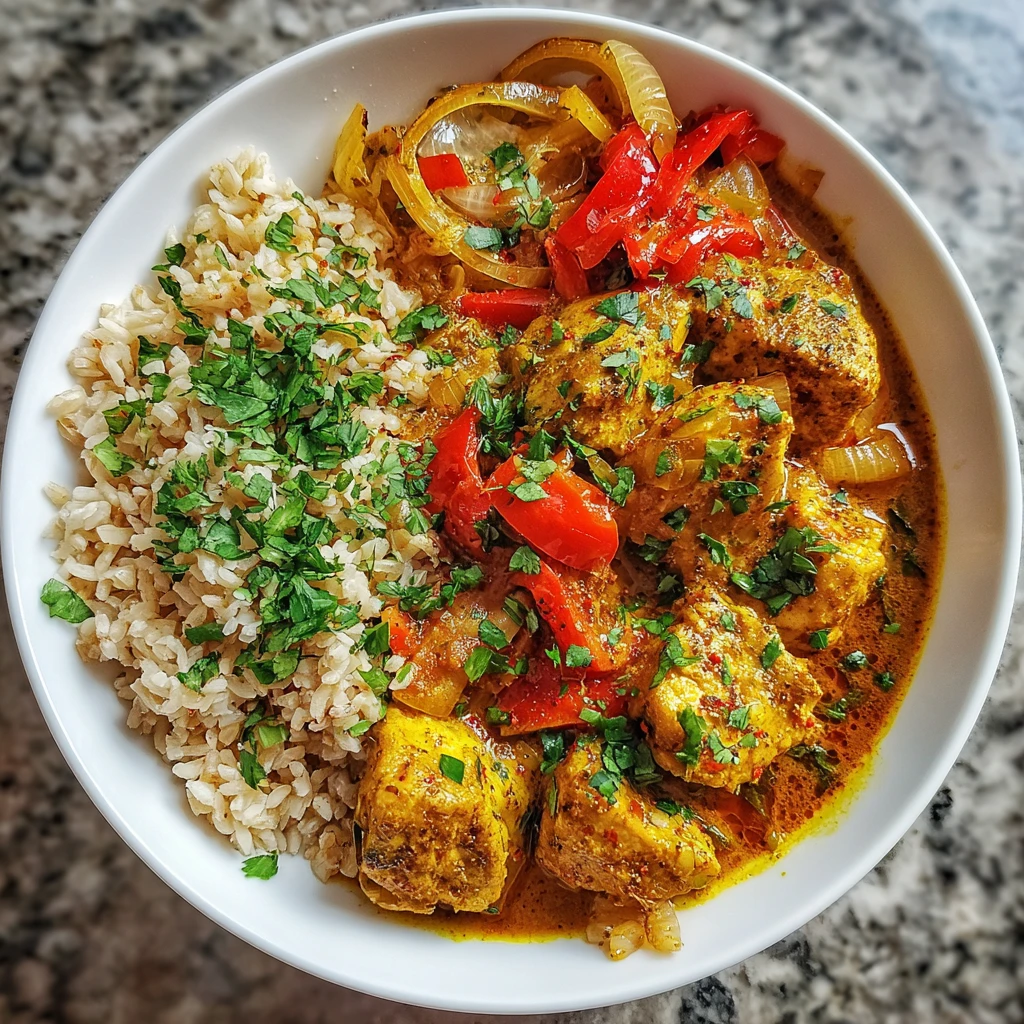
torso Curry Meal Prep Idea
Ingredients
- 1.5 lbs boneless, skinless chicken thighs, cut into bite-sized pieces (or tofu for vegetarian option)
- 1 large onion, chopped
- 2 cloves garlic, minced
- 1 inch ginger, grated
- 1 red bell pepper, chopped
- 1 (14 oz) can diced tomatoes, undrained
- 1 (13.5 oz) can coconut milk
- 2-3 tablespoons curry powder (adjust to taste)
- 1 teaspoon turmeric powder
- 1/2 teaspoon cumin
- 1/4 teaspoon cayenne pepper (optional, for heat)
- 1 tablespoon olive oil or coconut oil
- Salt and pepper to taste
- Cooked brown rice or quinoa, for serving
- Fresh cilantro, chopped (for garnish)
- Optional: chopped spinach or kale for added greens
Step-by-Step
1. Heat olive oil or coconut oil in a large pot or Dutch oven over medium heat.
2. Add chopped onion and cook until softened, about 5 minutes.
3. Add minced garlic and grated ginger and cook for another minute until fragrant.
4. Add chicken (or tofu) to the pot and cook until browned on all sides.
5. Stir in curry powder, turmeric powder, cumin, cayenne pepper (if using), salt, and pepper. Cook for 1 minute to bloom the spices.
6. Add chopped bell pepper and diced tomatoes. Stir well to combine.
7. Pour in coconut milk and bring the mixture to a simmer.
8. Reduce heat to low, cover, and simmer for 15-20 minutes, or until chicken is cooked through and tender. If using tofu, simmer for 10 minutes to allow the flavors to meld.
9. If adding spinach or kale, stir it in during the last few minutes of cooking until wilted.
10. Taste and adjust seasonings as needed.
11. Serve over cooked brown rice or quinoa.
12. Garnish with fresh cilantro.
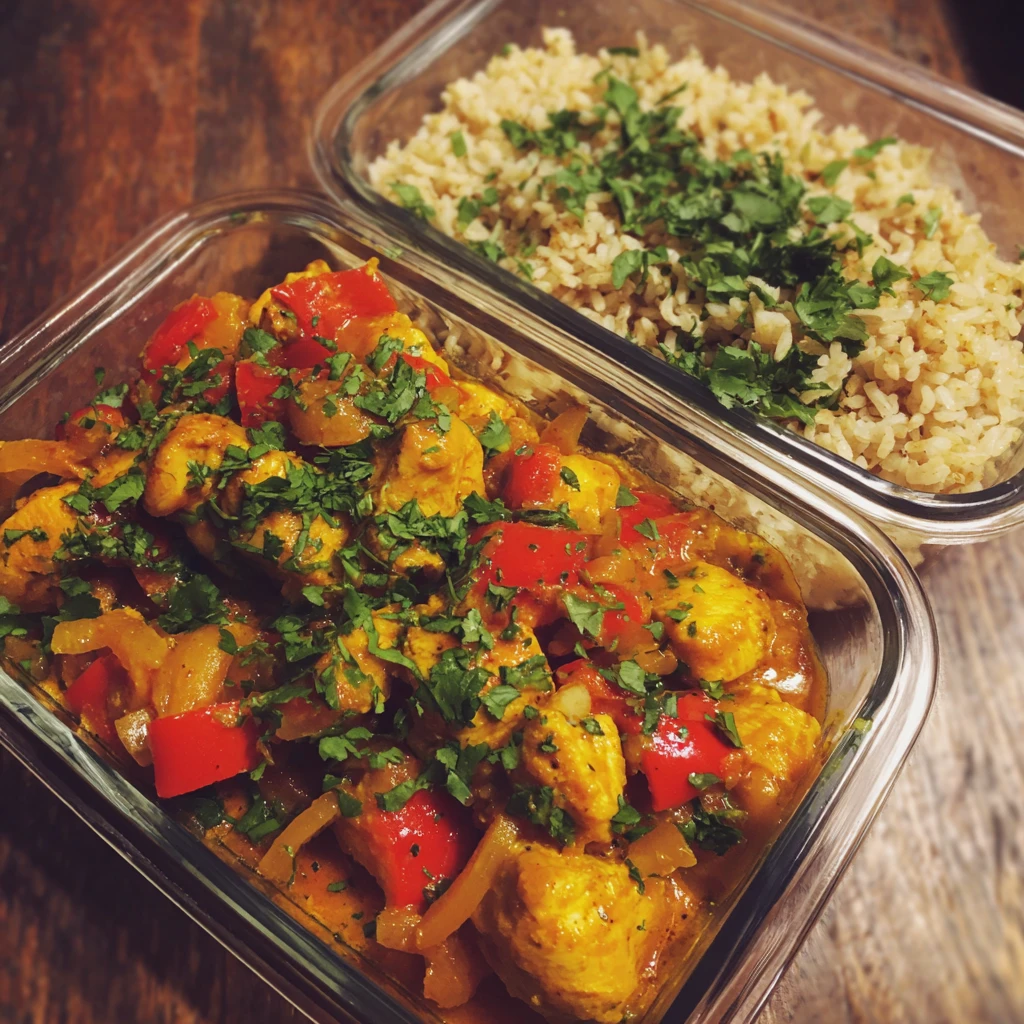
13. Allow to cool completely before portioning into meal prep containers.
14. Store in the refrigerator for up to 4 days.
Maximizing Flavor and Nutrition
Curry is a fantastic meal prep option, offering endless possibilities for customization and delivering a powerful punch of flavor. But simply following a recipe isn’t enough. Let’s explore how to maximize both the deliciousness and nutritional benefits of your curry meal prep.
Spice Blending for Personalized Taste
Don’t be afraid to experiment with different spice combinations. While the recipe above provides a base, the real magic of curry lies in the blending of spices.
Consider adding garam masala for warmth, coriander for citrusy notes, or smoked paprika for depth. Small adjustments can dramatically alter the flavor profile.
For those sensitive to heat, start with a smaller amount of cayenne pepper and add more to taste. Conversely, chili flakes or a dash of hot sauce can amplify the spiciness.
Boosting the Veggie Content
While bell peppers are included, there’s ample room to increase the vegetable content.
Consider adding other colorful vegetables like broccoli florets, cauliflower, green beans, peas, or even sweet potatoes. The key is to choose vegetables that hold their shape well during cooking and reheating.
Adding a variety of vegetables not only enhances the nutritional value but also adds textural complexity to the curry. This keeps the meal interesting and prevents palate fatigue.
Prioritizing Quality Protein Sources
The recipe calls for chicken thighs, which are a great source of protein and flavor. However, you can easily substitute with other protein sources based on your dietary preferences.
Chicken breast is a leaner option, but be careful not to overcook it, as it can become dry. Tofu is an excellent vegetarian choice, and chickpeas or lentils can add plant-based protein and fiber.
Shrimp or fish are also viable options, but they cook much faster, so add them towards the end of the cooking process. Ensure the protein source you choose is fresh and of high quality.
Meal Prep Container Considerations
The success of meal prepping hinges on proper storage. Choosing the right containers is crucial for maintaining the quality and freshness of your curry.
Glass vs. Plastic: Which is Better?
Both glass and plastic containers have their pros and cons. Glass containers are non-reactive, meaning they won’t absorb flavors or odors from the curry.
They are also microwave and oven-safe, making reheating convenient. However, glass containers are heavier and more prone to breakage.
Plastic containers are lighter and more durable, but they can stain and retain odors over time. Choose BPA-free plastic containers to avoid potential health concerns.
Portioning for Optimal Reheating
Consider the portion sizes you’ll need for each meal. Overcrowding the container can lead to uneven reheating and a less appealing meal.
Smaller, individual containers are often preferable to one large container. This allows for quicker and more thorough reheating.
Leave a small amount of headspace in the container to allow for expansion during freezing (if applicable). This will prevent the container from cracking.
Leak-Proof Lids: A Must-Have
Nobody wants a curry explosion in their lunch bag. Invest in containers with leak-proof lids to prevent spills and messes.
Ensure the lids fit snugly and securely. Test the seal by turning the container upside down before packing it.
Rubber or silicone gaskets can help create a tight seal. Clean the lids and gaskets regularly to prevent the build-up of food particles and bacteria.
Time-Saving Meal Prep Strategies
Meal prepping can be a time-consuming process, but with a few strategic approaches, you can streamline the process and save valuable time.
Batch Cooking for Efficiency
Instead of making one batch of curry, consider doubling or tripling the recipe. This allows you to prepare multiple meals at once, saving you time and effort in the long run.
Batch cooking is especially efficient if you’re using a slow cooker or Instant Pot. Simply add all the ingredients and let it cook while you attend to other tasks.
Freeze any extra portions for future meals. This is a great way to build up a stash of ready-to-eat meals.
Pre-Chopping and Prepping Ingredients
One of the biggest time-savers is to pre-chop and prep all the ingredients in advance. Chop the onions, garlic, ginger, and bell pepper and store them in separate containers in the refrigerator.
You can also pre-cook the rice or quinoa and store it separately. This way, when it’s time to cook the curry, everything is ready to go.
Pre-marinating the chicken (or tofu) in the spices can also enhance the flavor and reduce cooking time.
Leveraging Grocery Store Shortcuts
Don’t be afraid to take advantage of grocery store shortcuts. Pre-chopped vegetables, pre-cooked rice, and pre-made curry pastes can save you a significant amount of time.
While these options may be slightly more expensive, the convenience they offer can be well worth it, especially if you’re short on time.
Just be sure to check the ingredients list to ensure they align with your dietary preferences and avoid any unwanted additives.
Reheating and Serving Tips
Proper reheating is essential for preserving the flavor and texture of your curry. Avoid common mistakes and follow these tips for optimal results.
Microwave Reheating: Best Practices
When reheating in the microwave, use a microwave-safe container and cover the curry to prevent splattering.
Reheat in short intervals, stirring in between, to ensure even heating. Avoid overheating, as this can dry out the chicken or tofu.
Add a splash of water or coconut milk if the curry seems too dry. This will help rehydrate the ingredients and prevent them from becoming rubbery.
Oven Reheating: For Larger Portions
For larger portions, oven reheating is a good option. Preheat the oven to 350°F (175°C).
Place the curry in an oven-safe dish, cover with foil, and bake for 15-20 minutes, or until heated through.
Stir occasionally to ensure even heating. Remove the foil during the last few minutes of baking to allow the top to brown slightly.
Serving Suggestions and Garnishes
Serve the curry over freshly cooked brown rice or quinoa. Garnish with fresh cilantro, chopped green onions, or a dollop of plain yogurt or sour cream.
A squeeze of lime juice can brighten the flavors and add a touch of acidity. Serve with naan bread or papadums for dipping.
Consider adding a side of steamed vegetables or a simple salad to complete the meal.
Understanding Curry’s Nutritional Profile
Curry is not only delicious but also packed with nutrients. Understanding its nutritional profile can help you make informed choices about your meal prep.
Antioxidant Power of Spices
The spices used in curry, such as turmeric, ginger, and cumin, are rich in antioxidants. These compounds help protect your body against damage from free radicals.
Turmeric contains curcumin, a powerful anti-inflammatory agent that has been linked to numerous health benefits.
Ginger has anti-nausea and digestive properties. Cumin is a good source of iron and manganese.
Balancing Macronutrients for a Complete Meal
A well-balanced curry meal should contain a good source of protein, carbohydrates, and healthy fats.
The chicken (or tofu) provides protein, while the rice or quinoa provides carbohydrates. The coconut milk provides healthy fats.
Adjust the portion sizes to meet your individual macronutrient needs. Add more vegetables to increase fiber intake.
Addressing Potential Allergens and Sensitivities
Be mindful of potential allergens and sensitivities when preparing curry. Coconut milk is a common allergen, so consider using a substitute if necessary.
Some people may be sensitive to certain spices, such as chili peppers. Adjust the spice levels to suit your tolerance.
If you have any dietary restrictions or allergies, carefully read the ingredients list of all pre-made curry pastes or sauces.
FAQ
Can I freeze this curry for longer storage?
Yes, absolutely! Allow the curry to cool completely before transferring it to freezer-safe containers or bags. It can be stored in the freezer for up to 2-3 months. Thaw overnight in the refrigerator before reheating.
How long does meal-prepped curry last in the refrigerator?
When stored properly in airtight containers, your curry meal prep should last for up to 3-4 days in the refrigerator. Ensure it’s cooled down before refrigerating to prevent bacterial growth.
Can I make this curry spicier?
Definitely! Increase the amount of cayenne pepper or add a pinch of chili flakes. You can also use a spicier curry powder blend. Taste as you go and adjust accordingly.
What are some good substitutes for coconut milk?
If you’re allergic to coconut or simply prefer a different flavor, you can use cashew cream, plain yogurt (for a tangier flavor), or even vegetable broth as a substitute for coconut milk. The consistency will be different, but the flavor will still be delicious.
Can I use different vegetables in this curry?
Yes, feel free to customize the vegetables based on your preferences and what you have on hand. Good options include broccoli, cauliflower, spinach, peas, green beans, sweet potatoes, and carrots. Add them according to their cooking time to ensure they’re cooked through but not mushy.